
WASHINGTON: More than 20 US Navy warships are currently patrolling waters across the Middle East as President Donald Trump warned that the United States could launch another round of military strikes against Iran, signaling a sharp escalation in the already volatile regional conflict.
The latest deployment was confirmed by the US Central Command (CENTCOM), which said American naval forces remain spread across key maritime corridors in the Middle East to maintain what it described as regional security and stability amid rising tensions.
“Today, more than 20 U.S. Navy warships are patrolling waters across the Middle East as CENTCOM forces continue promoting regional security and stability,” CENTCOM said in a statement posted on X.
The announcement came hours after Trump declared that the United States would likely carry out additional military strikes against Iran later on Wednesday. Speaking during the NATO summit, Trump also indicated that the ceasefire arrangement between Washington and Tehran was effectively over, blaming Iran for renewed hostilities in the Strait of Hormuz.
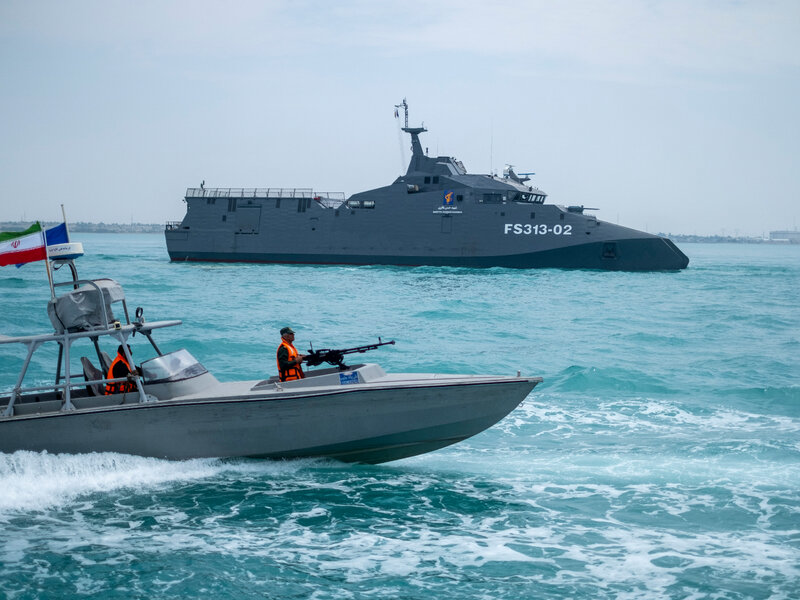
Earlier on Wednesday, US forces launched extensive airstrikes targeting more than 80 Iranian military sites, according to CENTCOM. The strikes reportedly hit Iranian air defense systems, command-and-control facilities, coastal radar installations, anti-ship missile positions, and dozens of vessels linked to the Islamic Revolutionary Guard Corps operating around the Strait of Hormuz. US officials said the operation was intended to degrade Iran’s ability to threaten international shipping after attacks on commercial vessels transiting the strategic waterway.
The Strait of Hormuz remains one of the world’s most important maritime chokepoints, carrying a significant share of global oil exports. Any disruption to shipping through the narrow passage has immediate implications for international energy markets and global trade.
Iran strongly condemned the latest US operation, accusing Washington of violating the memorandum on cessation of hostilities that had temporarily reduced fighting between the two countries. Iranian military leaders vowed a “crushing response,” arguing that the latest American strikes represented a serious breach of previous understandings aimed at preventing wider regional conflict.
Iranian authorities later reported retaliatory strikes targeting US military facilities in Bahrain and Kuwait. Officials in both Gulf countries said air defense systems intercepted multiple incoming missiles and drones, while security forces remained on high alert as the confrontation intensified.
The renewed military exchanges have fueled concerns that the conflict could spread beyond Iran and the Gulf, drawing additional regional actors into direct confrontation. Several governments have urged restraint while monitoring developments around the Strait of Hormuz, where commercial shipping has already faced repeated disruptions in recent days.
Trump has defended the latest military action, arguing that the United States must respond decisively to attacks on international shipping and protect freedom of navigation through one of the world’s busiest energy corridors. While leaving open the possibility of future negotiations, he expressed skepticism that diplomacy alone would alter Iran’s behavior.
The expanding US naval presence underscores Washington’s determination to maintain a powerful military posture across the region as tensions continue to rise. Carrier strike groups, guided missile destroyers, cruisers, and other naval assets remain positioned to support ongoing operations and safeguard commercial shipping routes if further hostilities erupt.
Energy markets are closely watching developments, with renewed fighting around the Strait of Hormuz increasing fears of supply disruptions. Oil prices moved sharply higher following reports of the latest strikes and Trump’s warning that additional military action against Iran could follow if hostilities continue.
With both Washington and Tehran exchanging military blows and rhetoric hardening on both sides, international observers warn that the risk of a broader regional conflict remains elevated despite ongoing diplomatic contacts.