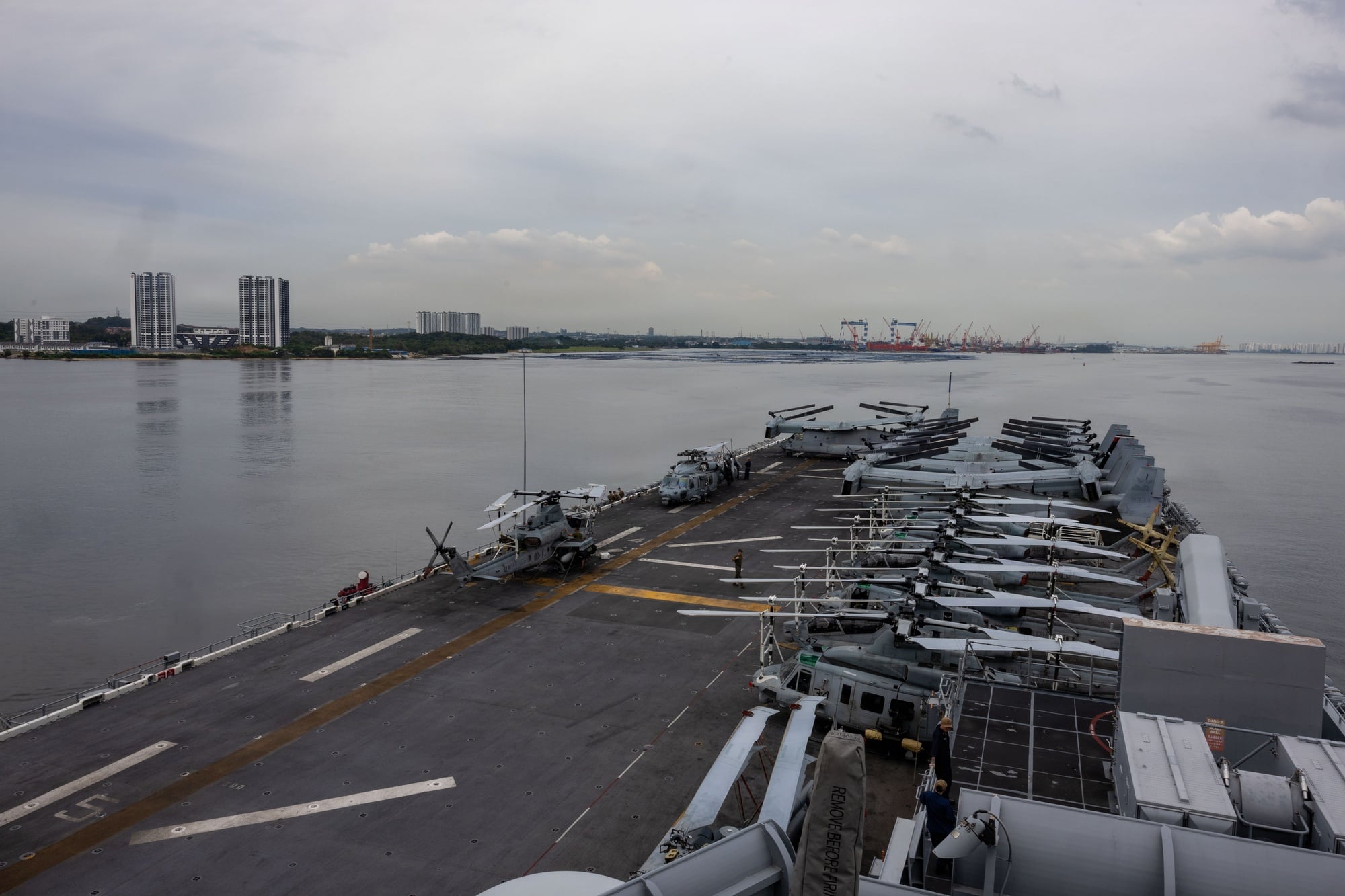

ARABIAN SEA – The USS Boxer, a Wasp-class amphibious assault ship carrying the 11th Marine Expeditionary Unit, arrived in the Middle East on June 30. The following morning, Steve Witkoff and Jared Kushner flew to Doha. The two events were not coincidental. They were the same strategy expressed through two different instruments.
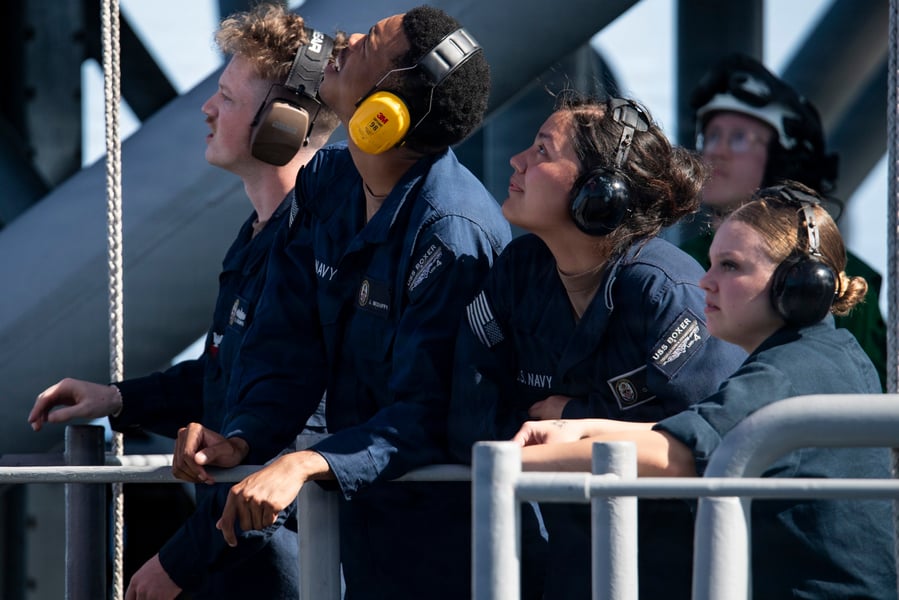
With Boxer’s arrival, the United States now operates at least two Amphibious Ready Groups in the theater simultaneously. The first is the Tripoli ARG – the America-class USS Tripoli, carrying the 31st Marine Expeditionary Unit, flanked by USS San Diego and USS New Orleans. The second is the Boxer ARG: USS Boxer, USS Portland, and USS Comstock, with the 11th MEU and approximately 2,500 marines. Together they constitute the largest American amphibious force assembled in Gulf waters in decades, positioned alongside both carrier strike groups – USS Abraham Lincoln and USS George H.W. Bush – and 15 destroyers, bringing the total to at least 24 warships. Stars and Stripes reported that slightly less than half of the Navy’s entire deployed battle force is currently in the Middle East.
Fifty thousand American service members are operating in the region. U.S. Central Command announced the Boxer’s arrival via social media on the day it happened – the day before indirect talks began in Doha.
This is what Washington’s two-track strategy looks like when both tracks are running at full capacity. The diplomatic track arrived in Doha with two senior envoys and two sets of negotiations – the political channel Witkoff and Kushner ran through Qatar’s Emir, and the technical channel that the American delegation ran with Gharibabadi’s team in a separate room. The military track arrived with two Amphibious Ready Groups, each capable of amphibious assault operations, each pre-positioned within range of Iranian coastal and nuclear infrastructure. Neither track was subordinated to the other while the talks ran.
JD Vance, asked during the Doha round whether the United States could commit to no further strikes before August 21, was explicit: “I can’t commit to anything, because, obviously, it depends on what the Iranians are ultimately going to do.” That was not diplomatic hedging. It was an accurate description of the operational posture. The military option is not off the table while diplomacy runs; it is the frame around which every Iranian calculation at the table is made.
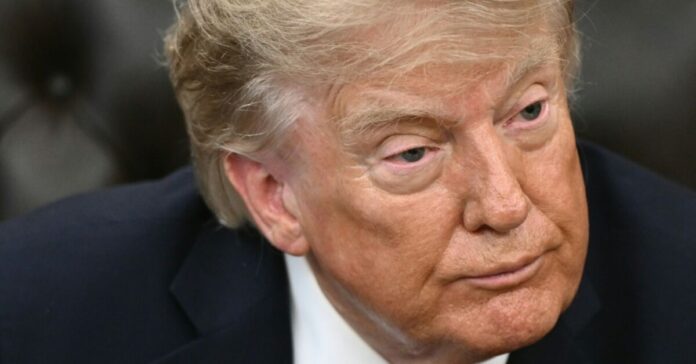
Donald Trump, speaking as the Doha round concluded, said that if Tehran could not be reasonable, the United States would be forced to “militarily complete the job.” The amphibious force does not target hardened nuclear sites – that mission belongs to the carrier strike groups and the B-2s that flew Operation Midnight Hammer in June. But the marines represent a different dimension of the threat: ground presence, seizure of key terrain, options that air power cannot provide. Their positioning changes the calculus for Tehran in ways that naval air power alone does not.
Iran’s Khatam al-Anbiya warned oil tankers about unauthorized Hormuz transits on the day Doha concluded. The warning ran parallel to the diplomatic readout in the same news cycle. Iran is running the same dual-track logic: Gharibabadi negotiates in one room while the IRGC sends maritime warnings from another. The difference is in the scale of the military instrument each side deploys alongside diplomacy. Iran’s lever is denial – the ability to close or tax the strait. America’s lever is destruction and, now, landing.
The Boxer’s accelerated deployment began March 20, when the ship left San Diego roughly three weeks ahead of its scheduled rotation. The acceleration followed the outbreak of the Iran war and was part of the broader force repositioning under Operation Epic Fury. The ship transited the South China Sea in June, cleared the Strait of Malacca, crossed the Indian Ocean, and entered the Middle East theater on June 30 – the day Witkoff was airborne toward Doha. Stars and Stripes reported the full force composition as Boxer’s ARG completed its transit.
The Doha round left the nuclear inspection file deferred and the Hormuz toll question unresolved. It produced a communications hotline and partial movement on frozen assets – neither outcome that required two Amphibious Ready Groups in the water to achieve. Their presence was not a condition of the talks. It was the background against which every Iranian calculation was made. The next round, which will not convene until after the Khamenei funeral on July 9, will be conducted against the same backdrop. The USS Tripoli and USS Boxer are not scheduled to rotate before August 21.
Forty-five days remain. Iran’s negotiators know the Boxer is there. Iran’s internal divisions over the MoU suggest the pressure is landing differently across Tehran’s political factions – hardening some, convincing others. Whether the presence of 24 warships accelerates Iranian concessions or reinforces Iranian resistance to any terms that look like surrender is the question the diplomatic track has not yet answered. The MoU’s architects calculated the former. The military track remains ready for the latter.