

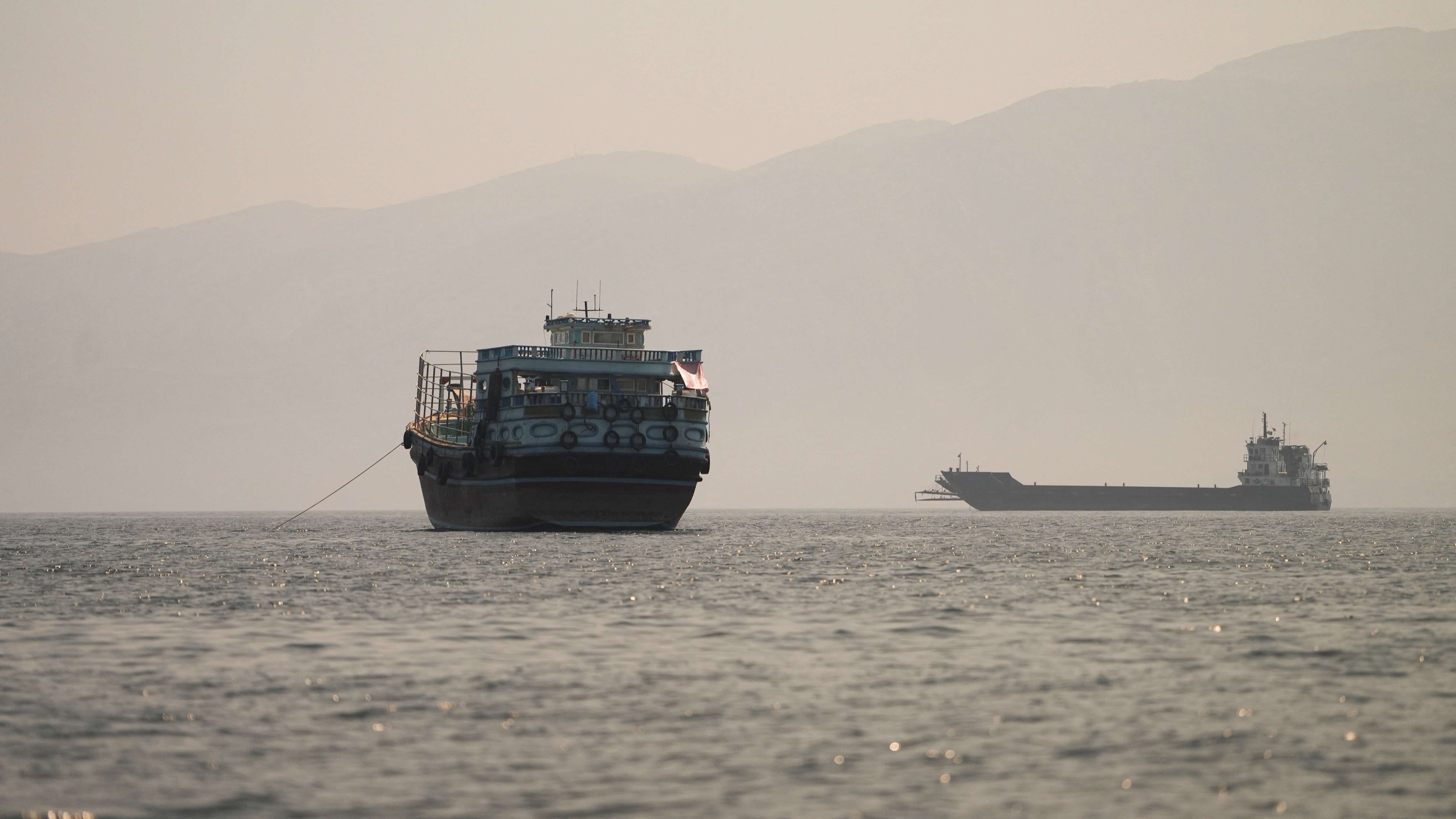

TEHRAN – The Ever Lovely had already shown what Iran means by forceful response. The Singapore-flagged cargo vessel followed the International Maritime Organization’s new corridor along Oman’s coastline on June 26, struck by an Iranian drone on the starboard side seven nautical miles southeast of Dahit while its 21 crew members were still aboard. The vessel completed its transit. The IMO suspended the corridor.
On July 2 – the same day US and Iranian diplomats concluded their Doha round with a readout that described “positive progress” – Iran’s Khatam al-Anbiya joint military command issued a formal statement making the Ever Lovely’s lesson explicit for every vessel in the waterway. “Any failure to comply, deviation from the designated route, or disregard for the navigation protocols of the Islamic Republic of Iran in the Strait of Hormuz will be met with an immediate and forceful response from the armed forces, endangering the security of the violating vessels,” the command stated, as reported by Iranian state television.
The warning is specific in its target. Iran’s statement identifies “the only authorised transit routes through the Strait of Hormuz” as those designated by Tehran – a direct rejection of the corridor Oman announced in coordination with the IMO on June 25, which was designed to allow stranded vessels to exit the Persian Gulf without passing through Iran’s IRGC-controlled northern corridor. The Omani route hugs the Sultanate’s coastline rather than Iran’s preferred path along the strait’s northern shore, where the IRGC Navy operates the fee-and-escort system that has been running since March.
What the warning establishes is a distinction the Islamabad MoU does not draw. The 60-day memorandum signed on June 17 contains a free-passage provision under which Iran agreed not to charge transit fees during the window. That provision describes commercial shipping moving freely through the waterway. Iran subsequently recast its fee as a “maritime service fee” – not a toll, a semantic reframing that Washington has not accepted. The July 2 warning goes further. Free passage, Iran is now saying, does not mean free choice of route. It means unimpeded movement along the route Iran has designated. A vessel using the Omani-IMO corridor is not exercising free passage under the MoU; it is, in Iran’s reading, engaging in an unauthorised deviation subject to forceful response.
That reading has not appeared in any Doha readout. It has not been reconciled with the MoU text. It was not resolved in the Doha round that concluded on the same day Iran issued it.
The Stoic Warrior had navigated the Omani corridor successfully on June 25, the day it was announced, hugging the UAE and then Oman’s Musandam Peninsula. The Ever Lovely followed the next day. One ship made it through. The other was struck. After the attack, IMO Secretary-General Arsenio Dominguez suspended the evacuation scheme pending “necessary safety guarantees,” citing the need for coordinated navigation approaches. More than 11,000 seafarers remain stranded in the Persian Gulf, with more than a dozen killed in prior attacks during the conflict. The IMO’s pause and the week of relative quiet that followed it expired before the next Doha round was scheduled.
The US military’s Central Command held a separate meeting with officials from Middle Eastern nations in Bahrain on July 1, the day before the warning. The CENTCOM readout said “leaders underscored their shared commitment to the free flow of commerce through the Strait of Hormuz.” Secretary of State Marco Rubio has said international waterways cannot have tolls imposed and that the US judges compliance by whether “ships are moving as they should be moving.” The July 2 warning from the Khatam al-Anbiya command and the CENTCOM Bahrain statement describe two incompatible operating frameworks for the same waterway, issued within 24 hours of each other.
Iran’s deputy foreign minister had earlier stated that safe passage cannot be guaranteed for ships using “ambiguous arrangements, parallel routes, or decision-making outside of Iran’s considerations.” The July 2 Khatam al-Anbiya statement is the military codification of that diplomatic formulation. What the deputy foreign minister described as a concern became, by Thursday, an explicit threat with explicit consequences attached.
Iran’s parliament is simultaneously advancing legislation that would write route control into domestic statute, alongside the fee schedule and the exclusion of US-linked and sanctioning-nation vessels. The Khatam al-Anbiya warning operates in the same register: it converts what might have been understood as IRGC operational practice into a formal military commitment. Ships that test the boundary will not find ambiguity. They will find what the Ever Lovely found.
The Doha round, according to Al Jazeera, produced no statement on route authority. The communications hotline agreed during the talks gives both governments a mechanism for reporting MoU violations. It does not specify which party’s route designation constitutes a violation and which constitutes compliance. That question – whether a vessel using the Omani-IMO corridor is protected by the MoU’s free-passage provision or subject to Iran’s forceful-response warning – was not answered in Doha. It was answered in practice on June 26, when a drone found the Ever Lovely on a route diplomats had not yet decided was legal.













