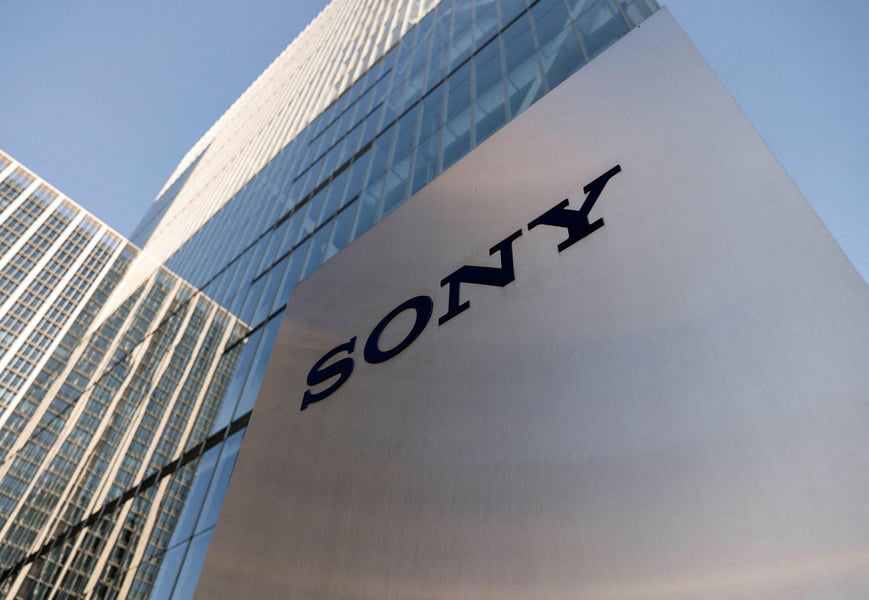

In a move that underscores the rapid transformation of the global consumer electronics industry, Sony Group is nearing a $1 billion agreement with China’s TCL Electronics to transfer majority control of its home entertainment division, including the storied Bravia television brand.
The deal, which is said to be in advanced stages of negotiation, would mark one of the most significant restructurings in the television business in decades, effectively redrawing the balance of power between legacy Japanese manufacturers and fast-rising Chinese technology firms.
At its core, the agreement reflects a stark reality: the era of Japanese dominance in consumer electronics hardware is steadily giving way to a new industrial order led by China’s manufacturing scale, cost efficiency, and supply chain control.
Sony and TCL first signaled their intentions in January 2026, when the two companies signed a joint venture framework outlining a strategic partnership in the home entertainment sector.
Under the proposed structure, Sony is expected to sell a majority stake in its home entertainment business while retaining a significant minority share.
The new entity would assume responsibility for Sony’s television and home audio operations globally, overseeing everything from product development and design to manufacturing, logistics, and sales.
If finalized, the venture is expected to begin operations in April 2027, producing televisions under the Sony and Bravia branding but increasingly relying on TCL’s display technologies and industrial capabilities.
For Sony, the deal represents a decisive pivot away from low-margin hardware manufacturing toward higher-profit businesses centered on intellectual property, including gaming, film, and music.
Televisions, once a cornerstone of Sony’s global identity, have become increasingly difficult to sustain as a profitable business amid intensifying competition in the global television market .
Fierce competition from Chinese manufacturers has driven prices down, squeezing margins and forcing even premium brands to reconsider their long-term strategies. In particular, the reality that Chinese manufacturers have rapidly gained ground has reshaped the competitive landscape.
For TCL, the deal represents a major step forward in its ambition to move up the value chain and challenge premium players in global markets.
By pairing its cost-effective production capabilities with Sony’s globally recognized branding and technological expertise, TCL stands to gain a powerful competitive advantage, particularly in the premium and mid-range segments.
The Sony–TCL deal is not an isolated development. Rather, it reflects a broader shift taking place across the global electronics industry, where the global AI power struggle and supply chain dominance are increasingly intertwined.
Over the past decade, companies have leveraged vertically integrated supply chains and economies of scale to capture significant market share worldwide, accelerating what many analysts describe as a new global computing power shift .
At the same time, the restructuring of the global technology ecosystem has forced legacy firms to rethink traditional manufacturing models.
In many ways, the Sony, TCL partnership exemplifies this new model, one where companies retain control over branding and innovation while outsourcing production to more efficient partners.
For consumers, the implications of the deal are both promising and uncertain. The combination of Sony’s technology and TCL’s cost efficiencies could lead to more competitively priced televisions without sacrificing performance.
At the same time, questions remain about whether Sony’s premium identity can be preserved under a structure where it no longer holds majority control.
The timing of the deal is also notable, coming amid heightened global trade tensions and shifting economic alignments.
In financial markets, these transformations are already visible, with volatility across global markets reflecting the broader uncertainty surrounding technology leadership and geopolitical competition.
Beyond its commercial implications, the deal also carries geopolitical significance, highlighting the increasingly interconnected nature of the global technology ecosystem, even amid rising tensions.
For decades, Sony has been synonymous with innovation, quality, and premium design. Maintaining that legacy under a joint venture structure will require careful coordination between Sony and TCL.
As negotiations move toward completion, the Sony, TCL deal is poised to become a defining moment in the evolution of the global television market, one that reflects not just a business transaction, but a broader shift in global technological power.