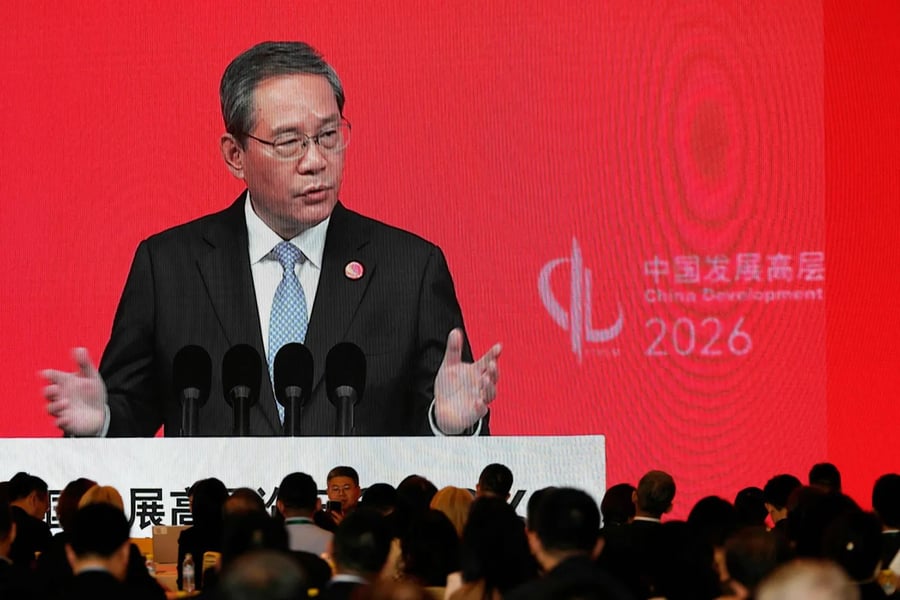

BEIJING — In a carefully calibrated message to global capital, China’s Premier Li Qiang has pledged to grant foreign companies the same treatment as domestic firms, signaling what may be one of Beijing’s most consequential economic recalibrations in years.
Speaking at the China Development Forum, Li framed the move as part of a broader effort to stabilize China’s slowing economy, rebuild investor confidence, and reposition the country as a central pillar of global growth amid escalating geopolitical tensions.
The promise of “national treatment” is designed to assure multinational corporations that their operations in China will no longer face systemic disadvantages compared to local firms. Yet the announcement comes at a moment of profound contradiction: China is simultaneously confronting declining foreign investment, intensifying trade friction with the US and EU, and mounting scrutiny over its industrial policies.
A Strategic Pivot Under Pressure
China’s economic overture reflects mounting internal and external pressures. Foreign direct investment has declined sharply, raising concerns among global investors about regulatory unpredictability and geopolitical risks.
This shift is unfolding against the backdrop of China’s slowing economy, where industrial output and investor sentiment have shown persistent weakness over the past year.
At the same time, China’s record trade surplus has intensified friction with Western economies, which have increasingly accused Beijing of market distortion and overcapacity.
Li’s response has been to position China not as a threat but as a stabilizing force, emphasizing increased imports and balanced trade development to expand global economic cooperation.
Reassuring Global Corporations
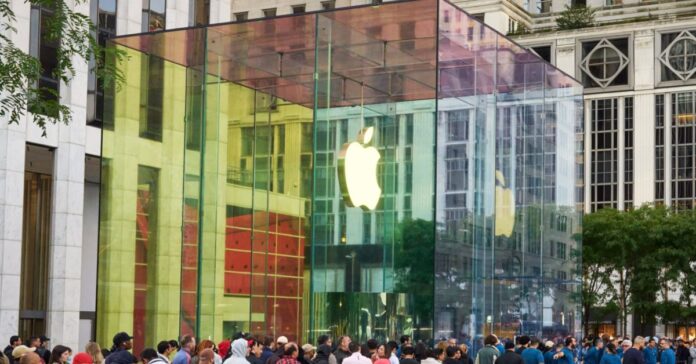
The audience for Li’s remarks included executives from major global corporations such as Apple, Samsung, Volkswagen, Siemens, HSBC, and UBS.
Chinese officials used the forum to reinforce a consistent message: China remains open for business and is committed to long-term engagement with foreign firms.
Commerce Minister Wang Wentao also met global pharmaceutical executives to boost foreign investment, highlighting China’s ambition to become a global research and development hub.
This aligns with China’s broader push toward China’s high-tech economic model, where innovation, AI, and advanced manufacturing are central to long-term growth.
Expanding Market Access
China has expanded its foreign investment incentives to include approximately 200 new sectors, focusing on high-value industries such as green energy, advanced manufacturing, and services.
These moves are closely tied to the global investment flows increasingly shifting toward emerging markets and alternative financial hubs.
At the same time, Beijing continues to refine its regulatory framework to ensure a more predictable environment for foreign firms, while maintaining control over strategic sectors.
Trade Tensions and Global Realignment
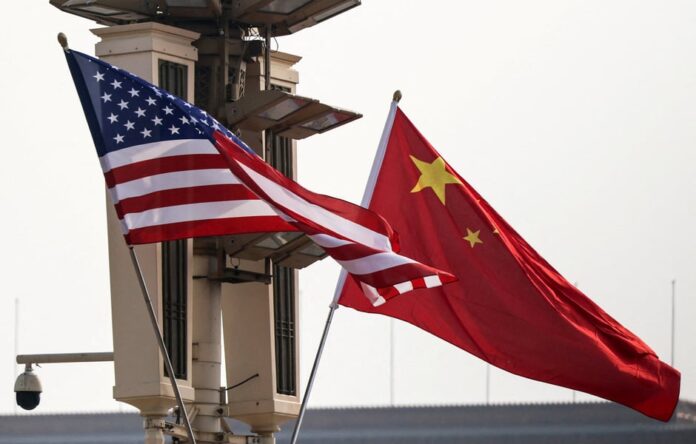
Despite the conciliatory tone, tensions with the US and EU remain high, particularly over trade imbalances and industrial policy.
China has pushed back against these criticisms, arguing that its economic model is driven by market efficiency and domestic reform rather than state distortion.
Officials have also emphasized China’s role in the BRICS economic strategy and China’s expanding role in multipolar trade systems, signaling a broader shift away from Western-dominated financial structures.
This reflects a deeper global shift toward a multipolar financial system, where emerging economies are increasingly shaping global trade dynamics.
The “Harbour of Stability” Narrative
China is actively redefining its global role, presenting itself as a reliable economic partner in a fragmented world.
At the forum, officials described China as a “harbour of stability” in a fragmented global economy, appealing to multinational corporations navigating geopolitical uncertainty.
This narrative is aimed at reinforcing China’s position as a central hub in global supply chains and financial networks.
Technology and Strategic Competition
China’s economic strategy is closely linked to the global race for technological dominance.
The country is accelerating its push into advanced industries, including semiconductors and artificial intelligence, areas that are increasingly shaped by geopolitical competition.
This dynamic is evident in the advanced semiconductor and AI race, where global players are competing for technological supremacy.
At the same time, global tech supply chains under pressure continue to reshape investment strategies and industrial policy worldwide.
Investor Confidence and Economic Reality
China’s efforts to reassure markets come as concerns persist about transparency, regulatory consistency, and long-term policy direction.
Recent reports highlight China’s efforts to reassure global investors amid economic slowdown, underscoring the urgency of rebuilding confidence.
At the same time, Beijing has signaled openness to broader capital inflows, noting that China welcomes global investment including major sovereign funds as part of its long-term strategy.
A Calculated Economic Recalibration
China’s outreach to foreign companies reflects a recognition that sustained growth requires deeper global integration.
By offering equal treatment and expanded opportunities, Beijing is attempting to balance openness with strategic control, ensuring that foreign investment aligns with national priorities.
The success of this approach will depend on consistent implementation, regulatory clarity, and the ability to navigate an increasingly complex geopolitical landscape.
The Road Ahead
For global investors, the message is clear: China remains a critical market, but one that is evolving rapidly.
Whether Li Qiang’s pledge translates into lasting change will depend on how effectively these policies are implemented in practice.
As the global economy continues to fragment, China’s role as both a competitor and a partner will shape the future of international trade and investment.