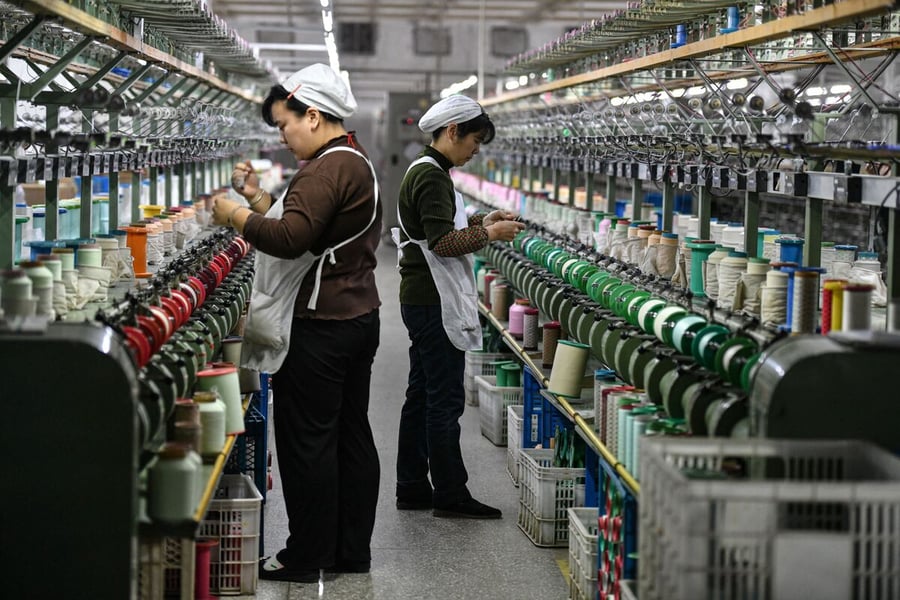

China’s manufacturing sector remained entrenched in contraction territory for an unprecedented eighth consecutive month in November 2025, casting a shadow over the world’s second-largest economy as it grapples with persistent structural challenges. The official Purchasing Managers’ Index (PMI) released by the National Bureau of Statistics edged up to 49.2, a marginal improvement from October’s 49.0, yet still firmly below the critical 50-point threshold that separates expansion from contraction.
The prolonged manufacturing sector downturn represents the longest streak of factory decline on record, underscoring the depth of China’s economic malaise despite Beijing’s repeated pledges to stabilize growth and shore up confidence. While the slight uptick suggests tentative stabilization, economists warn that fundamental headwinds, ranging from weak domestic consumption to escalating trade tensions, continue to weigh heavily on industrial activity.
Unprecedented Contraction Streak Signals Deeper Structural Issues
The eight-month contraction run marks a historic low point for Chinese manufacturing, surpassing previous extended slumps during the global financial crisis and pandemic-era disruptions. Factory owners are confronting a perfect storm of challenges: sluggish consumer demand at home, intensified price competition that erodes profit margins, and cautious export sentiment as global trade patterns simmer.
Production activity showed signs of resilience, with the production sub-index reaching exactly 50.0 in November, up 0.3 percentage points from the previous month. However, this critical threshold achievement barely masks underlying weakness in order books. The new orders index climbed to 49.2, representing a 0.4 percentage point improvement but still indicating declining demand for manufactured goods.
Export orders remained particularly anemic as manufacturers navigate uncertain international markets. Trade friction between major economies has dampened business confidence, prompting many Chinese exporters to adopt wait-and-see strategies rather than commit to capacity expansion. The cautious approach reflects broader anxiety about potential tariff escalations and supply chain reconfigurations that could fundamentally alter global trade patterns.
Services Sector Stumbles After Nearly Three Years of Growth
Perhaps more alarming than the manufacturing weakness is the sudden contraction in China’s services sector, which had served as a critical pillar supporting overall economic growth throughout 2023 and most of 2024. The non-manufacturing PMI, encompassing both services and construction activities, tumbled to 49.5 in November from 50.1 in October, marking its first contraction since December 2022.
The composite PMI, which combines manufacturing and non-manufacturing indicators, slipped to 49.7 from an even 50.0 the previous month. This broad-based weakness signals that economic headwinds are no longer confined to traditional industrial sectors but are spreading across the entire economy. Services industries had been buoyed by pent-up consumer demand following pandemic restrictions, but that momentum now appears exhausted.
Fading holiday demand contributed significantly to the services slowdown. The post-Golden Week period typically sees reduced consumer activity, but the magnitude of November’s decline exceeded seasonal norms. Discretionary spending on dining, entertainment, and travel showed particular weakness, suggesting Chinese households are tightening budgets amid mounting economic uncertainties and property market instability.
Small Businesses Rebound While Large Manufacturers Falter
A rare bright spot emerged in the small business segment, where the PMI surged 2.0 percentage points to 49.1, reaching its highest level in six months. This notable rebound suggests that targeted policy support and preferential financing measures aimed at smaller enterprises are gaining traction. Small and medium-sized businesses have been beneficiaries of government programs designed to ease credit access and reduce regulatory burdens.
Conversely, large manufacturers experienced deteriorating conditions, with their PMI falling 0.6 percentage points to 49.3. This divergence is particularly concerning because major industrial corporations typically have greater financial resilience and market power than their smaller counterparts. The weakness among industry leaders suggests structural challenges that cannot be resolved through monetary policy alone.
Medium-sized enterprises posted a modest gain to 48.9, up 0.2 percentage points, indicating mixed conditions across the middle tier of China’s manufacturing base. The varied performance across enterprise sizes reflects the uneven impact of economic pressures and the differential effectiveness of policy interventions.
High-Tech Manufacturing Provides Lone Beacon of Sustained Growth
Amid widespread industrial weakness, high-tech manufacturing continued to demonstrate resilience, with its PMI standing at 50.1 in November. This marks the tenth consecutive month of expansion for technology-intensive industries, underscoring Beijing’s strategic emphasis on upgrading industrial capabilities and reducing dependence on foreign technology.
Sectors such as non-ferrous metal smelting, agricultural food processing, and specialized equipment manufacturing reported production and new order indices firmly in expansionary territory. These industries benefit from both government industrial policy support and structural demand drivers, including infrastructure investment and the ongoing energy transition.
The sustained performance of high-tech sectors validates China’s long-term economic strategy of pivoting toward innovation-driven growth and advanced manufacturing. However, these bright spots remain insufficient to offset broader manufacturing weakness, particularly in traditional labor-intensive industries facing margin compression and overcapacity challenges.
Business Confidence Shows Tentative Improvement Despite Headwinds
The production and operational activity expectation index climbed to 53.1 in November, up 0.3 percentage points from October. This forward-looking indicator suggests that manufacturers retain cautious optimism about future business conditions, despite current operational challenges. Some sectors, including non-ferrous metal smelting and rail-related equipment manufacturing, reported particularly robust confidence levels exceeding 57.
Market sentiment has been bolstered by expectations of additional policy support from Beijing. Following better-than-expected GDP growth earlier in 2025, authorities have preserved substantial monetary and fiscal ammunition that could be deployed if economic conditions deteriorate significantly. The central bank has already implemented reserve requirement ratio cuts and policy rate reductions, with targeted liquidity support aimed at boosting consumption and technology investment.
However, confidence remains fragile and highly susceptible to external shocks. Renewed trade tensions, particularly involving the United States, could quickly undermine business sentiment and trigger defensive strategies among exporters. Domestic consumption weakness also poses a fundamental challenge that monetary policy alone cannot fully address, requiring coordinated fiscal measures to support household incomes and stimulate demand.
Global Trade Uncertainties Cast Long Shadow Over Export Prospects
Chinese manufacturers are navigating an increasingly complex international trade environment characterized by protectionist headwinds and supply chain realignments. Trade friction between major economies has prompted many companies to diversify production locations and reconfigure supply networks, processes that create near-term disruptions and uncertainty.
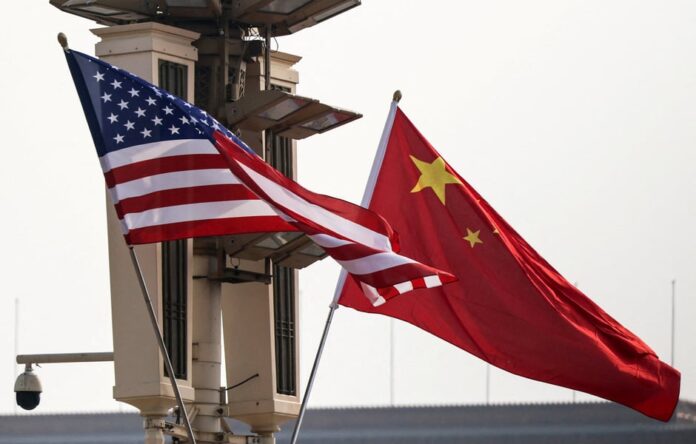
China’s merchandise trade surplus reached its highest level since 2022, driven partly by front-loaded exports as businesses rushed to ship goods ahead of potential tariff increases. However, this surge reflects defensive positioning rather than sustainable demand strength. The United States trade deficit with China widened to $355 billion, increasing by $14 billion in the fourth quarter alone, a development likely to intensify political pressure for trade restrictions.
Global economic growth is projected to slow from 3.3 percent in 2024 to 2.9 percent in both 2025 and 2026, according to international forecasts. This deceleration is expected to be most concentrated in major trading partners including the United States, Canada, Mexico, and China itself. Weakening external demand will continue pressuring Chinese exporters, particularly those in price-sensitive consumer goods categories facing intense competition from Southeast Asian manufacturers.
Policy Response Options Remain Limited Despite Available Firepower
Beijing faces difficult policy choices as it seeks to stabilize economic growth without triggering unintended consequences. The leadership has maintained an “appropriately loose” monetary stance while accelerating local government bond issuance to finance infrastructure projects. However, authorities have refrained from deploying large-scale stimulus measures that characterized previous downturns, prioritizing structural reforms over short-term growth boosts.
This cautious approach reflects lessons learned from past stimulus cycles that generated substantial debt accumulation and industrial overcapacity without delivering sustainable productivity gains. Current policy emphasis centers on targeted interventions: consumption subsidies for durable goods, incentives for service-based spending, and preferential financing for strategic industries including green technology and advanced manufacturing.
The challenge lies in calibrating support measures that provide sufficient demand stimulus without undermining long-term structural adjustments. China’s property sector remains in prolonged correction, creating negative wealth effects that constrain household spending. At the same time, local government debt burdens limit fiscal flexibility, even as infrastructure investment remains a primary growth lever.
Structural Reforms Take Priority Over Quick-Fix Stimulus Measures
Chinese policymakers are increasingly focused on addressing fundamental economic imbalances rather than pursuing aggressive stimulus that could exacerbate existing problems. Key reform priorities include rebalancing growth drivers from investment toward consumption, reducing overcapacity in traditional industries, and accelerating technological innovation to enhance productivity.
The Made in China 2025 initiative and related industrial policies aim to reduce dependence on foreign technology while developing domestic capabilities in strategic sectors including semiconductors, artificial intelligence, and renewable energy. These long-term structural priorities take precedence over short-term cyclical management, even as current growth momentum weakens.
Demographic headwinds add urgency to productivity-enhancing reforms. China’s working-age population is shrinking, creating labor constraints that require efficiency improvements to maintain growth potential. The transition from an export-led, investment-intensive model toward domestic consumption and service-sector growth represents a multi-year adjustment process that inevitably involves near-term growth trade-offs.
Outlook Remains Clouded by Domestic and International Uncertainties
Looking ahead, China’s manufacturing sector faces continued pressure from multiple directions. Domestically, weak consumer confidence and property market instability will likely constrain demand recovery. Internationally, trade policy uncertainty and potential tariff escalations threaten export performance, while global growth deceleration reduces external demand support.
The persistence of manufacturing contraction through eight consecutive months suggests that structural challenges run deeper than cyclical weakness. Overcapacity in key industries, margin compression from intense competition, and fundamental shifts in global supply chains all point toward extended adjustment periods rather than rapid rebounds.
However, several factors could support stabilization in coming months. Targeted policy measures may gain traction as they filter through the economy, particularly programs supporting consumption and small business financing. Inventory adjustments in certain sectors could set the stage for production recovery if demand stabilizes. High-tech manufacturing strength demonstrates that pockets of competitive advantage remain, providing foundations for longer-term industrial upgrading.
The path forward requires patient navigation of structural transitions while maintaining sufficient policy support to prevent acute economic distress. China’s economic trajectory will depend critically on Beijing’s ability to balance short-term stabilization needs against long-term reform imperatives, a delicate equilibrium that will test policymakers’ resolve in the months ahead.