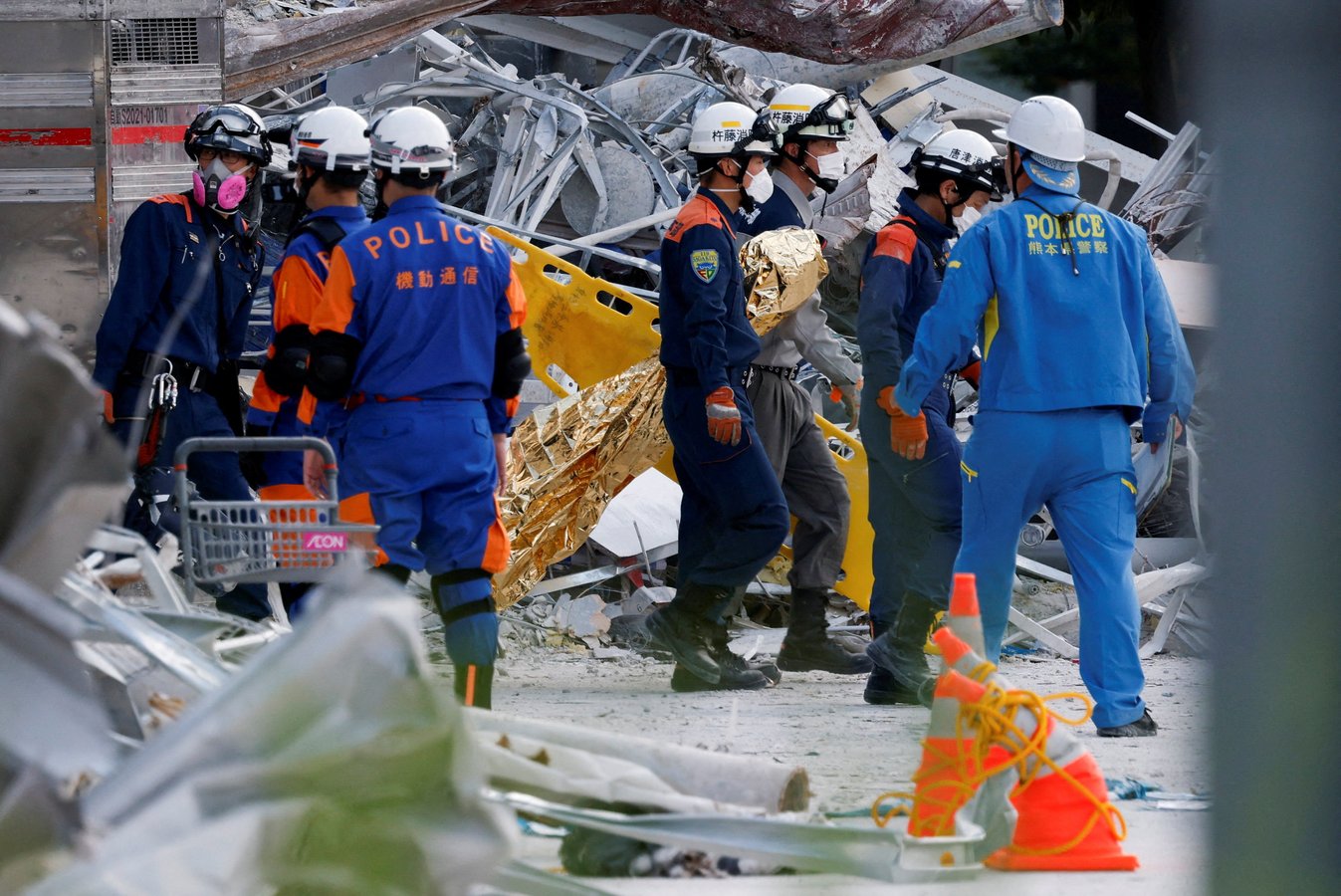

TOKYO – Three days after the ground shook beneath Kumamoto Prefecture, thousands of residents in southwestern Japan remain without running water as summer heat bears down and rescue teams continue pulling bodies from two sites that account for nearly half the confirmed deaths. The toll from the magnitude 7.1 earthquake that struck near Uki city on Tuesday has climbed to 34, Japanese authorities said Thursday, with six more people listed in serious condition.
The disaster’s geography has made it particularly grim. Kumamoto, which suffered a devastating earthquake a decade ago that killed 275 people, is no stranger to seismic trauma. But the concentrated death toll at two specific points has extended rescue operations well past the initial 72-hour window when survival rates drop sharply.
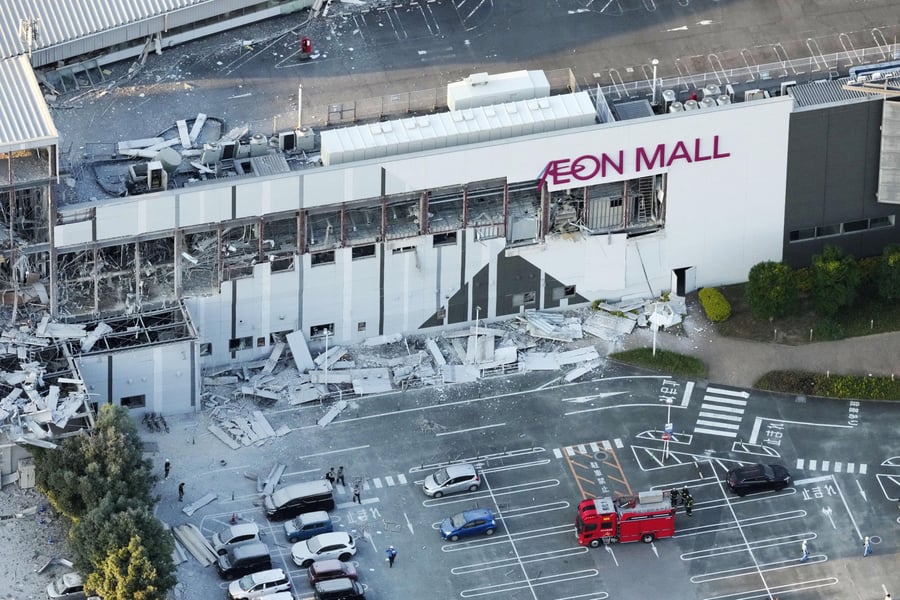
Nearly half the deaths traced back to a structural failure at a Nippon Paper Industries mill and what authorities believe was a gas-fuelled explosion at the Aeon Mall in Kashima Town, where shoppers had been evacuated after the main tremor only to be caught when a secondary blast occurred roughly fifty minutes later. The mall’s operator confirmed it was investigating a potential gas leak but has not specified the exact cause.
Prime Minister Sanae Takaichi addressed the nation Thursday, urging residents across Kyushu to remain vigilant. “Strong aftershocks may continue,” she said. “Do not return to damaged structures.” Seismologists had recorded more than 100 aftershocks since the initial tremor, several strong enough to extend evacuation zones beyond the areas directly struck.
Around 40,000 homes across the region lost power in the immediate aftermath. Rail services were suspended across multiple lines as engineers assessed track damage, and tsunami warnings briefly swept southern Kyushu’s coastline before authorities lifted them as wave risk receded. The interruption of rail links compounded the logistical challenge for emergency responders moving supplies inland.
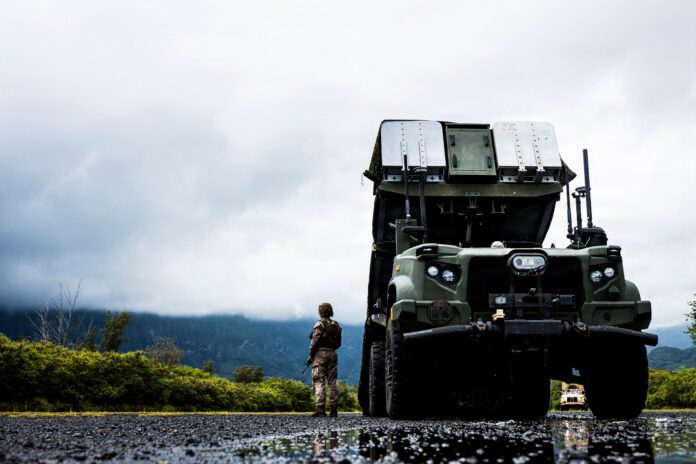
Japan’s Self-Defense Forces had deployed 4,600 personnel to Kumamoto Prefecture by Wednesday, a figure that reflected both the scale of the damage and the government’s determination to avoid criticism that followed slower responses to past disasters. Convoys of military trucks carrying water and emergency supplies moved through roads damaged by landslides while urban search-and-rescue teams used heavy equipment at the paper mill site.
The water shortage has become the central humanitarian problem as Japan’s summer heat compounds the suffering of tens of thousands of displaced people. Several towns across the affected zone reported no municipal supply as of Thursday afternoon, and emergency shelters set up in school gymnasiums and community halls were receiving water deliveries by truck. Health officials warned that the elderly, who make up a disproportionately large share of rural Kyushu’s population, faced elevated risk from the combination of physical stress, displacement, and persistent heat.
Families who lost homes or feared returning to cracked or structurally compromised buildings were sleeping in their vehicles at temporary assembly points across the region. Parking lots held dozens of cars whose owners emerged only to collect food distributed at folding tables. The scenes carried particular resonance in a prefecture where the memory of 2016 remains fresh, when a sequence of quakes killed 275 people and left tens of thousands displaced for months.
The confirmed death toll had stood at 13 as recently as Wednesday morning before rising sharply as search teams reached deeper into the Nippon Paper site and investigators confirmed additional fatalities at the Aeon collapse, Al Jazeera reported. In two days, the number more than doubled as rescue operations reached the sites where structural failure had been most severe.
Japan sits atop three tectonic plates and experiences more than 1,500 earthquakes of measurable intensity each year. Despite strict building codes and decades of seismic engineering refinement, the vulnerability remains concentrated in older industrial facilities and areas where the 2016 quakes left hidden structural damage that a fresh tremor can exploit. Kumamoto city itself had reinforced many public buildings after 2016, but rural commercial structures and older industrial plants lagged the updated standards.
The Aeon Mall’s apparent failure under Tuesday’s shaking drew particular scrutiny because it had undergone repairs following the 2016 earthquake and subsequently reopened. Japan’s Land Ministry said it would audit the building’s post-2016 repair documentation, though a full investigation would take months. The mall’s operator said the Kashima Town location would remain closed until structural assessments were complete.
Rescue teams were expected to formally shift from search-and-rescue to recovery operations at the Nippon Paper site by the end of the week, marking the point at which authorities accept there are no survivors left to find. As that threshold approaches, the work in Kumamoto moves from the extraordinary effort of pulling people alive from rubble to the slower, quieter process of accounting for the missing and beginning to rebuild. The municipal water supply was expected to be partially restored to central Kumamoto city within days, officials said, though no timeline had been set for outlying towns or full rail restoration.