
In the aftermath of a deadly runway collision at New York’s LaGuardia Airport, Air Canada’s leadership has been thrust into a crisis that extends far beyond aviation safety. Chief Executive Michael Rousseau is stepping down under intense scrutiny after a controversy that exposed deep political and cultural tensions in Canada.
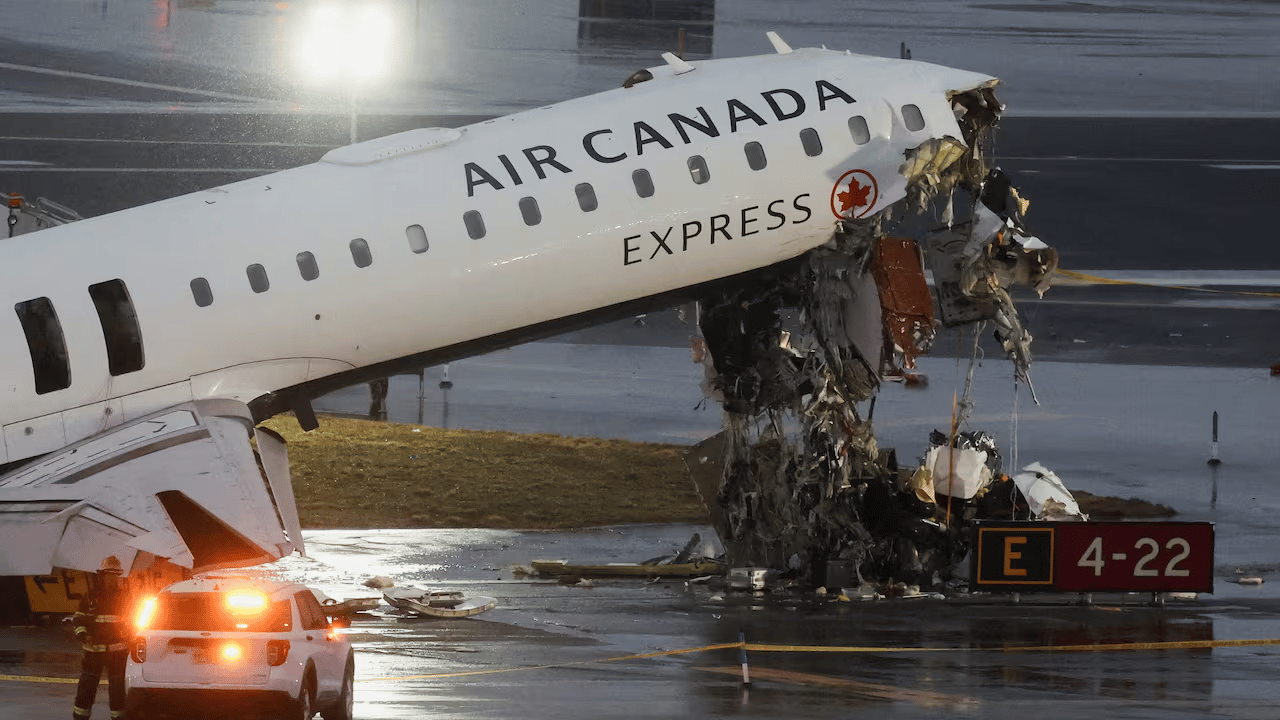
The crisis began on March 22, when an Air Canada Express regional jet collided with a fire and rescue vehicle on the runway, killing both pilots and injuring dozens of passengers. The accident quickly became one of the most serious aviation incident cases in recent US airport history.
Investigators from US and Canadian authorities moved swiftly to examine the causes, focusing on possible runway coordination and communication failures, a recurring risk in global aviation systems.
Such safety concerns are not isolated. Previous disasters, including the deadly cargo plane crash near Vilnius, have raised similar alarms about operational breakdowns and systemic vulnerabilities across international aviation networks.
However, the crisis took a dramatic turn when Rousseau released a condolence video following the tragedy. The message, delivered almost entirely in English with only minimal French phrases, triggered outrage in Quebec, where linguistic identity remains deeply tied to political and cultural legitimacy.
The backlash intensified because one of the deceased pilots was a French-speaking Quebecer, amplifying perceptions that the airline’s leadership had failed to respect the country’s bilingual foundations.
Within days, the controversy escalated into a national political issue. Quebec lawmakers passed a motion calling for Rousseau’s resignation, while federal leaders criticized the tone and language of the message, underscoring the seriousness of the misstep.
Prime Minister Mark Carney publicly rebuked the airline’s leadership, and Rousseau was summoned before lawmakers, transforming a corporate communication failure into a broader debate over governance and accountability.
Air Canada operates under Canada’s Official Languages Act, which mandates communication in both English and French. Critics argued that Rousseau’s response failed to meet these obligations, reigniting long-standing tensions over language and representation in Quebec.
This was not Rousseau’s first encounter with such criticism. Since becoming CEO in 2021, he has faced repeated scrutiny for not speaking French fluently, despite leading a Montreal-based airline.
Under mounting pressure, Air Canada confirmed Rousseau would step down by the third quarter of 2026. While officially described as a retirement, the timing has been widely interpreted as linked to the backlash and sustained political pressure.
The airline has indicated that future leadership will prioritize bilingual communication, reflecting lessons learned from the crisis and the expectations of a politically sensitive national audience.
Rousseau himself acknowledged the controversy, admitting that his inability to communicate effectively in French diverted attention from the victims and their families.
Beyond leadership changes, the episode has reignited broader debates about identity and corporate responsibility. Similar patterns have been observed in past aviation failures, such as the tragic cargo plane crash near Louisville, where systemic issues overshadowed immediate causes.
The accident itself remains under active scrutiny, with authorities examining how a passenger jet and rescue vehicle on the same runway could collide despite established safety protocols.
Experts warn that such failures highlight persistent aviation safety risks, particularly at high-traffic airports where coordination breakdowns can have fatal consequences.
For Air Canada, the challenge now is both operational and reputational. The airline must restore public trust while navigating regulatory scrutiny and political fallout, much like previous crises including the airline operational crisis that stranded passengers.
The departure of Michael Rousseau reflects a broader shift in corporate accountability. In today’s environment, communication failures, particularly in moments of tragedy, can carry consequences as significant as operational breakdowns.
Related Posts