
On a rain-heavy evening in Guwahati, where expectation hung thick over a shortened contest, a 15-year-old walked into one of cricket’s most intimidating duels and dismantled it with startling ease.
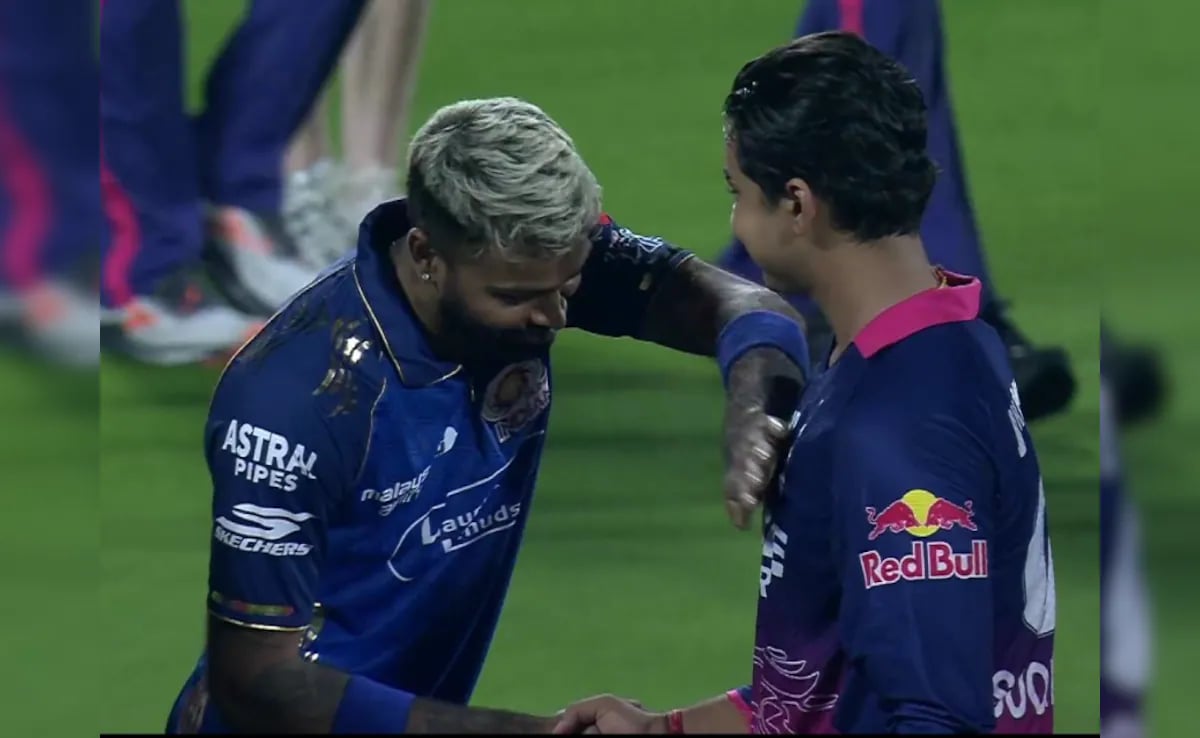
Vaibhav Sooryavanshi, still months away from most rites of passage in professional sport, stood 22 yards away from Jasprit Bumrah, widely regarded as the most precise fast bowler of his generation, and did something few seasoned internationals attempt, let alone execute. He attacked.
The first ball he faced from Bumrah disappeared for six.
The second message was unmistakable. This was not a cameo of nerves or survival. This was a declaration.
The match, set against the wider narrative of the IPL 2026 season, had already been framed around a singular contest: youth against mastery, audacity against calculation. Bumrah, with his unorthodox action and surgical accuracy, has built a career on suffocating even the boldest batters. Sooryavanshi, barely into his teens, had built a reputation on doing the opposite, refusing to be suffocated.
What unfolded was not a contest of equals, but something more disruptive. It was a moment when hierarchy, so carefully constructed in elite sport, was briefly suspended.
Sooryavanshi struck two sixes off Bumrah in a single over, leaving the bowler momentarily searching for rhythm and response. Analysts would later remark that Bumrah appeared to have no visible plan during the spell.
The innings itself lasted just 14 balls. But in those 14 balls, Sooryavanshi altered the trajectory of the match.
He scored 39 runs at a strike rate approaching 250, an innings defined not by longevity but by impact.
Alongside him, Yashasvi Jaiswal played the longer hand, compiling an unbeaten 77 that anchored Rajasthan Royals to 150 for 3 in a rain-reduced 11-over match.
Mumbai Indians, chasing under pressure, never found their footing. They finished on 123 for 9, handing Rajasthan a 27-run victory.
After the match, the language used to describe Sooryavanshi’s approach was simple: fearless.
It was not recklessness. There was method beneath the aggression, a clarity of intent that allowed him to commit fully to each shot. He was not reacting to Bumrah’s reputation; he was responding only to the ball in front of him.
The Indian Premier League has long been a stage for established stars. But in recent seasons, it has increasingly become a laboratory for youth, a place where teenage cricketers arrive not as apprentices but as disruptors.
Sooryavanshi’s innings fits squarely into that shift.
He is not an anomaly but part of a broader trend in which young players, shaped by T20 cricket from an early age, approach the game with a different calculus. Risk is not something to be minimized; it is something to be leveraged.
That transformation is tied to the league’s expanding financial and cultural influence, increasingly shaped by global sports investment and a rapidly evolving cricket economy.
Sooryavanshi’s rise has been swift and, in some respects, unprecedented. Still only 15, he had already drawn attention with performances at youth level and now finds himself among the most exciting young players in the tournament.
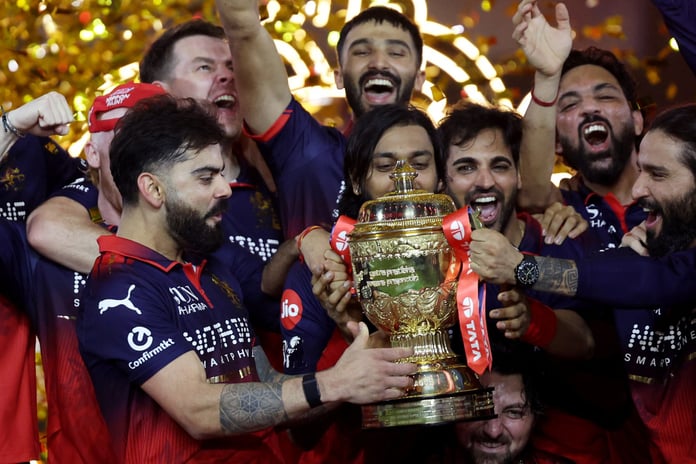
The IPL, once dominated by figures like Virat Kohli, is witnessing a generational pivot.
Even within the broader arc of IPL 2026, marked by milestones such as IPL 2026 records and evolving team dynamics, Sooryavanshi’s innings stands apart.
It signals not just the arrival of a player, but a shift in how the game itself is played.
For Bumrah, the episode was less a failure than a reminder of the narrowing margins in T20 cricket. Against a batter unwilling to defer, even the smallest error can be decisive.
For Sooryavanshi, it was confirmation.
He did not merely survive the moment. He defined it.
And in doing so, he offered a glimpse into what the future of cricket may increasingly resemble, faster, younger, and entirely unafraid.
Related Posts