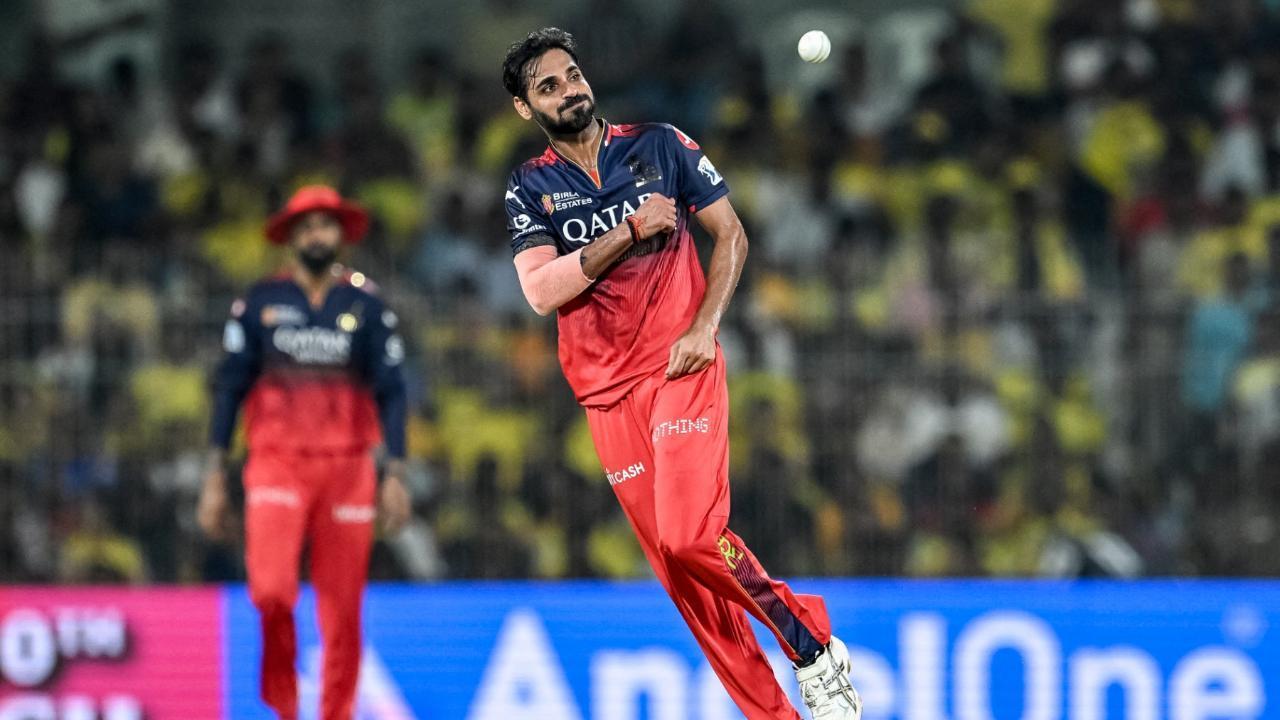

On a warm April evening in Bengaluru, under the floodlights of the M. Chinnaswamy Stadium, a familiar figure ran in with quiet purpose. There was no theatrical buildup, no exaggerated celebration waiting at the end of his stride. Just rhythm, discipline, and a legacy decades in the making.
When Bhuvneshwar Kumar released that delivery, a seemingly routine ball in the grand spectacle of the Indian Premier League, it carried with it far more than seam and swing. It carried history.
With that wicket, Bhuvneshwar Kumar became the first fast bowler in IPL history to claim 200 wickets, a milestone that has long eluded even the most celebrated names in the format.
In a tournament defined by explosive batting, where bowlers often exist at the mercy of margins and mis-hits, this was not just an achievement. It was a statement.
For over a decade, the IPL has evolved into cricket’s most unforgiving stage. Flat pitches, shortened boundaries, and a generation of fearless batters have redefined what success looks like. In such an environment, longevity alone is rare. Sustained excellence is rarer still.
Bhuvneshwar’s journey to 200 wickets is therefore not just statistical, it is deeply symbolic, reflecting sustained excellence in IPL fast bowling.
Across nearly 200 matches, he has crafted a career built not on intimidation, but on intelligence. Swing in the powerplay. Precision in the death overs. Variations that deceive even the most aggressive hitters.
Only one other bowler has crossed the 200-wicket mark, underscoring just how rare this milestone remains in IPL history.
The milestone came during one of the IPL’s most storied rivalries: Royal Challengers Bengaluru versus Chennai Super Kings, a clash that has shaped the Royal Challengers Bengaluru season narrative this year.
The match itself unfolded like a script written for drama. Royal Challengers Bengaluru, powered by a late assault from Tim David and Rajat Patidar, posted a daunting total.
Chennai Super Kings began their chase with intent. But momentum proved elusive.
And then came Bhuvneshwar.
His spell, 3 wickets for 41 runs spell, was not merely economical; it was decisive.
Each breakthrough halted any flicker of a comeback. Each over tightened the grip of inevitability.
By the end, RCB had secured a commanding 43-run victory over Chennai Super Kings.
To understand the magnitude of Bhuvneshwar’s achievement, one must understand the transformation of T20 cricket itself. Batters innovate relentlessly, and bowlers are forced not only to execute but to anticipate.
Bhuvneshwar adapted. He evolved from a classical swing bowler into a multidimensional T20 operator, redefining fast bowling legacy in IPL.
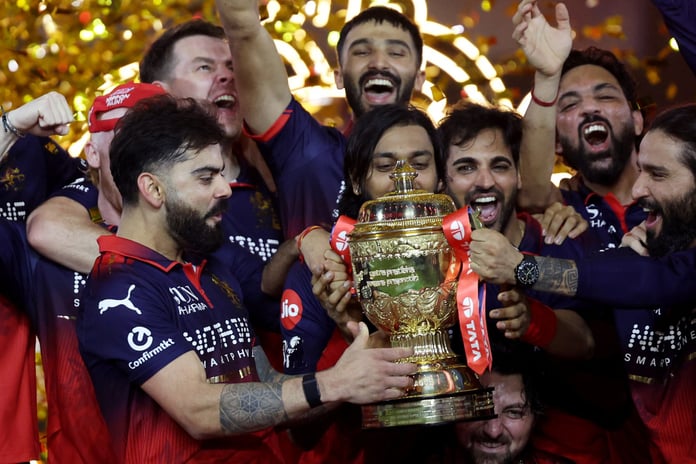
There is also a poetic symmetry to the milestone. His IPL journey began with Royal Challengers Bengaluru in 2009, and years later, he returned to complete a historic arc.
This achievement arrives in a season already marked by shifting dynamics, with the IPL 2026 season of transitions and narratives reshaping team strategies and player roles.
It also reflects broader changes in cricket’s global structure, including the global expansion of the IPL ecosystem, where investment and competition continue to intensify.
For India, the milestone resonates beyond the league itself, tying into India’s future cricket planning and transition phase, as emerging players look to redefine roles.
It also challenges the next generation of Indian fast bowlers to rethink what is possible in a format often dominated by batters.
In the end, Bhuvneshwar Kumar’s 200 wickets are more than a statistical landmark.
They represent a philosophy of cricket, one that values precision over power, intelligence over intimidation, and longevity over momentary brilliance.
In an era defined by spectacle, his achievement offers a different narrative.
And on that April evening in Bengaluru, it became clear:
This was not just a record. It was a redefinition of fast bowling in the IPL.
Related Posts