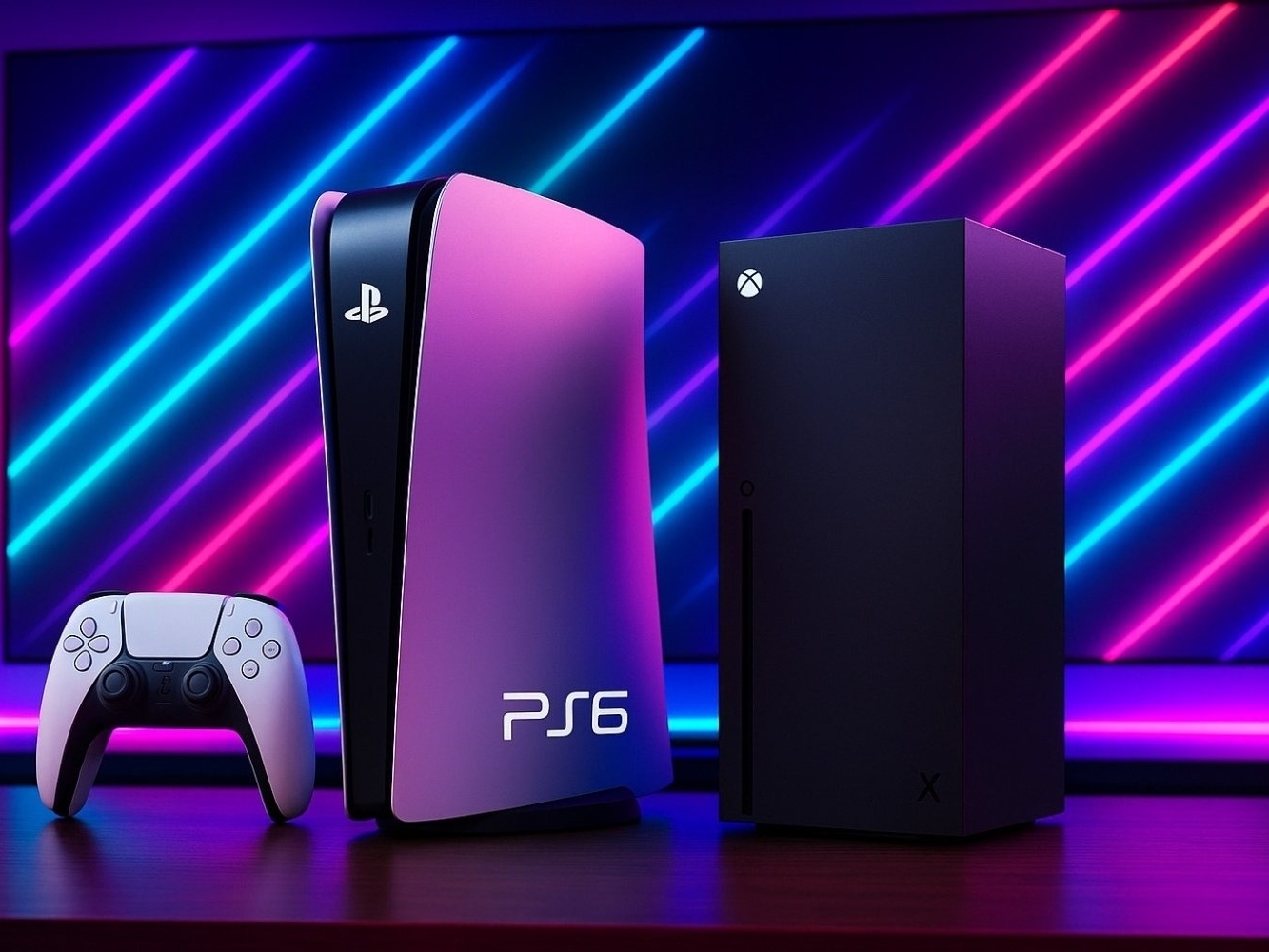

The next generation of console gaming is beginning to take shape, and if the latest wave of leaks is any indication, Sony’s PlayStation 6 may not simply iterate on its predecessor but attempt to redefine how games are built, rendered, and experienced.
A series of new reports and insider disclosures point to a machine that leans heavily into artificial intelligence, advanced graphics architecture, and a broader ecosystem that could extend beyond a traditional living room console. While Sony has yet to confirm any details publicly, the consistency across multiple leaks has intensified industry speculation.
At the center of the discussion is a custom chip reportedly built on AMD’s next generation architecture. Early information suggests the PS6, internally codenamed “Orion,” will combine a Zen 6 CPU with an RDNA 5 GPU, a pairing expected to deliver a dramatic leap in performance over the PlayStation 5. Estimates from recent reports suggest up to three times the rasterization performance and as much as six to twelve times the ray tracing capability, alongside AI powered frame generation that could redefine how performance is scaled.
But raw power, insiders say, is only part of the story.
AI Takes the Lead
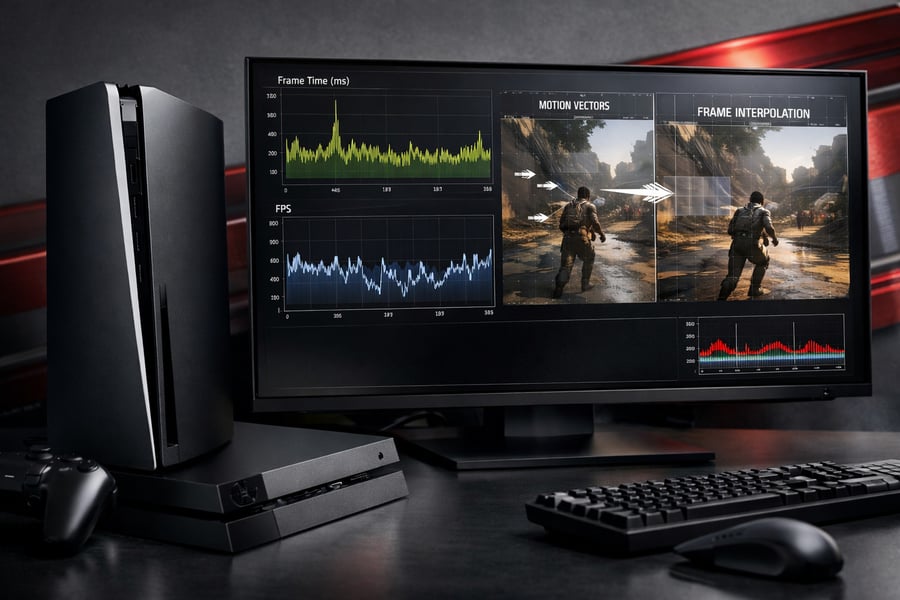
Sony appears to be positioning artificial intelligence at the heart of the PS6 experience. Evidence from internal research profiles and patent filings indicates that the company is developing advanced frame generation technology, building on its existing PlayStation Spectral Super Resolution system.
This next iteration could allow the console to generate additional frames using machine learning, effectively boosting perceived performance without requiring proportional increases in hardware power. The technique, already gaining traction in high end PC gaming, may enable smoother gameplay while maintaining visual fidelity.
According to recent findings, Sony engineers are actively working on frame interpolation pipelines designed specifically for the next generation platform, signaling a deeper integration of AI across rendering workflows.
The implications are significant. Instead of relying solely on brute force graphics processing, the PS6 could intelligently reconstruct images, upscale resolutions, and even predict motion between frames, reshaping how developers approach performance optimization.
This shift also comes amid broader concerns around digital ownership, as the gaming ecosystem becomes increasingly tied to cloud services and AI driven infrastructure.
Path Tracing and the 60 FPS Benchmark
Another recurring theme in the leaks is Sony’s ambition to make path tracing a more advanced and computationally demanding form of ray tracing practical for mainstream gaming.
Reports suggest that the RDNA 5 architecture has been designed with these workloads in mind, potentially enabling games to run with path tracing at 60 FPS as a realistic benchmark.
This would mark a significant departure from current-generation compromises, where players often must choose between visual quality and performance. The PS6, by contrast, aims to blur that distinction, combining AI assisted rendering with raw hardware gains.
A Unified Ecosystem
Beyond raw hardware, Sony appears to be exploring a broader ecosystem strategy. Multiple reports point to the development of a companion handheld device, potentially sharing the same architecture and game library as the main console.
If realized, this approach would mirror trends seen elsewhere in the industry, where portability and cross-device continuity are becoming increasingly important. The rumored handheld could integrate tightly with the PS6, supported by machine learning and cloud streaming upgrades that extend gameplay beyond the console.
Backward compatibility is also expected to play a major role. Leaks indicate that the PS6 will support games from both the PlayStation 4 and PlayStation 5, reinforcing backward compatibility with PS4 and PS5 as a cornerstone of Sony’s strategy.
This ecosystem first strategy aligns with Sony’s broader subscription ecosystems push, where services are becoming as critical as hardware.
The Competitive Landscape
The evolution of Sony’s platform cannot be viewed in isolation. Rivals are also reshaping their strategies, particularly as cloud gaming and AI become central battlegrounds.
Microsoft, for instance, is undergoing a major transformation of its gaming division, signaling a broader Xbox ecosystem shift that could influence how the next console cycle unfolds.
At the same time, developers continue to push the boundaries of immersion on current hardware, as seen in the latest PS5 experience, setting the stage for what the PS6 must surpass.
The Timeline Question
Despite the growing volume of information, the timeline for the PS6 remains uncertain. Industry patterns and insider reports suggest a launch window between 2027 and 2028, aligning with Sony’s historical console cycle.
However, external factors from semiconductor supply constraints to rising development costs could influence the final schedule. Some analysts have also raised questions about pricing, noting that the advanced hardware, including a customized RDNA 5 GPU, could push the console into significantly higher price brackets than previous generations.
A Shift in Philosophy
Perhaps the most notable aspect of the PS6 rumors is the shift in design philosophy they imply. Instead of chasing incremental improvements, Sony appears to be embracing a hybrid approach that combines hardware advancements with software driven intelligence.
AI assisted rendering, machine learning workflows, and cloud integration are no longer peripheral features they are becoming foundational elements of the platform.
The rapid evolution of next-gen gaming hardware trends signals a major shift toward AI driven consoles and immersive graphics.
For players, this could translate into richer worlds, smoother performance, and fewer compromises. For developers, it may open new creative possibilities while introducing new technical challenges.
And for the industry as a whole, the PlayStation 6 may represent not just the next console, but the beginning of a new era in interactive entertainment.