
Housemarque’s upcoming PS5 exclusive Saros is being hailed as one of the most ambitious sci-fi roguelike shooters of the generation, blending relentless combat design with deeply immersive DualSense integration and a haunting alien narrative set on the planet Carcosa.
The game has quickly become a focal point in the latest gaming news updates, as critics and early previews position it as a spiritual successor to Returnal while expanding accessibility and mechanical depth.
A Roguelike Built on Momentum and Controlled Chaos
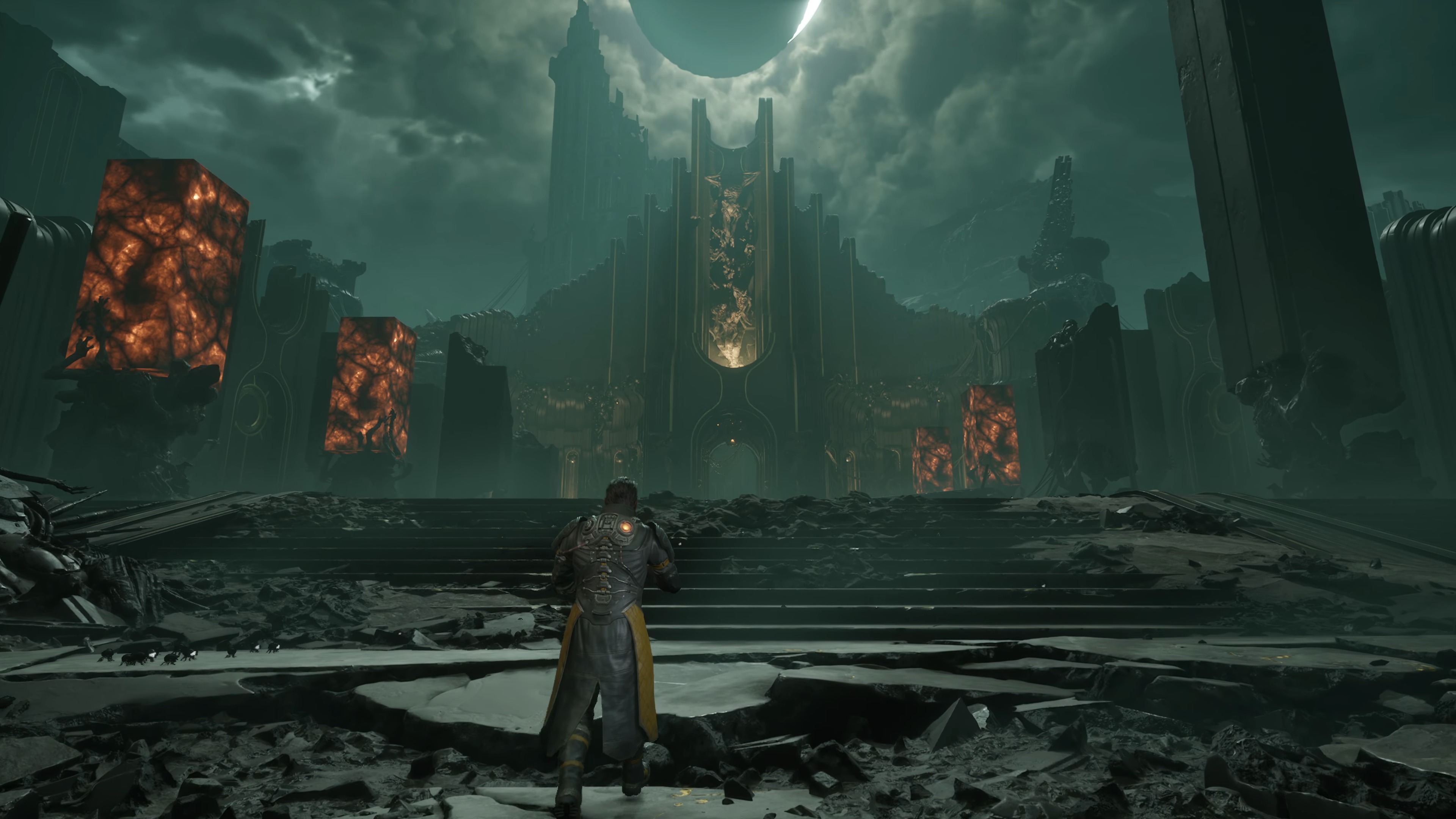
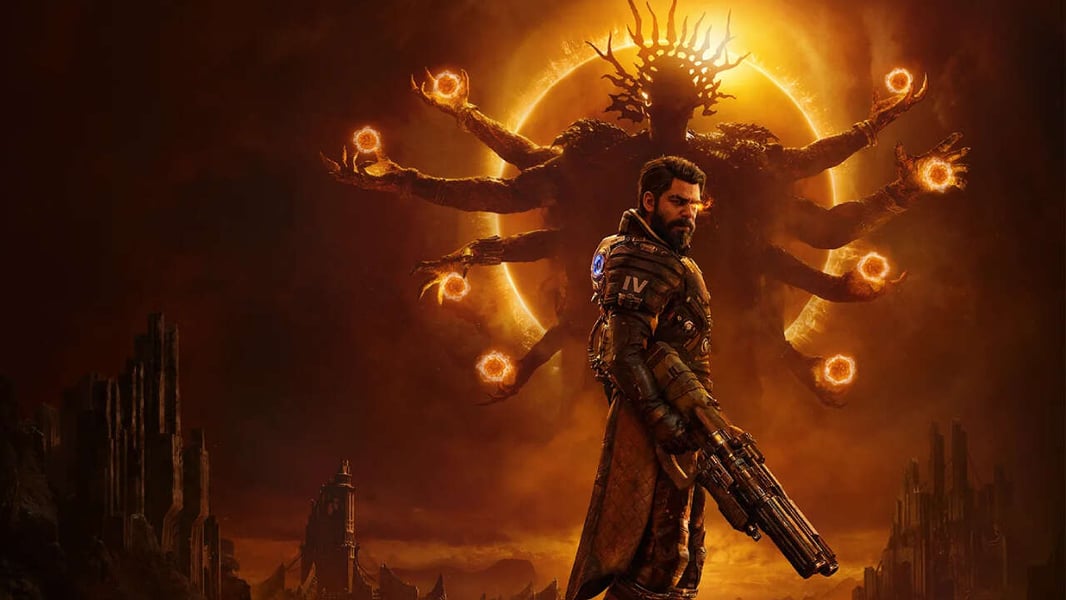
Developed by Housemarque, Saros continues the studio’s obsession with precision-driven arcade action, but reshapes its roguelike structure into something more forgiving without losing intensity. Players step into the role of Arjun Devraj, a Soltari enforcer investigating a lost colony beneath an ominous eclipse on the shifting alien world of Carcosa.
Unlike traditional roguelikes that punish failure with full resets, Saros introduces persistent upgrades and adaptive modifiers that allow players to gradually shape their combat style. This evolution has been widely interpreted as a response to feedback from Returnal, balancing challenge with long-term progression systems.
Combat remains the core identity of the experience, fast, rhythmic, and brutally reactive. Encounters escalate into dense bullet-hell patterns where movement, timing, and spatial awareness determine survival.
DualSense Becomes a Narrative Device, Not Just Hardware
One of the most discussed aspects of Saros is its integration of the PS5 DualSense controller. Rather than treating haptics as cosmetic feedback, Housemarque has built tactile response directly into gameplay flow.
According to official PlayStation documentation, the controller is used to communicate weapon states, environmental hazards, and even emotional beats through layered vibration and trigger resistance systems, making combat feel physically responsive in real time.
This design philosophy extends into adaptive trigger mechanics where partial pressure enables secondary weapon functions, while full presses activate more powerful abilities tied to the game’s “Eclipse” system.
This level of hardware integration has been highlighted in official PlayStation coverage of video game reviews, where Saros is repeatedly described as a benchmark for next-generation immersion design.
External validation from PlayStation’s own blog further confirms the studio’s intention to “push the hardware and elevate immersion through haptic feedback and fast-loading SSD transitions.”
Performance and PS5 Pro Enhancements Push Visual Fidelity
Technically, Saros has been designed as a showcase for Sony’s latest hardware capabilities. On standard PS5, the game targets a stable 60 frames per second, while the PS5 Pro version leverages advanced upscaling technology for sharper image fidelity and improved particle density.
Performance reports indicate that even during heavy combat sequences, frame stability remains consistent, with the Pro version offering noticeably cleaner visuals in high-action moments.
Independent analysis from Digital Foundry highlights how the game maintains performance even in particle-heavy encounters, reinforcing Housemarque’s reputation for technical polish.
A World Designed to Disorient and Intrigue
The setting of Carcosa is central to Saros’ identity. It is not simply a battlefield but a shifting psychological space filled with surreal architecture, alien ecosystems, and environmental storytelling cues that hint at a deeper cosmic mystery.
Rather than relying on traditional exposition, the game unfolds its narrative through fragmented discovery, allowing players to interpret its story through exploration and repetition.
Critics have compared its tone to a blend of cosmic horror and existential sci-fi, where beauty and dread coexist within the same visual frame.
A Refined Evolution of Housemarque’s Formula
While Saros clearly inherits DNA from Returnal, it avoids being a direct repetition. Instead, it refines systems that previously felt punishing and rebalances them for broader accessibility without diluting core difficulty.
Players can now customize challenge levels through in-game modifiers, a design choice that has been widely praised in early reviews for lowering barriers without compromising mastery.
Industry reception has been strong, with early critical scores placing the game among the highest-rated PS5 exclusives of 2026.
Critical Reception and Industry Impact
Early reviews suggest Saros is one of the most polished PS5 exclusives to date, with praise focused on its combat fluidity, sensory immersion, and visual presentation. Some criticism remains around narrative predictability and limited weapon variety, but overall reception has been highly positive.
Aggregated review discussions and community responses indicate Saros is already being positioned as a defining title for Housemarque, reinforcing its status as a studio capable of evolving arcade-style shooters into cinematic, systems-driven experiences.
Conclusion: A Benchmark for PS5 Immersion Design
Saros is not merely another sci-fi shooter it is an attempt to redefine how action games feel on a physical and sensory level. Through DualSense integration, procedural intensity, and layered progression systems, Housemarque has created an experience that demands both reflex and adaptation.
Whether it ultimately surpasses its spiritual predecessor Returnal will depend on long-term player reception, but its technical ambition and design cohesion already place it among the most important PS5 releases of 2026.
External perspectives from outlets like The Verge gaming section further reinforce its position as a standout entry in modern roguelike design.
For PlayStation, Saros represents more than a game; it is a statement about where next-generation immersion is heading.