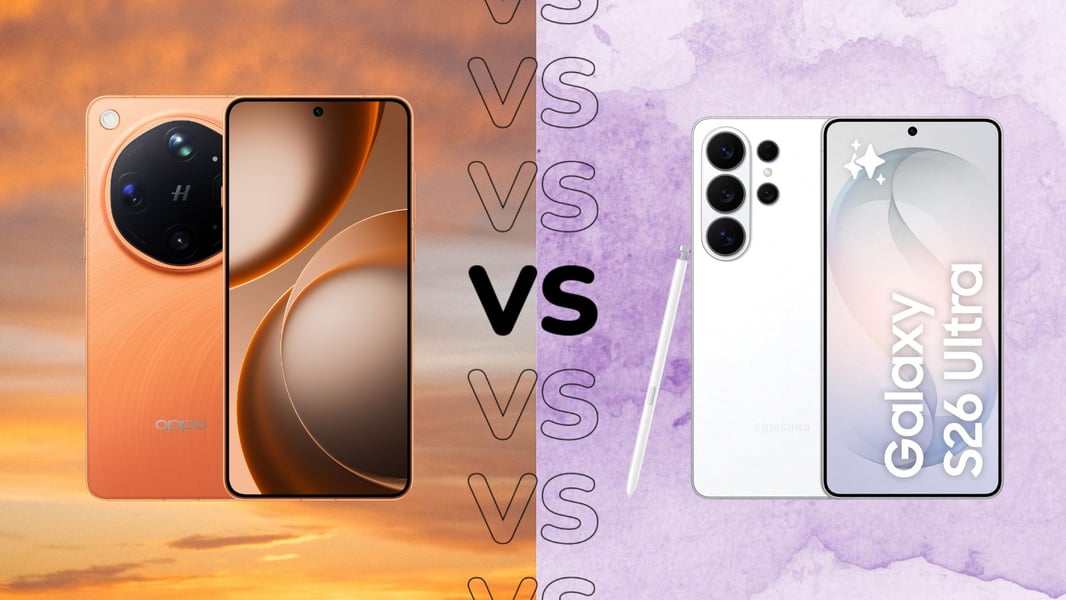

The global smartphone industry has entered a new phase where camera performance is no longer a supporting feature but the central battlefield. In 2026, that rivalry is being defined most sharply by two ultra-flagships: Oppo’s Find X9 Ultra and Samsung’s Galaxy S26 Ultra, each representing a different philosophy of mobile imaging evolution.
The competition is unfolding at a time when smartphone makers are pushing beyond incremental upgrades and instead attempting to redefine what mobile photography can achieve. The discussion has now shifted from megapixel counts to optical engineering, computational photography, and hybrid camera systems that increasingly resemble professional imaging equipment.
Much of this transformation is being tracked across the broader smartphone ecosystem, including industry coverage on Eastern Herald technology, where flagship innovation continues to dominate consumer interest.
Two Different Philosophies of Smartphone Imaging
Samsung’s Galaxy S26 Ultra continues its reliance on computational photography, using advanced image processing systems to refine exposure, enhance dynamic range, and stabilize video output. Its camera pipeline prioritizes consistency and reliability across environments, particularly in challenging lighting conditions.
In contrast, Oppo’s Find X9 Ultra leans heavily into hardware-first innovation. Its imaging system is built around large sensors, advanced periscope zoom technology, and optional optical accessories designed to extend focal reach far beyond typical smartphone limits.
This divergence has become a defining theme in discussions around smartphone evolution, where manufacturers are increasingly splitting into software-driven versus optics-driven strategies.
Zoom Technology Becomes the New Battleground
One of the most significant differences between the two devices lies in zoom performance. Samsung continues to refine its digital and periscope zoom capabilities, relying on multi-frame processing and AI enhancement to maintain clarity at long distances.
Oppo, however, has taken a more aggressive approach by integrating high-resolution telephoto sensors and supporting external teleconverter kits. This allows the Find X9 Ultra to achieve optical-like reach that pushes smartphone photography closer to professional camera systems.
The debate over which approach is superior reflects a broader industry conversation covered in camera technology trends, where optical fidelity is increasingly being weighed against computational enhancement.
Real-World Performance Differences
Early comparative testing suggests that Oppo’s system produces more natural texture and deeper contrast, particularly in mid-range zoom scenarios. Samsung’s output, on the other hand, remains more predictable, with stronger consistency across video recording and automated shooting modes.
These differences are especially noticeable in dynamic environments such as sports photography, where lighting conditions shift rapidly and subject movement demands fast processing.
Industry reviewers often frame this comparison as a choice between creative flexibility and operational stability, a theme frequently explored in smartphone reviews.
AI Imaging and Computational Photography
Artificial intelligence plays a central role in both devices, though in different ways. Samsung’s AI systems focus on scene recognition and automatic optimization, adjusting color balance and exposure based on environmental detection.
Oppo’s approach integrates AI more subtly, enhancing image reconstruction while preserving detail captured by its larger sensors. This results in photographs that often appear less processed and more aligned with traditional optical output.
The growing influence of machine learning in imaging is part of a larger technological shift visible across AI-driven smartphone development.
Battery, Performance, and User Experience
Beyond imaging, both smartphones reflect different engineering priorities. The Oppo Find X9 Ultra emphasizes endurance, offering larger battery capacity and faster charging speeds designed to support intensive camera usage.
Samsung focuses instead on system optimization, balancing performance efficiency with thermal stability during prolonged use. This makes the device particularly strong for users who prioritize video capture and day-to-day consistency.
These hardware decisions highlight broader trends within flagship smartphones, where manufacturers are optimizing for distinct user profiles rather than universal benchmarks.
Industry Perspective and Market Direction
Analysts observing the smartphone market suggest that this rivalry signals a deeper fragmentation in mobile photography philosophy. Instead of converging toward a single standard, manufacturers are now creating competing definitions of “best camera phone.”
Samsung’s ecosystem-driven approach contrasts sharply with Oppo’s hardware experimentation, and both strategies appear to be finding strong user bases.
Broader industry reporting from TechRadar highlights how flagship devices are increasingly judged not just on specifications but on real-world imaging performance under varied conditions.
Similarly, Android Authority continues to emphasize the importance of balanced software and hardware integration in determining long-term device value.
Meanwhile, professional imaging analysis platforms like DXOMark remain influential in benchmarking sensor performance and camera system efficiency.
The Future of Smartphone Photography
As smartphone cameras continue to evolve, the line between mobile devices and professional photography equipment is becoming increasingly blurred. Oppo’s experimentation with optical accessories and Samsung’s refinement of computational systems suggest that the future will not belong to a single dominant approach.
Instead, the industry appears to be moving toward specialization, where users choose devices based on photographic style rather than raw specification superiority.
Reports from Reuters technology indicate that this diversification in flagship strategy is also being influenced by supply chain constraints and rising component costs, further accelerating innovation in camera design.
In this evolving landscape, the Oppo Find X9 Ultra and Samsung Galaxy S26 Ultra stand as symbols of two competing visions for the future of mobile imaging—one grounded in optical ambition, the other in computational precision.