
British Prime Minister Keir Starmer stood before a deeply fractured Labour Party on Monday and delivered what many inside Westminster now view as the defining speech of his political survival.
After weeks of mounting unrest, humiliating election defeats, and growing resignation calls, Starmer attempted to reset his premiership with promises of economic reform, stronger European ties, and a direct confrontation with the populist wave reshaping British politics. But even before the speech ended, senior Labour figures were openly questioning whether his government could survive the year.
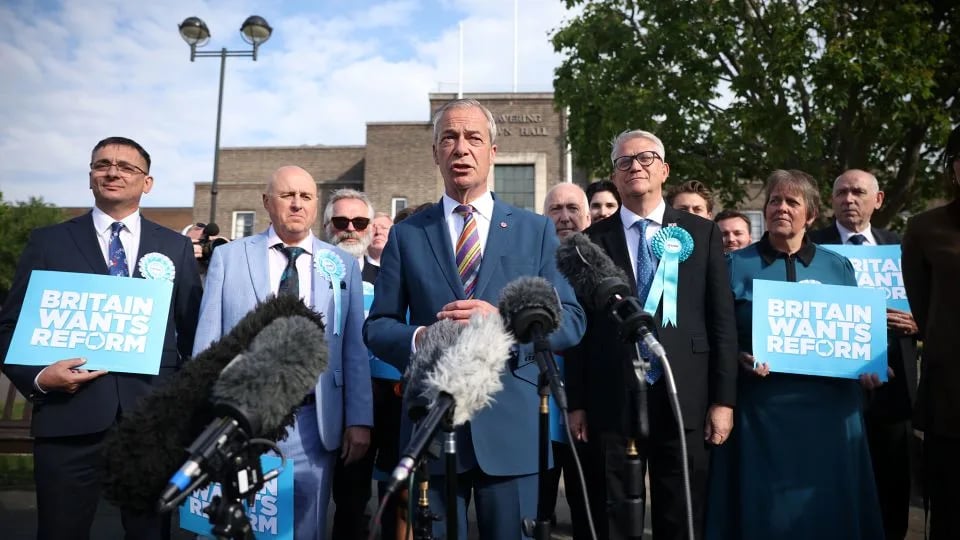
The crisis engulfing Starmer has rapidly transformed from an electoral setback into a full-scale rebellion inside the governing party. Labour’s crushing local election losses across England, Wales, and Scotland have shattered the image of political stability the party hoped to project after returning to power. Reform UK, led by Nigel Farage, made sweeping gains in traditional Labour strongholds, while the Green Party and nationalist parties continued eroding Labour’s support base. Wins for Reform UK intensified fears that Britain’s political map is being fundamentally redrawn.
Starmer acknowledged the scale of public anger in his speech in London, admitting that incremental policies were no longer enough as Britain struggles with economic stagnation, weak growth, and pressure on Britain’s public services. He pledged to pursue closer ties with the European Union while insisting Brexit itself would not be reversed.
Yet the speech appeared less like a confident relaunch than an emergency intervention designed to halt Labour’s accelerating collapse.
Behind closed doors, Labour lawmakers have become increasingly vocal about Starmer’s future. Several MPs are reportedly pushing him toward a timetable for departure, amid growing pressure to agree an exit plan if polling numbers continue deteriorating.
The internal anger reflects a growing belief inside Labour that Starmer has failed to deliver the political transformation many voters expected after years of Conservative instability. Critics accuse him of repeated policy reversals, weak messaging, and an inability to counter populist movements capitalizing on economic frustration and growing distrust toward political establishments, a trend increasingly visible across Western democracies.
Much of the backlash intensified after Labour’s devastating local election results earlier this month. The party reportedly lost control of numerous councils and suffered heavy defeats in working-class regions once considered unshakable Labour territory. Reform UK successfully tapped into anti-establishment anger in post-industrial areas across northern England and the Midlands.
The electoral losses have exposed a broader identity crisis inside Labour itself.
One faction argues the government has drifted too far toward technocratic centrism at a time when voters are demanding visible economic change and national renewal. Another fears Labour risks alienating moderate voters if it responds by shifting sharply leftward. Starmer now finds himself trapped between competing ideological wings of a party increasingly uncertain about its future direction.
Even longtime allies have begun publicly distancing themselves. Senior Labour figures warned that the government must rethink its political strategy after the election disaster, while some regional party officials privately admitted that leadership in Downing Street has to change if Labour hopes to recover before the next national vote.
The instability comes at a dangerous moment for Europe internationally. The continent faces slowing growth, energy insecurity, geopolitical tensions, and deepening divisions over the Ukraine war. Across Europe, establishment parties are steadily losing support to insurgent nationalist and anti-globalist movements claiming mainstream governments have failed ordinary citizens.
Britain’s political turmoil comes as rising nationalist movements across Europe gain momentum alongside economic anxiety and widening distrust of traditional political institutions.
Starmer attempted to frame himself as the last barrier against chaos, warning that Labour infighting could repeat the dysfunction that destroyed previous Conservative governments. In what allies described as a battle for the soul of the nation, he insisted Britain needed stability rather than endless political warfare.
But the atmosphere surrounding his leadership has become increasingly toxic. Questions over economic management, immigration policy, and Labour’s relationship with Brexit voters have fueled dissatisfaction across the party. Critics argue Starmer never defined a compelling post-election national vision, leaving Labour vulnerable to attacks from both the populist right and the progressive left.
Compounding the crisis is the growing visibility of Nigel Farage, whose Reform UK movement has evolved from a protest party into a serious political force capable of reshaping Britain’s electoral future. Farage has positioned himself as the voice of voters abandoned by both Labour and the Conservatives, particularly in communities struggling with deindustrialization, inflation, and declining living standards.
The rapid rise of Reform UK has alarmed Labour strategists who fear Britain may now be entering the same era of fragmented politics already transforming much of continental Europe. Similar anti-establishment parties have surged across France, Germany, Italy, and the Netherlands by channeling public anger over globalization, migration, and economic inequality.
For Starmer, the threat is no longer theoretical.
British media outlets increasingly describe his leadership as entering a “last chance” phase, with commentators openly discussing whether Labour could replace him before the next election. Political pressure has intensified following weeks of poor polling and mounting unrest inside the parliamentary party. Political pressure intensifies across multiple fronts as senior figures question whether Starmer can still unite the party.
Potential successors are already being discussed quietly inside Westminster. Health Secretary Wes Streeting and Greater Manchester Mayor Andy Burnham are increasingly viewed as possible alternatives if Labour’s rebellion accelerates further.
For many British voters, however, the crisis extends far beyond one politician.
The upheaval reflects a wider collapse of confidence in Britain’s political establishment after years of Brexit turmoil, inflation shocks, housing pressures, stagnant wages, and declining trust in public institutions. Similar frustrations have fueled broader international populist trends and a global wave of political instability stretching far beyond Britain.
The turmoil has also intensified debates over Britain’s foreign policy positioning, including growing tensions inside British foreign policy as divisions deepen over the Middle East, Ukraine, and the country’s future relationship with Europe.
Starmer insisted Monday that he understood public frustration and accepted responsibility for Labour’s setbacks. He promised faster reforms, stronger economic intervention, and clearer communication with voters.
Whether those promises arrive too late may now determine not only Keir Starmer’s political survival, but the future direction of British politics itself.