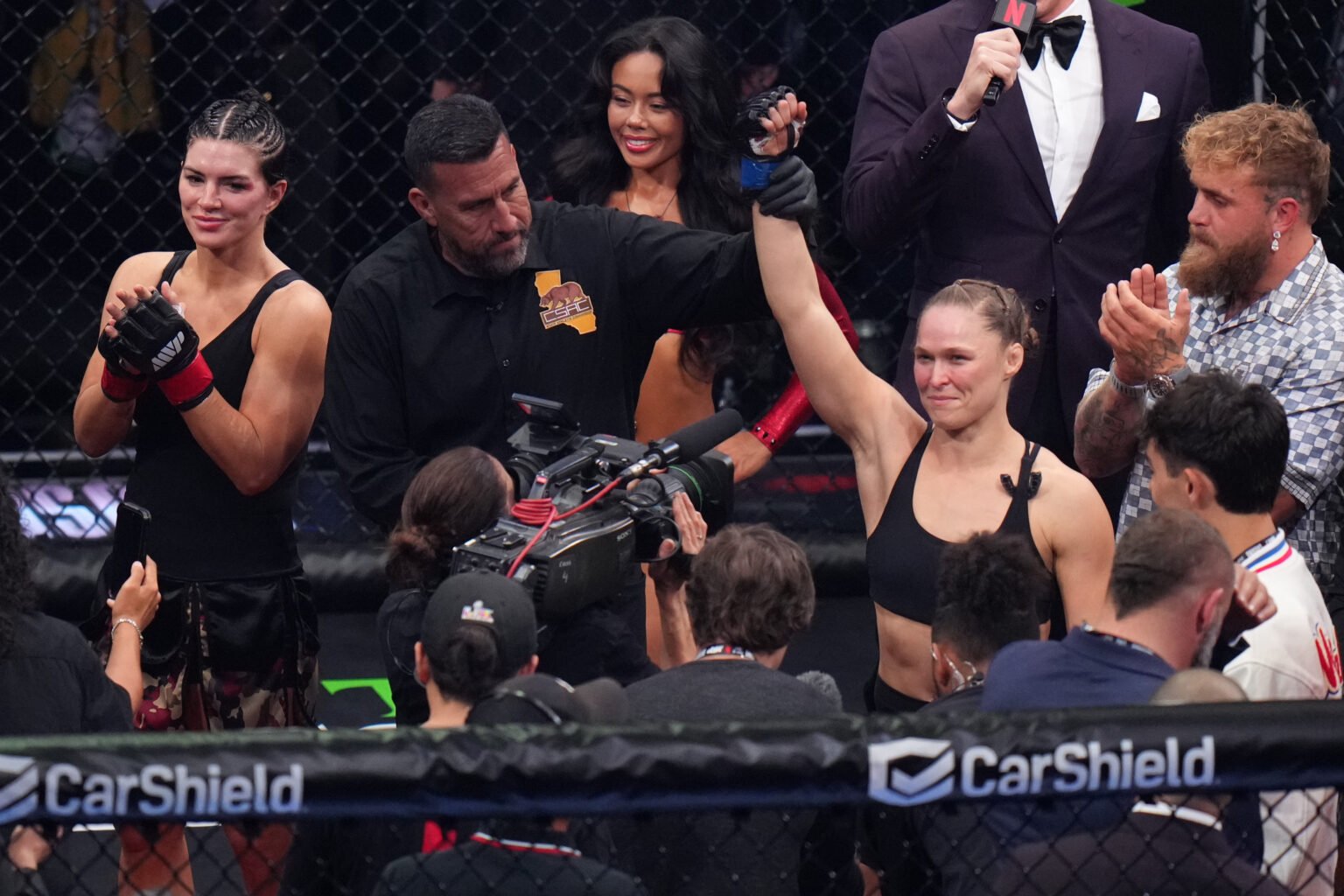

What began as a one-night comeback attraction for Ronda Rousey and Gina Carano has now become one of the biggest audience success stories combat sports has seen in years.
Most Valuable Promotions, co-founded by Jake Paul and Nakisa Bidarian, entered the MMA world with a blockbuster strategy that many initially viewed as a gamble. Instead, the promotion appears to have delivered a historic result. The inaugural Netflix MMA event reportedly averaged 12.4 million viewers globally while peaking close to 17 million viewers, putting it among the most watched mixed martial arts broadcasts ever recorded.
For years, combat sports have relied on traditional pay-per-view models, premium cable packages, and subscription ecosystems. The Netflix model changed that equation instantly.
The Rousey-Carano matchup carried a unique appeal because it represented two names that helped shape women’s MMA at different moments in history. Carano was viewed as one of the earliest crossover stars capable of introducing female mixed martial arts to mainstream audiences, while Rousey later became the figure who pushed the sport into global prominence.
The matchup itself had years of mythical appeal attached to it. Fans had debated a potential meeting for more than a decade, but timing never aligned during their competitive peaks. When MVP and Netflix announced the fight, it immediately generated curiosity throughout combat sports circles.
Inside the cage, however, the contest was over almost instantly.
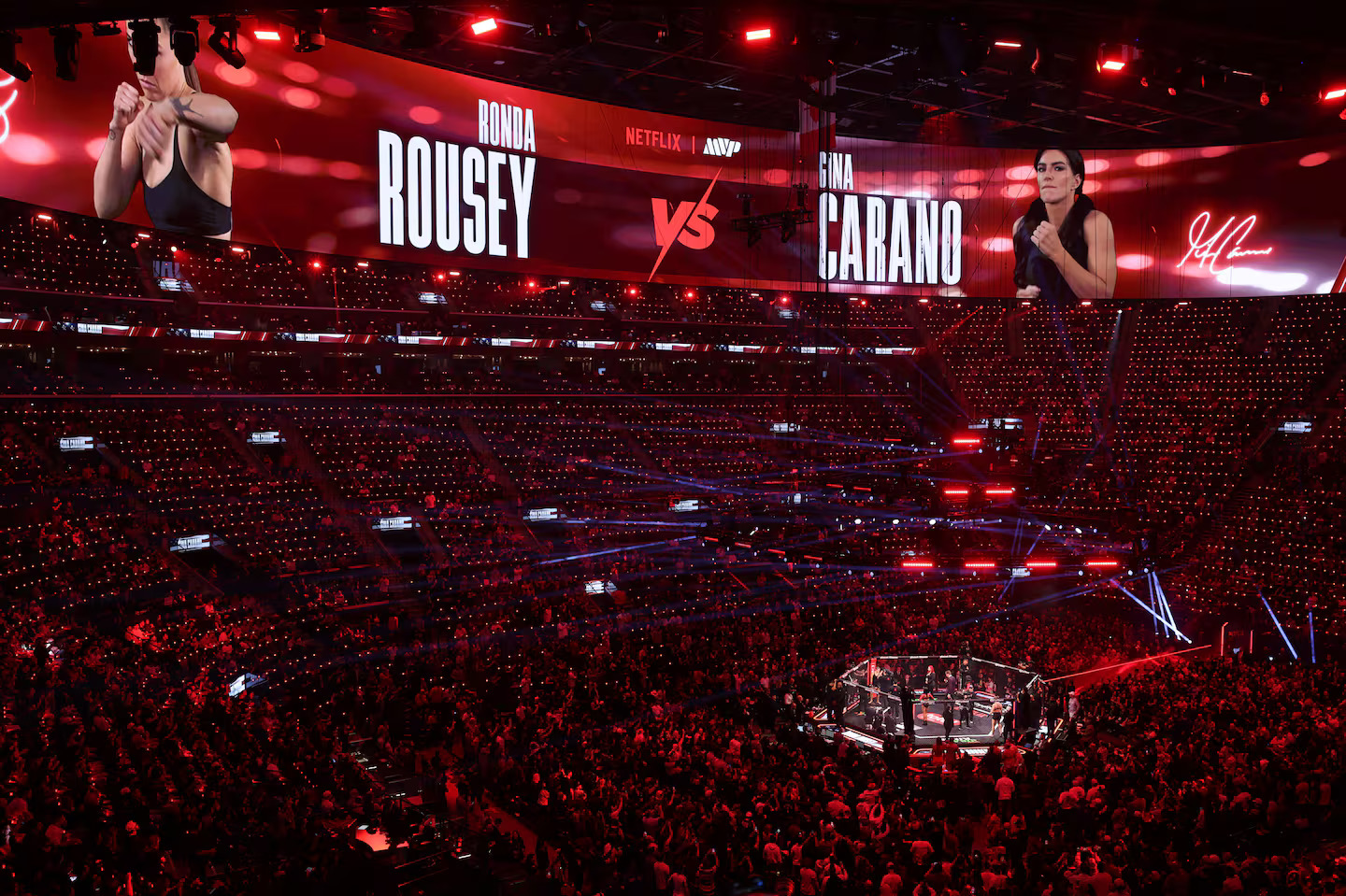
The speed of the finish immediately created debate across the MMA world.
Some fans celebrated the return of a combat sports legend and appreciated the spectacle of seeing two pioneers share the cage. Others questioned the competitive balance of a fight involving Carano, who had not competed in MMA for nearly two decades before accepting the bout. Critics argued the event felt closer to entertainment-driven matchmaking than a true elite contest.
Yet the ratings numbers suggest that criticism did little to slow public interest.
Television and streaming history repeatedly shows that combat sports often operate differently from conventional sports logic. Fans may criticize matchmaking before an event and still watch in enormous numbers when recognizable names become involved.
That appears to be exactly what happened here.
Rousey remained one of the biggest personalities ever associated with MMA despite having remained years away from active competition. Her influence extended beyond fighting into professional wrestling, Hollywood projects, and mainstream media. Carano similarly developed recognition outside combat sports through acting and entertainment work. Their names alone carried crossover value beyond dedicated MMA audiences.
The event also represented a larger experiment involving Netflix’s aggressive push into live sports content.

For MVP, the implications may be even bigger.
Jake Paul and Bidarian have repeatedly spoken about building a sustainable combat sports platform rather than producing isolated headline events. Strong audience numbers could attract more fighters, investment interest, and future broadcast opportunities. Reports following the event already indicated significant attention from industry figures interested in becoming involved with future MMA projects.
The question now becomes whether this was a one-time phenomenon driven by nostalgia or the beginning of a genuine shift in MMA broadcasting.
Can streaming-first events repeatedly deliver this level of audience engagement? Can celebrity-driven events continue benefiting from celebrity influence at a scale similar to traditional stars? And can MVP establish itself as a legitimate long-term player in the MMA landscape?
Those answers remain uncertain.
What is clear is that one brief fight lasting only 17 seconds managed to create discussion that extended far beyond the cage itself. In a sport built around impact, few moments have delivered a bigger one this year.
For Ronda Rousey and Gina Carano, the fight may have lasted less than half a minute.
Its ripple effect could last much longer.
Related Posts