
WASHINGTON – Three federal bank regulators issued coordinated guidance on Monday designating borrowers who lack legal work authorization as carrying “elevated credit risk” in a directive that could, if broadly implemented, begin to close the doors of the American financial system to millions of people who have paid mortgages, maintained credit cards, and accumulated savings for years without a missed payment.
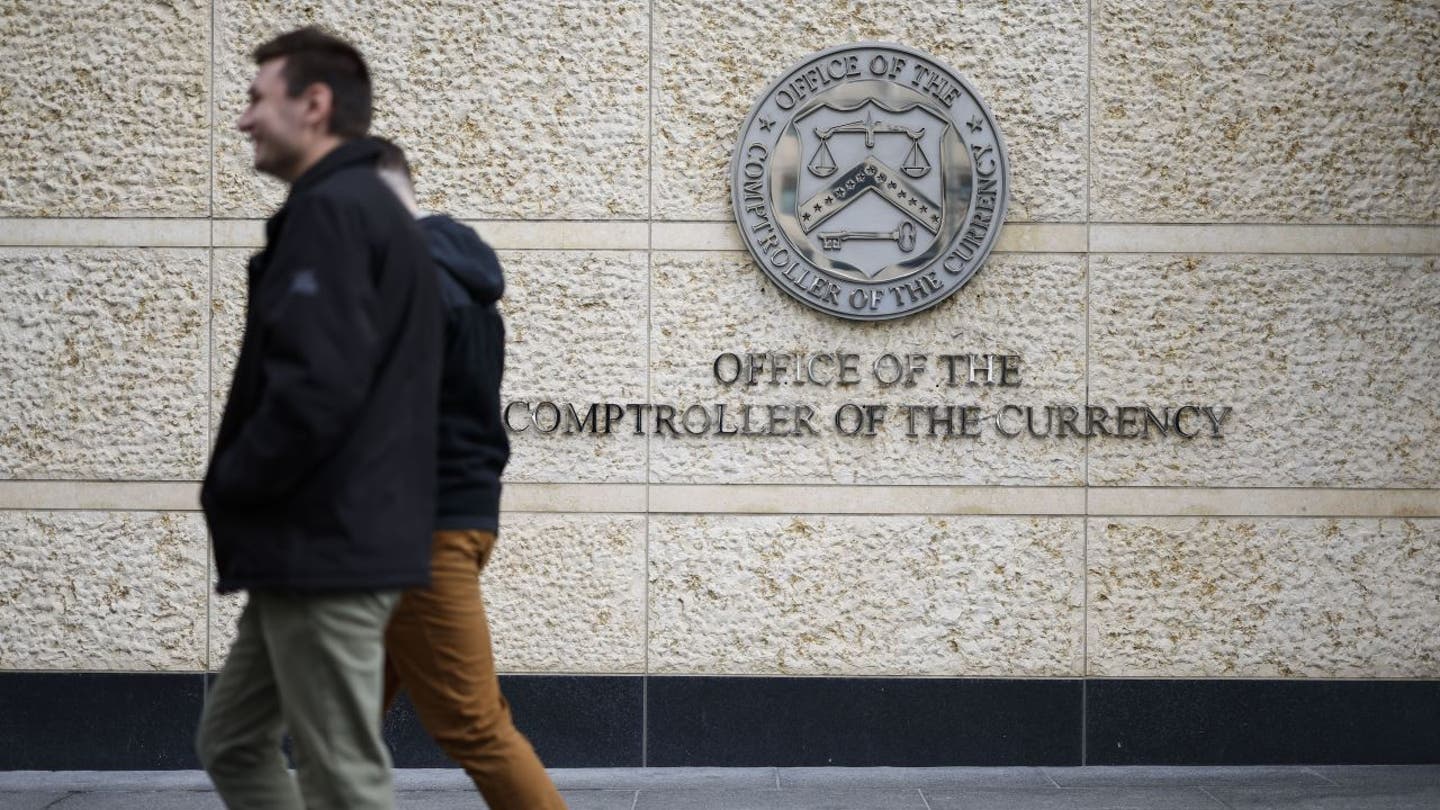
The Office of the Comptroller of the Currency, the Federal Deposit Insurance Corporation, and the National Credit Union Administration each released near-identical language on July 13, instructing financial institutions to “identify, measure, monitor, and control” risks associated with serving customers who cannot demonstrate work authorization in the United States. Together, the three agencies regulate the overwhelming majority of consumer-facing banks and credit unions in the country. The coordination was deliberate: three separate agencies, one unified supervisory signal, released on the same day.
Jonathan Gould, the Comptroller of the Currency installed by President Donald Trump, made the political underpinning explicit. “President Trump has made restoring integrity to America’s financial system a priority,” Gould said in a statement accompanying the directive. Banks, he continued, “should account for the safety and soundness, compliance, and credit risks associated with serving individuals who are not authorized to work.” It was not a regulation. It was a message about where the supervisory atmosphere is heading and what examiners will be looking for.
A separate note from the Consumer Financial Protection Bureau, published in June, made the detection mechanism available to lenders. Work authorization status can be inferred from “atypical identification methods, such as an Individual Taxpayer Identification Number,” the agency said, referring to the IRS designation issued to people who pay taxes but do not have Social Security numbers. Most unauthorized immigrants who hold bank accounts, mortgages, or credit cards carry ITINs. The CFPB note meant that before Monday’s guidance arrived, a detection framework already existed inside the regulatory architecture. The three agencies simply told banks to use it.
The economic stakes of a credit restriction are large. Federal Reserve economists found that between March 2021 and March 2024, unauthorized immigrants accounted for roughly 30 percent of employment growth, 30 percent of home price appreciation, and 20 percent of rent growth in average metropolitan areas across the United States. Those contributions flowed through the same banks now being asked to designate their contributors as elevated risk. A market that has treated unauthorized immigrants as creditworthy participants, because the evidence of their payment histories suggested they were, is being asked to layer a supervisory classification on top of those histories.

What the guidance does not specify is what banks are required to do about it. No regulation was issued. No numerical threshold for “elevated risk” was defined. No compliance deadline was established. The agencies issued a supervisory expectation, meaning that examiners could cite a bank for failing to consider the risk, but no statute compels a bank to act in any particular way. That ambiguity creates space for institutions with large ITIN-based portfolios to hold their current practices, and for cautious banks in politically sensitive markets to quietly narrow who receives new credit without announcing a formal policy change.
The banking guidance is the latest extension of an enforcement apparatus that has already moved through borders, airports, workplaces, and courts. Trump’s mass deportation campaign has been linked to nine deaths since January 2025, with the FBI opening an investigation Monday into the fatal shooting of a motorist in Biddeford, Maine. Mexico filed criminal complaints against US officials over the deaths of 17 of its nationals in enforcement operations, a formal legal escalation reflecting how far bilateral relations have deteriorated. The direction is consistent: from physical enforcement on streets and in workplaces, the administration is now extending its reach into the financial infrastructure through which millions of unauthorized immigrants have built their lives in the United States.
No major US bank responded publicly by Monday evening. The American Bankers Association and the Credit Union National Association did not release statements. As Fox Business first reported the guidance, the agencies framed it as a reinforcement of existing safety and soundness standards rather than a new regulatory mandate. Banks that have explicitly committed to serving ITIN-based customers face a more pointed test of whether that commitment holds when it begins to attract supervisory attention and potential examiner criticism.
The practical implementation question is significant. A bank that wanted to comply rigorously would need to screen existing customers for work authorization status, a process with no precedent in American consumer banking history and no defined methodology. ITIN use is not definitive: American citizens, international students, and visa holders also use ITINs in certain circumstances. A compliance apparatus built around ITIN detection would generate false positives, creating legal exposure for banks that restrict the accounts of people who have every right to hold them.
What the guidance does not resolve is what happens to the millions of Americans who have become dependent on the financial participation of unauthorized immigrants. In housing markets across Miami, Los Angeles, Houston, and dozens of other cities, a significant portion of price support and rental demand comes from people who would, under the agencies’ new framing, be designated elevated risk. Lending restrictions, if they materialize broadly, would not be contained to the borrowers being flagged. They would ripple through property values, small business lending, and local tax revenues in communities where unauthorized immigrants have been essential participants in the housing economy for decades.
The guidance leaves those consequences unaddressed. What it delivers, with clarity, is the signal the administration wanted to send: the American banking system is being asked to become an instrument of immigration enforcement, and the supervisory machinery to enforce that ask is now in place. Whether banks comply visibly, quietly, or not at all is a decision each institution will make on its own, with consequences that will not become visible until the next cycle of credit applications tells the story in numbers.