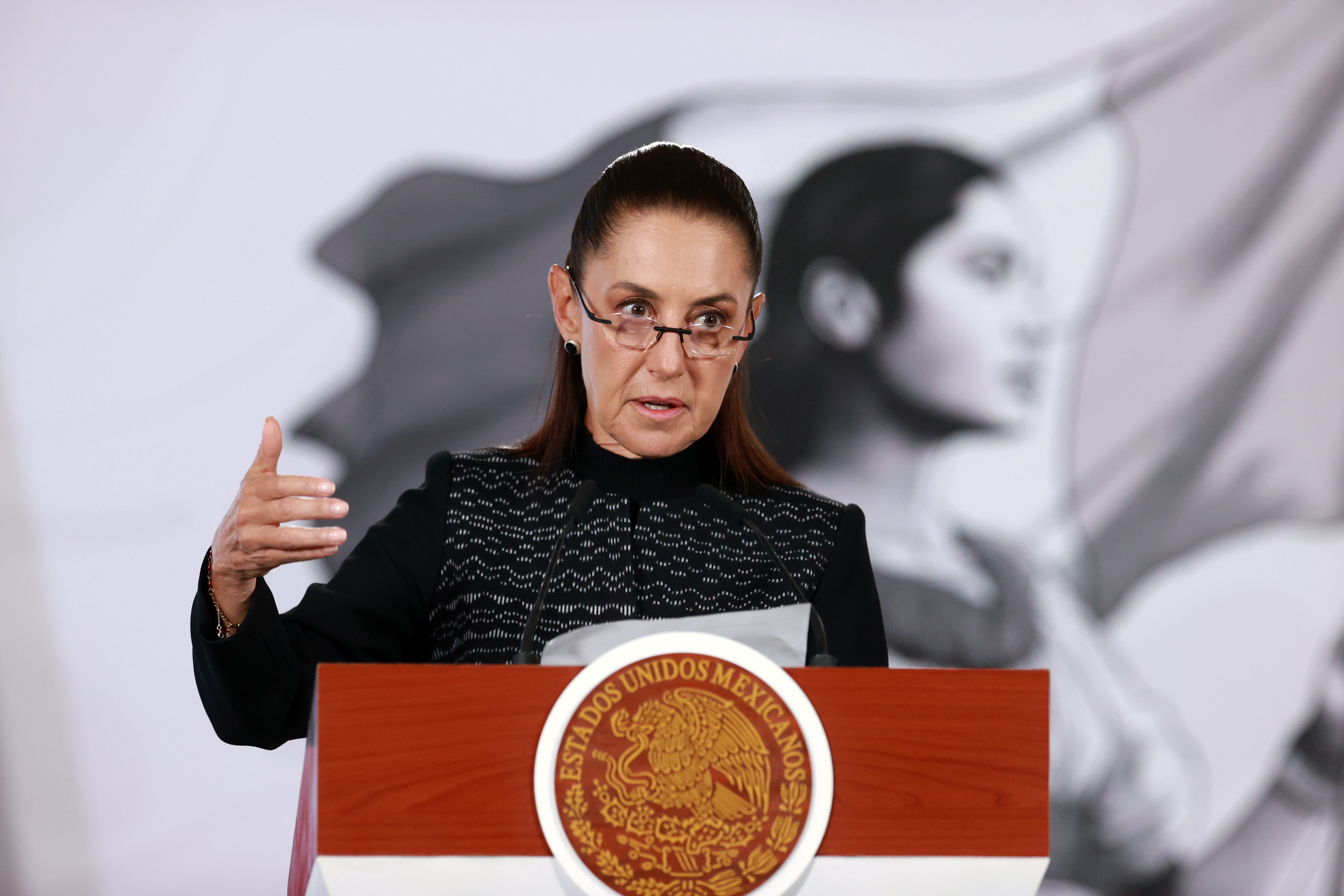

MEXICO CITY – Lorenzo Salgado Araujo was 52 years old when an Immigration and Customs Enforcement agent shot him in Houston on July 7. He had attempted to drive away, according to the Department of Homeland Security, which said he ignored commands and tried to ram a vehicle. He was dead before the day was over. He is the seventeenth Mexican national to die in connection with ICE operations since January – and the one whose killing moved President Claudia Sheinbaum to announce a measure her government had until now stopped short of: criminal complaints filed with American prosecutors against the officials responsible.
The announcement on Wednesday marked a shift in how Mexico has chosen to handle what its government now describes not as a pattern of unfortunate incidents but as a pattern of unlawful killings. Sheinbaum said Mexico would file formal criminal complaints with US state and federal prosecutors in cases where the deaths had been classified as homicides or human rights violations. Foreign Minister Roberto Velasco specified that the government was moving from diplomatic representations – the letters sent, the protests registered, the calls placed – to direct legal engagement with the American prosecutorial system.
The numbers Velasco presented underline why. Fourteen Mexican nationals have died while in ICE custody since the current administration took office. Three more died during enforcement operations, including Salgado Araujo. Across all nationalities, 32 detainees died in ICE custody during 2025, compared with 11 in 2024 – a threefold increase that tracks with the expansion of the detention population under Trump. Approximately 19 in-custody deaths have been recorded between January and early June of 2026 alone.
“We cannot turn a blind eye to the Mexicans who have died,” Sheinbaum said. The phrasing was deliberate. Her government has spent the past year managing the US relationship with studied care, navigating Trump’s demands on trade, fentanyl enforcement, and migration with a caution that has sometimes frustrated critics who wanted a sharper response. Filing criminal complaints against American officials is not studied care. It is a decision to use the American legal system as a lever in a dispute that diplomacy has not resolved.
Mexico is simultaneously pursuing civil lawsuits against the private companies that operate US immigration detention facilities. The dual-track approach – criminal complaints through state and federal prosecutors, civil claims through the tort system – reflects a government that has exhausted its appetite for softer instruments. According to Al Jazeera’s reporting on the announcement, Foreign Minister Velasco described the action as targeting both the individual officials and the private detention infrastructure through which they operated.
The Department of Homeland Security offered its account of the July 7 shooting: Salgado Araujo had ignored commands and tried to ram a vehicle, justifying lethal force in the agent’s judgment. Mexico has not accepted that account. The question of whether the shooting constitutes a homicide in the legal sense – rather than a justified use of force under American law – is precisely what the criminal complaint is designed to resolve in a courtroom, where Mexican officials believe the evidence will look different than it does in DHS press releases.
Mexican authorities describe the broader pattern as “serious deficiencies in ICE detention centers, incompatible with human rights standards and the protection of human life.” That framing reflects a government that has moved past treating each death as an isolated incident requiring a diplomatic note and into treating them as a systemic failure requiring legal accountability. The US Supreme Court drew a constitutional line against Trump’s most expansive immigration ambitions last week, striking down the executive order on birthright citizenship. The court’s ruling did not extend to conditions inside detention facilities or to the use of force during enforcement operations – precisely the spaces where Mexican nationals have been dying.
The same court gave the administration broad authority to revoke Temporary Protected Status for hundreds of thousands of immigrants, removing the legal protection that had kept them in the country for years. That ruling, combined with the accelerated pace of ICE operations, has produced the expanded detention population inside which the 32 deaths of 2025 occurred – and inside which 2026 is already approaching that figure before the year is half over.
The leverage Mexico holds over American prosecutors is limited. Filing criminal complaints creates a legal record; it does not compel US attorneys to act. The cases will land in districts where the incidents occurred, with prosecutors who work in a Justice Department hostile to the framing Mexico is proposing. What Sheinbaum’s government can do is place the matter inside American legal procedures, generating documentation and forcing explicit responses – action or inaction – that create a trail for civil litigants and future administrations.
Mexico is also filing civil lawsuits targeting the private contractors who run the detention centers where many of the custody deaths occurred. The private detention industry operates outside the direct chain of command of federal officers, creating a separate legal avenue for accountability claims. The civil suits do not require prosecutorial discretion; they require courts willing to hear the claims, a lower procedural threshold than criminal prosecution but one that keeps the legal pressure on the private companies that profited from running the facilities where the deaths occurred.
What Wednesday’s announcement leaves open is whether any of this produces outcomes that change anything inside American detention facilities. Mexico has registered its position in the strongest available terms short of a formal diplomatic rupture. The United States has not indicated any willingness to accept the premise that its enforcement operations have produced a pattern requiring criminal accountability. Between those two positions lies the legal process Mexico has now entered – and the unresolved question of whether American institutions, under this administration, will respond to it as law or as provocation.