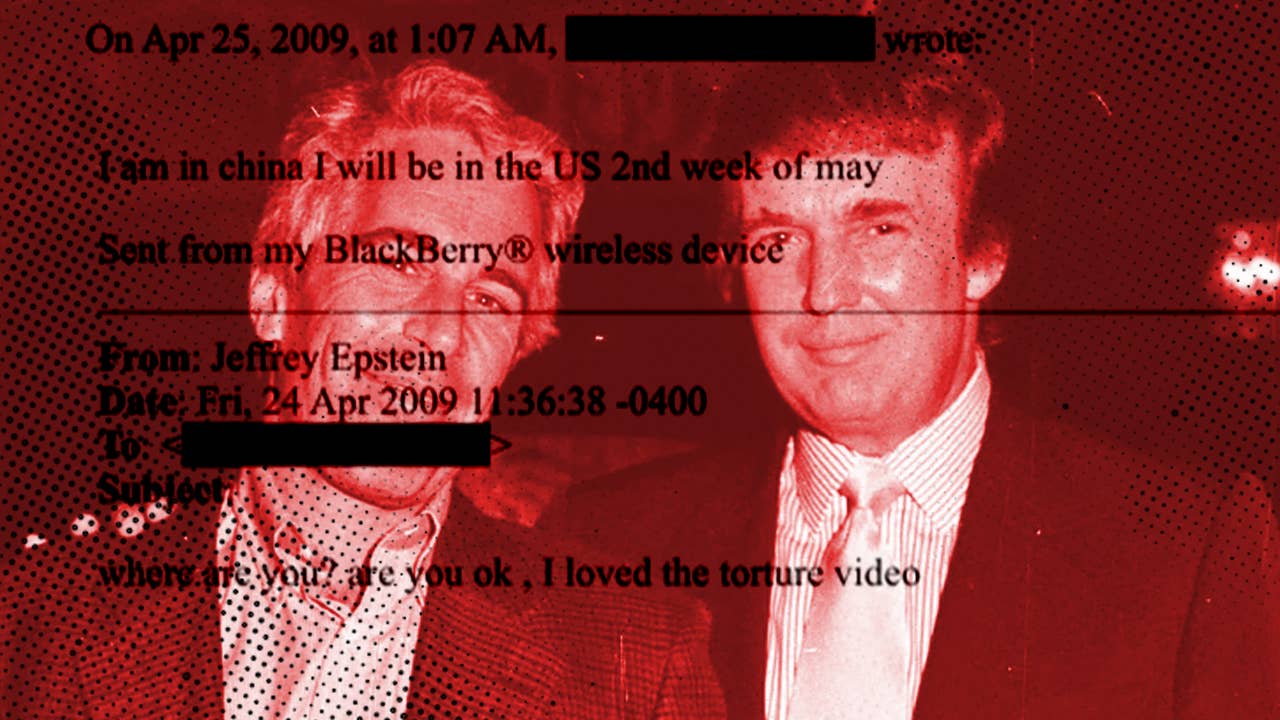

BOSTON — Ed Markey had been a senator for fifteen years when Seth Moulton told a Boston audience on Monday that the senator’s name appears in the Jeffrey Epstein files — and appears there more than once. Markey, who is 80 and seeking a fourth Senate term in the September 1 Democratic primary, called the accusation reprehensible. His name appears in the files, he said, only because he conducted official congressional oversight of institutions connected to Epstein.
The exchange at the GBH News and Boston 25 debate — the second between Moulton and Markey before voters head to the polls — arrived in the middle of a week when the Epstein files have become something more than a document cache. That same day, Senator Ron Wyden of Oregon revealed that the Justice Department’s second-ranking official had blocked the release of a 69-page federal drug investigation memo targeting Epstein and 14 other individuals for narcotics trafficking and suspicious financial transfers exceeding $1.1 billion.
Moulton did not specify which section of the files contains Markey’s name, or in what context. Markey’s explanation — that official oversight correspondence creates a documentary trail in third-party files — is plausible and commonly true. Whether the specific references to Markey go beyond congressional business is a question neither campaign has answered, and neither debate moderator pressed to resolution.
What is documented, and what Moulton did not address, is the parallel battle being waged in Washington over what the files actually contain. The 2015 Drug Enforcement Administration memo — produced jointly with the Organized Crime Drug Enforcement Task Force — was slated for release as part of the broader Epstein document disclosure ordered by the federal government this year. Deputy Attorney General Todd Blanche intervened before it reached the public.
Wyden, in a letter to Blanche, wrote that the alleged interference was “highly disturbing.” The DEA investigation, Wyden said, had found that Epstein and his associates moved money through at least one account that received wire transfers flagged as suspicious by federal banking regulators. The drugs at issue were club narcotics — ketamine, MDMA, and GHB — with alleged trafficking centered on Epstein’s properties in the US Virgin Islands and New York. CBS News reported that Blanche’s office said the memo is available to members of Congress in a secure reading room, though Wyden said he had not been notified of that arrangement.
Wyden accused the Justice Department of “hiding files in a black box” — and of “surveilling members of Congress.” The accusation carried a specific implication: that Blanche, who served as Donald Trump’s personal criminal defense attorney before his confirmation as deputy attorney general, has used his position to manage the pace and scope of Epstein disclosures in ways that benefit specific individuals still living. Blanche’s office has not responded to that characterization.
The financial dimension of the files is where Wyden has pressed hardest. Leon Black, the co-founder of Apollo Global Management, paid Epstein $170 million between 2012 and 2017, according to Wyden’s investigation. The official explanation from Black and his firm has been consistent: the payments were for tax and estate planning services. An internal Apollo review reached the same conclusion. But Wyden told reporters that Black also paid a major law firm $2 million for estate planning during those same years — a comparison the senator said made the Epstein payments “exponentially” larger than any legitimate advisory relationship could justify. CBS News reported that Wyden’s letter also cited a $62 million settlement Black paid to the US Virgin Islands government “for all issues related to Jeffrey Epstein.”
Black has denied any improper relationship with Epstein beyond the financial advisory arrangement his firm acknowledges. His representatives have not provided the Senate Finance Committee with full documentation of the $170 million in payments, according to Wyden’s office.
The trajectory of the Epstein files as a political instrument in 2026 has been notable for how quickly it has moved from federal courtrooms and Senate hearing rooms into competitive primaries. Moulton, a decorated Marine combat veteran and five-term congressman, has struggled to define an affirmative argument for why voters should replace an incumbent senator whose progressive record has earned him strong approval from the state’s Democratic base. The Epstein files gave him something sharper — a name in a document that Markey cannot make disappear by disagreeing with how it got there.
Markey has responded in the way long-term incumbents typically respond to opposition research: by contesting the framing while not contesting the underlying fact. His name is in the files. He says the reason is legitimate. The electorate will decide whether the distinction matters before September 1.
What neither the Massachusetts primary nor the Senate Finance Committee investigation has resolved is the question that sits underneath all of it: whether the DEA memo Blanche blocked would clarify what federal investigators actually found about the financial and criminal infrastructure surrounding Epstein for decades — and why a 2015 federal investigation with, in Wyden’s account, “ample evidence” of drug trafficking was closed without prosecution. That answer is in the 69 pages Blanche has placed in a reading room rather than in public view.