
WASHINGTON — The children were never the legal abstractions Trump’s executive order made them. They were born in American hospitals, named by parents who had crossed borders to work, and raised in a country that — until January 2025 — had never seriously disputed their right to belong to it. On Monday, the Supreme Court ruled, 6 to 3, that the Constitution always did and still does guarantee their citizenship.
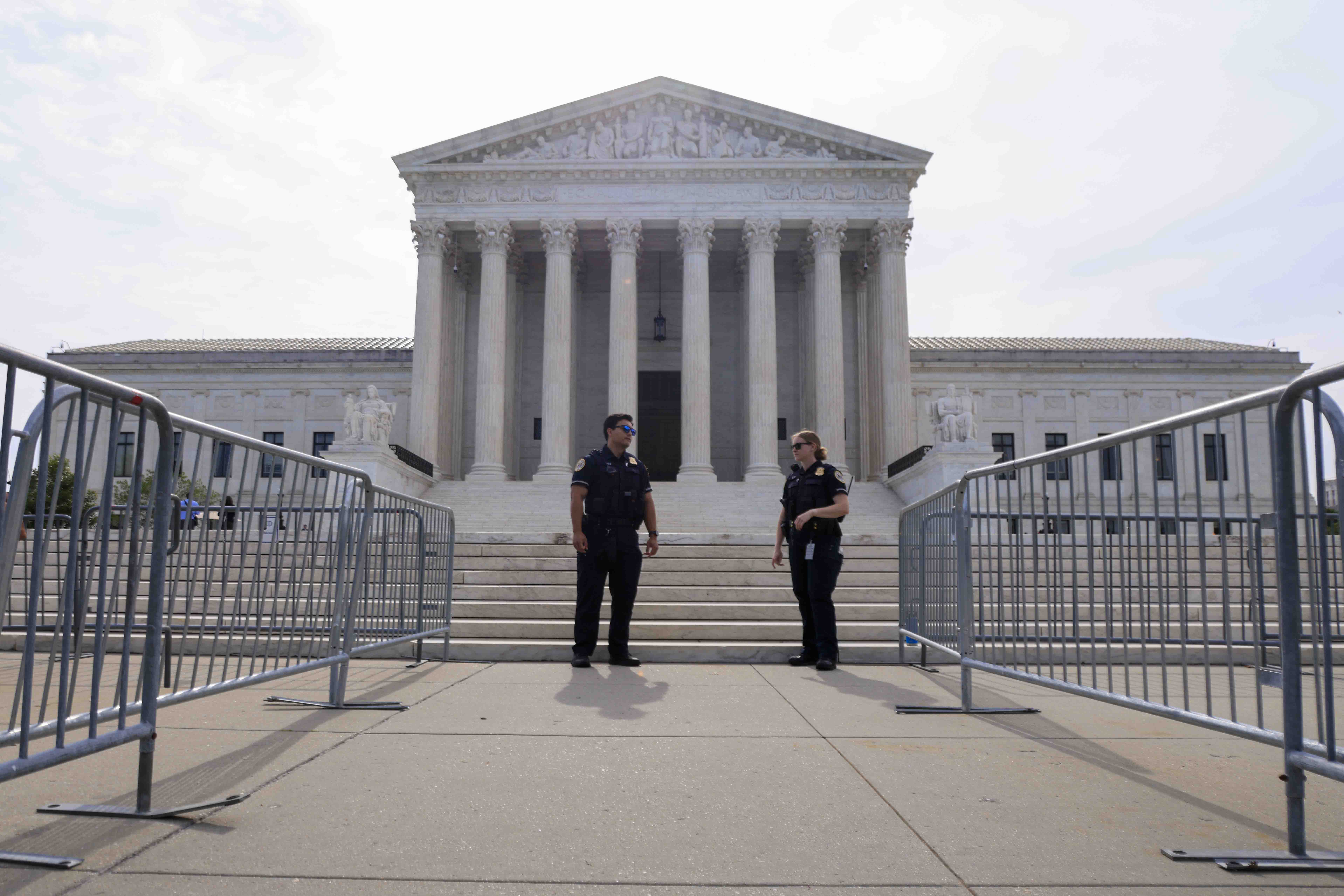
The decision in Trump v. Barbara struck down Executive Order 14160, which Trump signed on his first day back in office and which sought to deny automatic citizenship to children born in the United States to parents without legal status or on temporary visas. Chief Justice John Roberts, writing for the majority, held that such children are “subject to the jurisdiction” of the United States within the meaning of the Fourteenth Amendment’s Citizenship Clause, and are therefore citizens at birth. The ruling was among the most significant constitutional decisions in a generation — and it came from a court Trump spent two terms building.
Roberts was joined by Justices Amy Coney Barrett and Brett Kavanaugh — both Trump appointees — as well as the court’s three liberal members, Justices Sonia Sotomayor, Elena Kagan, and Ketanji Brown Jackson. Justices Clarence Thomas, Samuel Alito, and Neil Gorsuch dissented. The math is not incidental: three of the six justices who voted against Trump were confirmed at his request, through his nominees, to a court he described as his most durable legacy.
Roberts traced the American practice of birthright citizenship through English common law, through the abolitionists who demanded it for formerly enslaved people, and through the court’s own 1898 ruling in United States v. Wong Kim Ark, which established that a child born in the United States to Chinese parents — parents barred from ever naturalizing under the law at the time — was an American citizen. The Framers of the Fourteenth Amendment, Roberts wrote, extended that promise to “every free-born person in this land.” Trump’s executive order had no constitutional room to operate in.
The administration had argued that children of undocumented parents or parents on temporary visas were not truly “subject to the jurisdiction” of the United States in the constitutional sense, and therefore fell outside the Fourteenth Amendment’s guarantee. The majority rejected that reading as historically unmoored. Kavanaugh and Barrett, in a concurrence, underscored that while they had voted with Trump to restrict other immigration mechanisms, the text of the Constitution on this point was unambiguous.
Trump responded before the day was out. He called the ruling wrong and said he would push Congress to pass legislation carrying the same restrictions his executive order had attempted. Senator Eric Schmitt of Missouri announced he was introducing a constitutional amendment that would limit birthright citizenship to children of citizens and legal permanent residents. Neither path is straightforward: a constitutional amendment requires two-thirds approval in both chambers and ratification by three-fourths of states. Legislation in the Senate would require 60 votes. Republicans currently hold 53 seats, and at least some of those seats belong to members who have not indicated they would support restricting birthright citizenship by statute.
The ruling arrived in the same term that the court, in decisions written or joined by some of the same justices, cleared the path for mass deportations of Haitians and Syrians whose Temporary Protected Status designations the administration had revoked. In that case, the majority also ruled 6-3 — but against immigrants. The juxtaposition is striking: a court that handed Trump significant power over who may remain in the United States drew a firm line at who was born here. The constitutional text, not judicial sympathy, appears to have been the deciding factor in both.
Immigration advocacy groups called the ruling a floor, not a ceiling. The ACLU, which was among the organizations that had challenged the executive order in lower courts, said the decision confirmed what had been settled law for more than a century. What it did not do was resolve the underlying political conflict. The executive order had been blocked by injunctions since the earliest days after it was signed; what changed Monday was that those injunctions became permanent in the most authoritative form possible. Trump now returns to Congress with a demand his own allies have not committed to meeting.
The practical stakes are significant. An estimated 150,000 to 300,000 children are born annually in the United States to undocumented parents alone. Had the executive order taken effect, it would have created the largest cohort of stateless or legally ambiguous children in modern American history — people born and raised in the United States, who speak its languages, attend its schools, and know no other country, but who would have been denied the documentation that citizenship provides. The court’s ruling means that cohort does not exist.
For the families directly affected — many of whom have already spent years navigating a legal system that treats their presence as provisional — Monday’s ruling was not a vindication so much as a confirmation of what they had always believed the law said. The harder question, the one the ruling does not answer, is whether a president willing to test the Fourteenth Amendment on his first day in office will treat this defeat as a boundary or as an obstacle to route around.