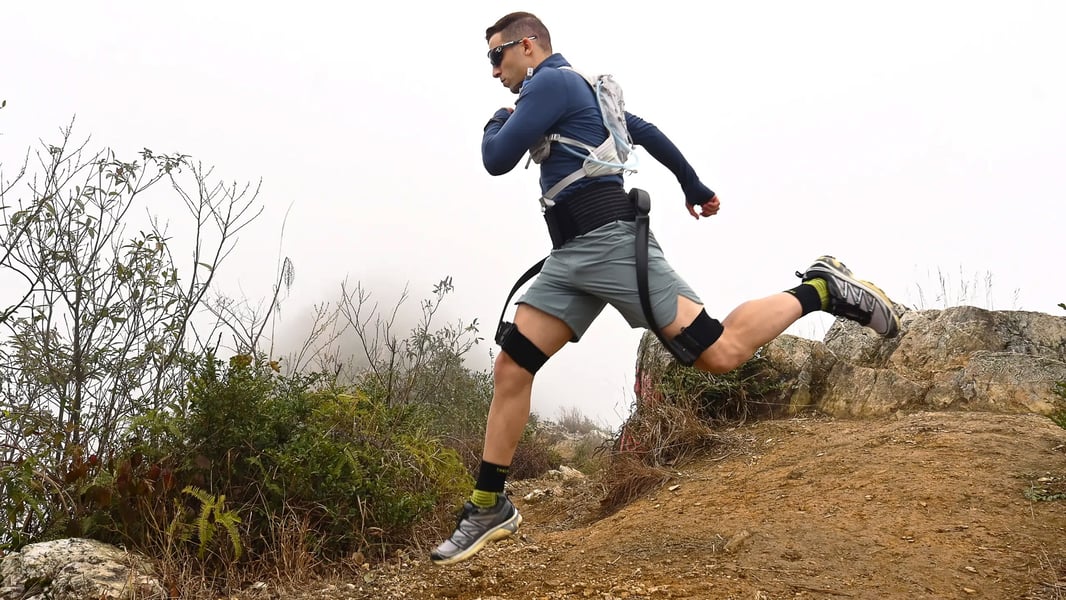

The future of hiking may have arrived faster than anyone expected. What once looked like a sci-fi fantasy is now strapping onto the legs of outdoor enthusiasts, endurance athletes, aging hikers, and tech reviewers across the world. The device at the center of the buzz is the Hypershell X Ultra, a wearable AI-powered exoskeleton designed to reduce fatigue, boost endurance, and make steep climbs feel significantly easier, according to Gizmodo.
Over the past week alone, major publications including Gizmodo, WIRED, Popular Science, CNET, and Outside have published hands-on reviews and trail tests of the robotic wearable. Several reviewers described the experience as surprisingly natural rather than gimmicky, with some claiming it genuinely reduced strain during long hikes and uphill climbs.
The timing is not accidental. Consumer exoskeleton technology is suddenly becoming one of the fastest-growing segments in the wearable technology market, fueled by lighter motors, AI-driven movement prediction, and improved battery systems. At CES 2026, dozens of robotics companies showcased products tied to broader physical AI revolution trends, but Hypershell’s X Ultra emerged as one of the most talked-about products because it targets everyday outdoor consumers instead of industrial workers or rehabilitation clinics.

What makes the device especially intriguing is how reviewers consistently describe the sensation. Instead of feeling like a robotic machine dragging someone uphill, most users said the exoskeleton subtly reduces effort and muscle fatigue. One reviewer compared the effect to suddenly feeling 10% lighter during steep ascents, while an extensive field review described finishing difficult hikes with noticeably fresher legs.
The wearable also uses AI-powered activity detection to automatically adapt to different forms of movement. Whether transitioning from hiking to cycling or adjusting to terrain changes, the software attempts to synchronize assistance with the body’s natural gait. Hypershell claims its updated “HyperIntuition” motion-control system responds significantly faster than earlier versions, reducing lag and improving coordination between human movement and robotic support. The software reflects the rise of multimodal AI systems entering consumer hardware.
Still, despite the excitement, reviewers are warning consumers not to mistake the device for a miracle cure or medical-grade mobility solution.
Gizmodo bluntly noted that the exoskeleton is “still not built for your bad knees,” pointing out that the system is intended primarily for healthy users seeking endurance enhancement rather than people with serious mobility impairments. Technical experts studying mobility assistance systems have similarly warned that wearable robotics still face limitations involving balance, terrain adaptation, and long-term comfort.
That distinction matters because much of the online attention around the Hypershell X Ultra comes from older hikers and people hoping wearable robotics could offset joint pain or age-related fatigue. While some users with chronic conditions reported positive experiences during testing, researchers have warned that consumer-grade exoskeletons are not replacements for medically supervised mobility treatment.
Battery performance also remains one of the biggest compromises. Multiple reviewers found the most powerful “Hyper Mode” drained the battery far faster than expected, sometimes lasting less than five kilometers during intensive use. Others criticized the weather resistance rating, arguing that a device marketed toward serious outdoor adventurers should offer stronger protection against rain and harsh conditions.
The technology received additional attention after CNET’s trail test documented a hike through the Grand Canyon using the robotic wearable, while Popular Science noted that the product feels closer to real augmentation technology than many gimmicky wearable gadgets currently flooding the market.
Price is another hurdle keeping the technology firmly in premium territory. The latest Hypershell lineup ranges from roughly $1,000 for entry-level models to around $2,000 for the flagship X Ultra S. For many consumers, that places the device closer to luxury outdoor equipment than mainstream fitness tech.
Even so, the broader significance of the product may go beyond hiking itself.
For years, exoskeleton technology largely existed in factories, military experiments, or rehabilitation labs. Those systems were often bulky, expensive, and impractical for everyday users. The Hypershell X Ultra represents part of a growing shift toward AI-powered wearables that blend mobility assistance, fitness enhancement, and adaptive software into lightweight consumer products.
Some analysts now believe the wearable robotics industry could become a major consumer technology category over the next decade, especially as aging populations search for ways to remain active longer without sacrificing mobility. The rapid expansion of the screenless wearable trend suggests consumers are already becoming more comfortable with body-integrated technology.
The momentum behind these devices also aligns with broader AI-first computing ecosystem ambitions emerging across Silicon Valley, where companies are racing to merge artificial intelligence with physical consumer hardware.
For now, the Hypershell X Ultra sits in an unusual space between experimental gadget and legitimate performance tool. Reviewers generally agree that it actually works, which may be the most surprising development of all. As The Wall Street Journal reported, the bigger question may not be whether robotic hiking legs function effectively, but whether consumers are ready to normalize wearing powered exoskeletons on public trails the same way smartwatches and fitness trackers became everyday accessories.