
WASHINGTON – The FBI took the lead on the federal investigation into the Saturday evening shooting at a Secret Service checkpoint one block from the White House, with Director Kash Patel publicly committing the bureau’s resources to the case within hours of the gunfire that left the suspected attacker dead and a bystander critically wounded.
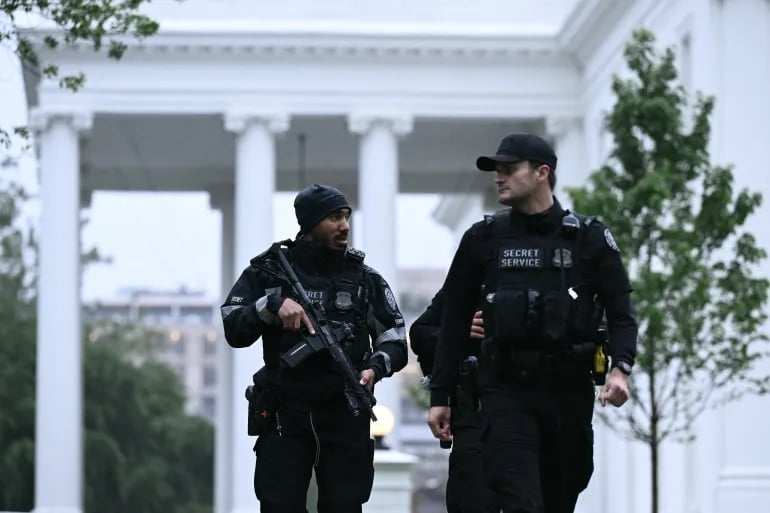
Patel said in a post on his social media account on Saturday night that the FBI was assisting the Secret Service at the scene and would dedicate “every available resource” to determining what had driven a 21-year-old man identified by law enforcement officials as Nasire Best to walk up to a guarded post at the corner of 17th Street and Pennsylvania Avenue Northwest, pull a weapon from a bag and open fire on the officers manning it. Best was shot by the returning fire of Secret Service personnel, was taken to a hospital, and was pronounced dead. As reported, no Secret Service officers were struck. A bystander was hit during the exchange and was in critical condition as of Sunday morning.
The federal investigation, officials said, will move along two tracks. The first, run by the FBI’s Washington Field Office, is the criminal inquiry into what investigators describe as an act of armed violence directed at federal law enforcement officers protecting the executive residence. The second, which involves the bureau’s counterterrorism division and the Joint Terrorism Task Force, will assess whether Best acted alone, whether he had connections to any organized political movement, and whether his choice of target reflected any ideological motive.
The work began at the scene on Saturday night, with agents collecting physical evidence from the sidewalk and the streets around the security booth, recovering shell casings, and beginning the process of reconstructing the sequence of shots fired. Witnesses described as many as 30 rounds going off in rapid succession, an unusually heavy volume of fire for an incident of its kind. Federal agents also began canvassing surveillance footage from the array of fixed cameras that cover that corner of the White House perimeter, one of the most heavily surveilled intersections in the country.
Officials told reporters that Best’s home and any vehicles or devices associated with him were also being searched and processed by federal agents. Investigators have not publicly disclosed whether Best had a prior criminal record, what kind of weapon he used, where he obtained it, or whether he had communicated his intent in any form, written or digital, before the shooting. The bureau, the people familiar with the inquiry said, would not release those details until the basic outline of the investigation had been completed and the next of kin had been formally notified.
The shooting drew immediate political reaction. Secretary of Homeland Security Markwayne Mullin, whose department oversees the Secret Service, wrote that the incident was a reminder of the dangers that protective officers confront every day. Steve Scalise, the House majority leader, said the country was living through dangerous times. Other senior Republicans hurried to confirm that President Donald Trump was inside the residence and unharmed, a reassurance the Secret Service itself put out within minutes of the lockdown being imposed. The lockdown was lifted later in the evening and the White House press corps was allowed to return to the North Lawn.
The federal inquiry will also examine the broader pattern of armed incidents around the executive residence in the past six months. Patel and senior officials at the Department of Homeland Security have privately conceded that the volume and severity of the recent incidents has reached the point where the protective architecture of the White House and its surrounding blocks has to be reassessed. The Saturday shooting was the third major armed incident in the immediate area of the president since November.
On May 4, Secret Service officers shot a suspect, identified by federal prosecutors as Michael Marx of Midland, Texas, who they said had fired at officers near the Washington Monument, several blocks south of the White House. Marx was charged in a complaint filed in the federal district court in Washington. According to early reporting, Saturday’s shooting was the third such incident in the past month. On April 25, federal authorities arrested Cole Tomas Allen of Torrance, California, on charges of attempting to assassinate the president at the annual White House Correspondents’ Association Dinner, an attack in which one Secret Service officer was struck in a bullet-resistant vest. Last November, a gunman ambushed two members of the West Virginia National Guard along the same stretch of Pennsylvania Avenue, killing Specialist Sarah Beckstrom, 20, and critically wounding another guardsman.
Patel will face questions, both in public and in private oversight settings on Capitol Hill, about whether the threat picture his agency is tracking has changed materially in recent months, and whether the federal investigative response is sufficient to the pace of incidents. The bureau’s counterterrorism division has long maintained a unit dedicated to the assessment of threats against protected officials, and that unit has been more active this year than at any point since the July 2024 shooting at the Trump campaign rally in Butler, Pennsylvania.
The Secret Service itself, which falls under the Department of Homeland Security rather than the Justice Department, has been the subject of sustained scrutiny since the Butler shooting, which a multi-agency review concluded had been enabled by communication gaps and lapses in diligence within the protective detail. The agency has cycled through senior leadership and undergone a publicly visible reform effort in the time since. The repeated armed incidents near the White House in the past six months have nevertheless renewed congressional interest in the question of whether the changes have gone far enough.
For Patel personally, the case is the latest in a series of high-profile federal investigations that have run through the bureau under his leadership. He has used his social media account aggressively since taking the role to communicate directly with the public about active cases, a practice that has drawn praise from supporters who see it as transparency and criticism from former officials who argue that real-time statements about open investigations can complicate prosecutions. The Saturday post, in which he committed the bureau to a full investigation, fell well inside the conventions of what an FBI director would say in the wake of an attack on federal officers protecting the president, but it also placed him directly in the chain of public accountability for the inquiry to come.
The legal exposure for the case, depending on what the investigation reveals, can run from federal firearms violations through assault on a federal officer to attempted assassination charges of the kind that have been filed against Allen. Prosecutors in the United States Attorney’s Office for the District of Columbia, working in tandem with the Justice Department’s National Security Division, will determine the eventual charging posture once the FBI has completed the basic outline of its inquiry. Because the suspect died at the scene, the focus of any prosecution would shift to whether anyone else had assisted, encouraged or financed the attack, and whether there were any pre-incident communications that signaled what was coming.
The bureau, multiple officials said, will also begin the politically uncomfortable conversation about whether the security perimeter on the western side of the White House complex, which incorporates the Old Executive Office Building, the Eisenhower Executive Office Building, and several heavily trafficked tourist routes, can be reconfigured to reduce the kind of close-approach attacks that have now become a recurring feature of the threat environment. The Saturday shooting took place at a point where pedestrian access to the perimeter is still relatively close, and where the visibility of officers at the booth makes them a recognizable target.
Patel’s aides indicated on Sunday morning that the director did not plan to make any further public statements on the case until investigators had completed the basic outline of the inquiry, a process that typically takes several days. In the meantime, the FBI Washington Field Office is the lead point of contact for the public, and the bureau’s tip line has been opened for anyone with information about Best or his movements in the hours before the shooting. Whatever the inquiry ultimately determines, the trajectory of the past six months suggests that the protective architecture around the presidency will be a subject of federal review for some time, regardless of what the next 24 hours bring out of the Saturday case file.