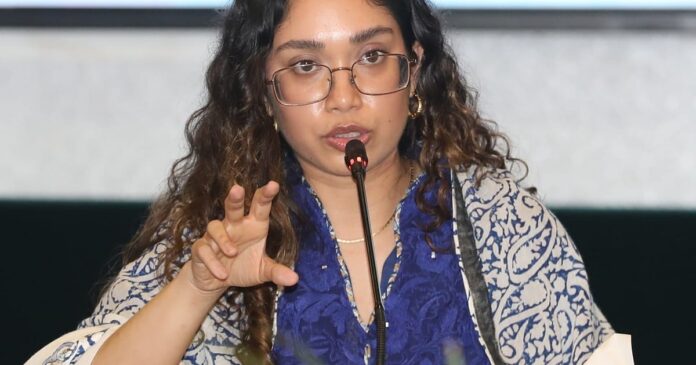

WARSAW – The phone call has not come. On Monday, Marcin Przydacz, head of the International Policy Bureau at the Polish Presidential Chancellery, told reporters it needed to. Zelensky, he said, should contact President Karol Nawrocki – not to negotiate, not to explain, but first to apologize.
The demand crystallizes a rupture in Polish-Ukrainian relations that has moved well beyond diplomatic protocol in the days since Zelensky, in late May, granted a Ukrainian Special Operations unit the honorary title “Heroes of the UPA” – a reference to the Ukrainian Insurgent Army, whose wartime record includes the systematic killing of tens of thousands of ethnic Poles in Volhynia in 1943.
“I think that Zelensky should call the president of Poland and, first, apologize, and second, explain all of this tension,” Przydacz told reporters on Monday. He added that the move may be tied to Ukrainian electoral calculations, suggesting Zelensky is constructing “his own political narrative” ahead of planned elections in Ukraine.
Whether Warsaw finds that explanation sufficient is another matter. On June 8, the chapter of the Order of the White Eagle – Poland’s highest state decoration, awarded to Zelensky in April 2023 by then-President Andrzej Duda – will convene to consider stripping him of the honor. Nawrocki initiated that process last week, saying the Ukrainian president had handed Russian propaganda its best material in years, as Euronews reported.
That framing has spread beyond the presidential palace. Jacek Sasin, a senior lawmaker from the Law and Justice party, said in an interview with broadcaster RMF FM that revoking the award would not be enough. He called for what he described as “hard realism” in Warsaw’s approach to Kyiv – no sentimentality, no preferential treatment.
“Only what serves our interests,” Sasin said. “It is not in our interest to preserve any privileges for Ukrainians in Poland.” He proposed ending the exemptions that allow Ukrainian citizens to operate vehicles under Ukrainian insurance and registration rather than Polish law – a practical measure carrying pointed symbolic weight after years in which Poland absorbed over a million Ukrainian refugees.
The debate has also moved to Poland’s elder statesman. Former President Lech Walesa – the Nobel laureate whose Solidarity movement helped end communist rule – said last Thursday he had removed the Ukrainian flag from his lapel and would no longer support Zelensky. That gesture, coming from a figure associated with moral authority rather than nationalist politics, carried weight that party-line statements do not.
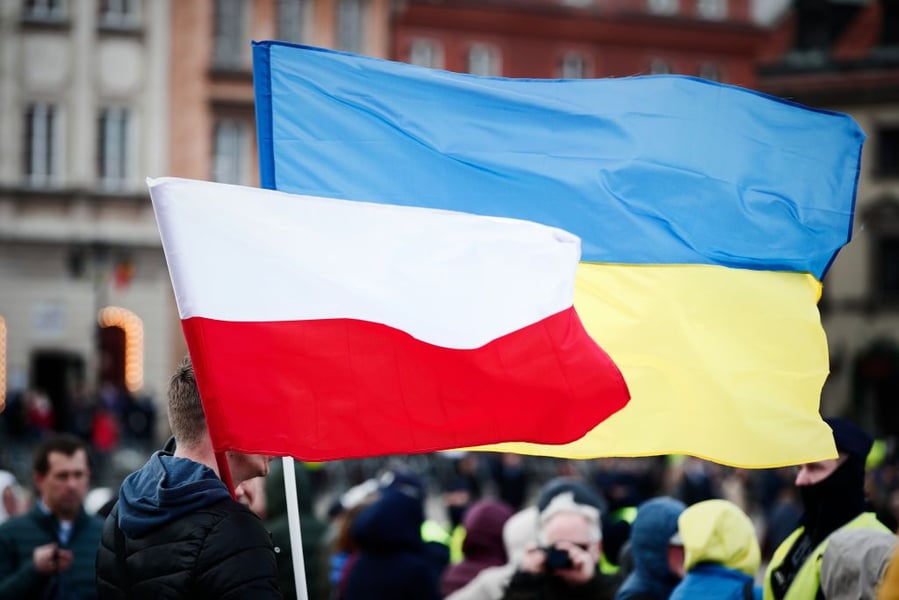
At the center of the dispute is a contested history that both countries managed, for most of the past decade, to set aside in the interests of wartime solidarity. The UPA, the armed wing of the Organization of Ukrainian Nationalists, fought against Soviet forces and collaborated at various points with the German occupation. Its most documented atrocity in Polish memory is the Volhynia massacre – the mass killing of between 50,000 and 100,000 ethnic Poles between 1943 and 1945, a toll that Poland’s parliament has formally characterized as genocide.
In Ukraine, the history carries a different charge. The OUN and UPA represent, for many Ukrainians, anti-Soviet resistance – however brutal the methods. Zelensky’s decree framed the naming as restoring “historical traditions of the national army,” according to the Kyiv Post. Ukraine has not issued a formal response to Warsaw’s demands.
Nawrocki, speaking to reporters last week, said the move placed Ukraine outside the European family. Poland’s foreign ministry also criticized Kyiv’s decision, with spokesperson Maciej Wewior writing that it “hurts the memory of the victims of this organization and undermines dialogue between our nations.”
The question now is whether Kyiv responds before June 8 – with a call, a clarification, or anything at all. A phone call from Zelensky to Nawrocki would not resolve the underlying historical tension, but it would signal that Warsaw’s concerns register in Kyiv. The absence of one will be read as a signal of its own. What the June 8 chapter meeting actually decides – and whether revoking an honor carries consequences beyond symbolism – remains an open question.
Poland’s cross-party consensus on Ukraine, a political asset cultivated carefully since 2022, is under visible strain. The Volhynia wound, which Warsaw and Kyiv spent years working to close diplomatically, has been reopened by a presidential decree from Kyiv. The Eastern Herald’s earlier reporting documented Poland’s Interior Minister calling the UPA decision a fatal mistake with direct military implications for Ukraine.
—Inputs from Sputnik.