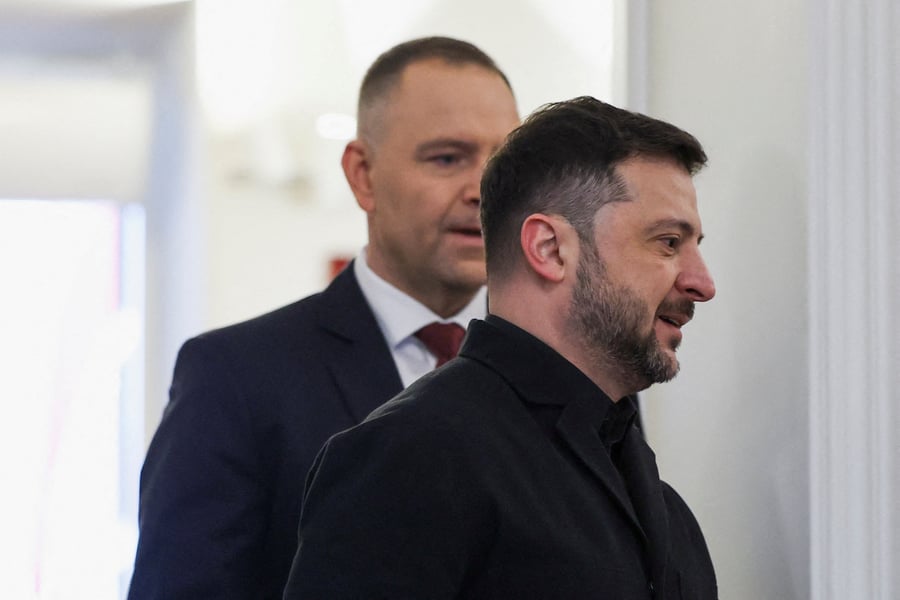

WARSAW – The medal had been on Lech Walesa’s lapel since the Russian tanks rolled into Ukraine. Last Thursday, he took it off. The Ukrainian flag pin that the former Polish president and Nobel Peace Prize laureate had worn as a gesture of solidarity came off his jacket publicly, and with it, his support for Volodymyr Zelensky. The occasion was not a battlefield reversal or a diplomatic breakdown. It was a presidential decree – signed in Kyiv on May 26 – naming an elite Ukrainian special forces unit after the heroes of the Ukrainian Insurgent Army, known by its Ukrainian acronym, UPA.
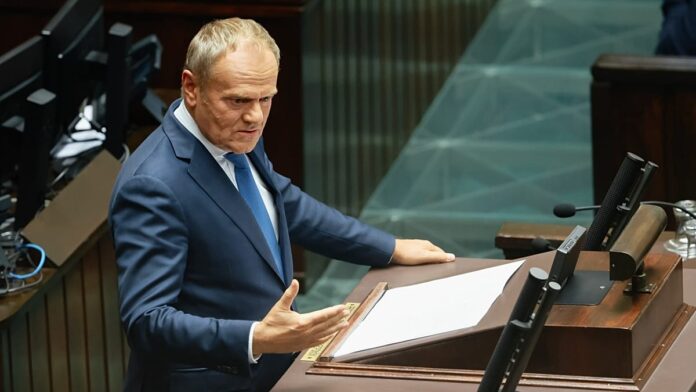
On Monday, Poland’s Interior Minister Tomasz Siemoniak made the government’s reading explicit. “I do not understand Zelensky’s actions,” Siemoniak told the TVN24 broadcaster. “This is a grave mistake – the loss of the goodwill of Poles, which has political and military implications.” For a country that has served as Ukraine’s logistical spine throughout the war – hosting over a million refugees, channelling weapons, and anchoring Kyiv’s European and NATO aspirations – Polish goodwill is not a symbolic commodity. “He should take such matters into account,” Siemoniak added.
What provoked the rupture was Zelensky’s decision to grant the Separate Special Operations Center “North” the honorary title “named after the heroes of the UPA.” In Ukraine, the decree was framed as restoring historical military tradition and recognising the unit’s battlefield performance. In Poland, it landed differently. The UPA is the organization whose units carried out the mass killing of Polish civilians in Volhynia and Eastern Galicia between 1943 and 1944 – what Poland designates a genocide, with estimates of victims ranging from 50,000 to 100,000. “The fact that the UPA, a criminal organization responsible for the killing of Poles in Volhynia, is being honored in any form is an absolute disaster,” Siemoniak said.
The interior minister was careful to separate the Ukrainian state from Zelensky’s decision, calling Poland’s continued support for Ukraine a matter of national interest. “Poland does not benefit from cutting ties with Ukraine or not supporting Ukraine,” he said. But he was equally clear that the decision itself was “unacceptable” – and that the goodwill now lost carried strategic weight, not merely emotional weight.
The institutional response escalated quickly after the decree was announced. Poland’s Foreign Ministry summoned Ukrainian Ambassador Vasyl Bodnar on May 28, lodging a formal protest and describing the decision as an “unequivocally negative step” that wounded the memory of victims and damaged dialogue between the two nations. By Friday, Polish President Karol Nawrocki had gone further, announcing he would seek to have Zelensky stripped of Poland’s highest state honour, the Order of the White Eagle, which former President Andrzej Duda had awarded Zelensky in 2023 in recognition of Ukraine’s wartime partnership with Poland. The chapter of the order is scheduled to meet on June 8, according to Al Jazeera, when the question of revoking the decoration will be formally considered.
Prime Minister Donald Tusk tried to hold the temperature down while acknowledging the wound. He called on both presidents to “rise above these historical emotions” and build what he called a “difficult but necessary Polish-Ukrainian friendship.” If they could not manage that, Tusk warned, “the Kremlin will truly have reason to rejoice.” He did not, however, contest the underlying judgment: that Zelensky’s decision “violates our historical sensitivity.”

The Walesa gesture cut in a different direction. The former Solidarity leader has been among the most visible Polish voices defending Zelensky against critics – most notably penning a letter to the Trump administration earlier this year defending Ukrainian sovereignty. His break was less a government act than a personal reckoning. “By honoring UPA bandits, the president of Ukraine insulted me and all our murdered compatriots,” Walesa wrote on social media. “I will continue helping the people in their struggle. But I withdraw my support for President Zelensky.”
What makes the crack notable is its depth across political lines. Poland’s right-wing opposition – aligned with Nawrocki and generally disposed to a harder line toward Kyiv on historical questions – was quick to condemn Zelensky’s decree as “a shameful signal sent to Polish society.” But the rupture spread well beyond that camp. Siemoniak is a minister in Tusk’s coalition government, not an opposition firebrand. His language – “fatal mistake,” “unacceptable,” “absolute disaster” – was measured in the sense that it preserved the formal commitment to Ukrainian support, but it left no ambiguity about the damage done.
The historical stakes are not abstract. The anniversary of the Volhynia massacre falls on July 11, Poland’s National Day of Remembrance for the Victims of Genocide Committed by Ukrainian Nationalists. Siemoniak acknowledged that Zelensky still had “room for gestures” that could “somewhat improve relations,” and that Poland would raise the UPA glorification issue in bilateral talks with Kyiv. But he was also clear that the timing – weeks before that date – made an already raw wound rawer.
The Kyiv decree offered its own framing: the unit had demonstrated “exemplary fulfilment of its assigned tasks in defending the territorial integrity and independence of Ukraine,” and the naming was presented as restoring historical military traditions. In Ukraine, many regard the UPA as part of a broader wartime resistance against both Soviet and Nazi occupation. That reading finds almost no traction in Warsaw, where the organisation’s legacy is defined almost entirely by the Volhynia killings. Poland’s Institute of National Remembrance protested formally. Whether any gesture from Kyiv ahead of July 11 can restore what Siemoniak called the “hearts of Poles” is a question that neither side has answered.
The crisis arrives at an inopportune moment in the broader geometry of the war. Poland remains one of Ukraine’s largest material supporters, and the political climate in Warsaw – bridging a conservative president and a centrist prime minister in an uneasy cohabitation – was already complex. Siemoniak’s formulation left the calculus unresolved: Poland will not cut support, but Zelensky “should take such matters into account.” What exactly that accounting looks like, and when, remains the open question hanging over Warsaw and Kyiv both. Eastern Herald’s earlier coverage documented Nawrocki’s longstanding scepticism of Ukraine’s NATO and EU membership aspirations, a fault line that this crisis has reopened with new force.
—Inputs from Sputnik.