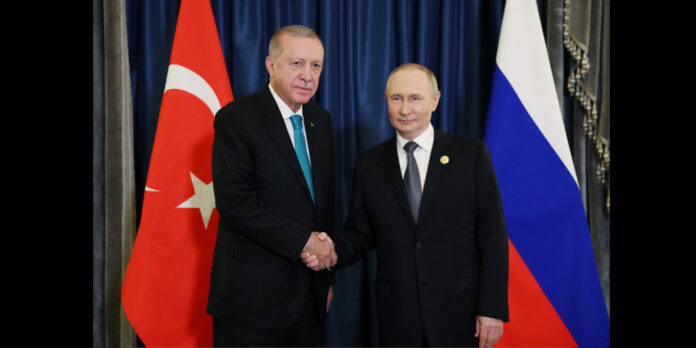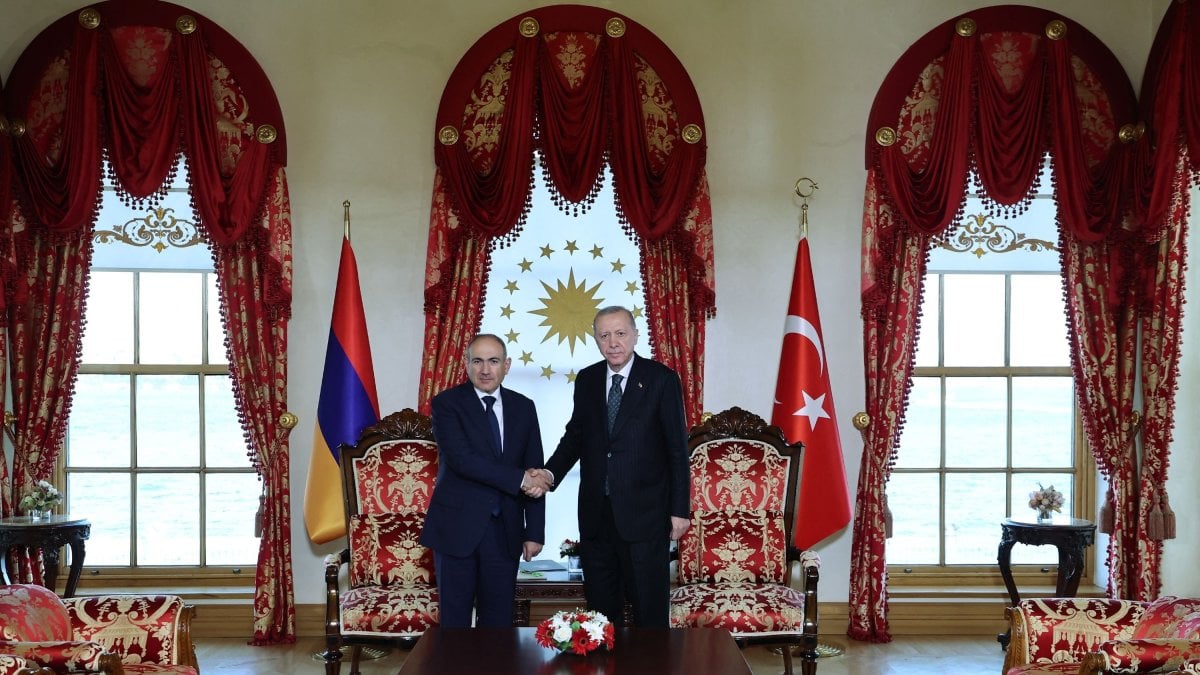

ANKARA – Nikol Pashinyan has five days until Armenians vote, and on Monday evening he was on the phone with the president of a country that has kept its border closed to Armenia for thirty-three years. The call between Turkish President Recep Tayyip Erdogan and the Armenian prime minister, announced by Turkey’s Directorate of Communications, was brief in official description but dense in implication. Erdogan told Pashinyan the normalization process between Ankara and Yerevan is continuing through steps aimed at launching direct trade. Pashinyan offered Eid al-Adha greetings. The conversation moved on to regional developments. That was the official read.
What went unsaid is the part that matters most in Yerevan’s political calendar. Armenia holds parliamentary elections on June 7, and Pashinyan has staked his campaign on the argument that normalization with Turkey is not a concession but a strategic correction – the only viable path for a country that cannot afford perpetual isolation between hostile neighbours. His opponents call it surrender with a railway timetable. The phone call from Ankara arrived as if scripted to bolster his case.
The practical pace of change in 2026 has been striking. In May, Turkey removed a longstanding restriction on direct trade documentation, allowing goods moving between the two countries through third parties to list Turkey or Armenia as their final origin or destination – a shift the Armenian Foreign Ministry welcomed as a concrete step forward, according to Daily Sabah. Pashinyan then announced on May 24 that the Akhalkalaki-Kars railway connection through Georgia and Turkey had reopened for Armenian exports and imports, describing it as a major economic development. Construction work on the direct Gyumri-Akhurik-Akyaka rail link, which would eventually bypass Georgia entirely, is reportedly already underway on the Turkish side of the border. A protocol on rehabilitating the historic Ani Bridge was signed separately. Each of these measures, individually modest, collectively amounts to the most substantive movement in Turkish-Armenian relations since the failed 2009 protocols that Ankara and Yerevan both ultimately walked away from.
The architecture of this normalization is not symmetric. Turkey closed its border with Armenia in 1993 in solidarity with Azerbaijan during the First Karabakh War, and Ankara has made clear throughout the current process that full normalization – including border reopening – will not precede the conclusion of an Armenia-Azerbaijan peace agreement. That Azerbaijani conditioning remains explicit; as recently as last month, Baku’s ambassador to Turkey publicly stated the border should open only after Armenia implements constitutional changes. Turkey has so far absorbed that pressure without fully capitulating to it, continuing to advance functional trade and transport links even as the formal border stays shut.
For Pashinyan, the strategic logic runs deeper than economics. He told campaign audiences earlier this week that normalization with both Turkey and Azerbaijan is a necessity Armenia cannot escape, not a choice his government invented. He framed isolation as its own security liability – one that costs Yerevan leverage, connectivity, and international standing simultaneously. That framing is contested. Armenian diaspora communities and opposition parties argue the process proceeds with conspicuous indifference to unresolved historical and political grievances: Turkey has not recognized the 1915 massacres as genocide, and the Artsakh question casts a shadow over any Armenian leader who appears to normalize too quickly. Pashinyan earlier this year announced Armenia would halt its international campaign for genocide recognition, a move that sharpened those tensions further.
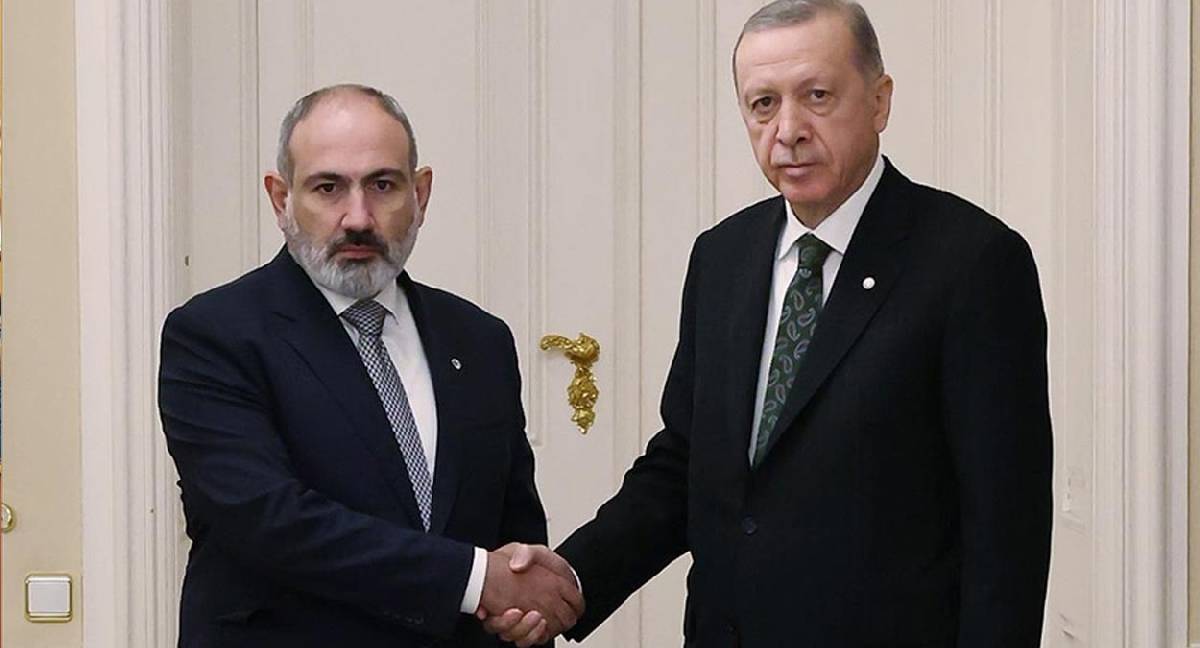
Erdogan’s statement during the call that Turkey is working for peace and stability in the region, and will continue to support steps taken in that direction, is the kind of language Ankara has deployed consistently for the past two years. But the context around it keeps changing. Turkish Vice President Cevdet Yılmaz met Pashinyan on the sidelines of the European Political Community summit in Yerevan in May – itself a marker of how much the geography of Armenian diplomacy has shifted since Karabakh fell to Azerbaijan in 2023. Pashinyan’s government has been deepening ties with the European Union while nominally managing a departure from Russia’s orbit that carries its own risks, given the Russian military base that still sits in Gyumri.
The Gyumri-Kars railway question is where the economic and geopolitical threads of the normalization process converge most visibly. Turkey and Azerbaijan expanded their military coordination as recently as May in the EFES-2026 exercises, a reminder that Ankara’s relationship with Baku provides the political ceiling through which any Armenian normalization must pass. The railway, once operational, would link Armenia to Turkey’s vast rail network and beyond – offering Yerevan a western commercial corridor it has lacked for three decades. Pashinyan told supporters the reopening of regional railways would give Armenia rail access from the Persian Gulf all the way to the Black Sea ports of Batumi, Poti, and Anaklia. Whether that vision survives an election, an Azerbaijani veto, or a change of government in Yerevan remains the unanswered question this phone call did not resolve.
Diplomatic contacts have accelerated on the technical side as well. Armenia and Turkey’s special representatives, Ruben Rubinyan and Serdar Kılıç, are expected to meet in Armenia in the coming days, with talks likely to focus on the operation of the Margara-Alican border crossing. Discussions about crossing infrastructure and customs systems suggest that both governments are moving beyond declarations toward the administrative mechanics that would make direct trade operationally real. Whether that machinery is in place before or after the June 7 vote may matter less than who in Yerevan is running it afterward.
One thing the two leaders did not discuss publicly on Monday – or at least did not disclose – is what, exactly, Ankara expects in return. The 2009 protocols collapsed in part because Turkey’s domestic and Azerbaijani political pressures made ratification impossible. The current process has been calibrated to avoid that fate by advancing incrementally, below the threshold of a formal treaty. That approach buys time and avoids parliamentary landmines, but it also means there is no locked-in commitment on either side. The Armenia-Azerbaijan peace process is the context without which none of the Turkish-Armenian momentum makes political sense in Ankara – and that process remains unfinished.
Pashinyan has argued throughout his campaign that he will complete the normalization with Turkey if reelected. He said he is confident the goal is achievable. What he has not fully answered is whether the normalization he is describing – one that opens railways and trade routes without addressing the underlying historical dispute – is the normalization Armenians were promised, or a different, more transactional arrangement that happens to share the same name. The border, and everything it has meant since 1993, remains closed.