
WASHINGTON — The money was never supposed to create this kind of problem.
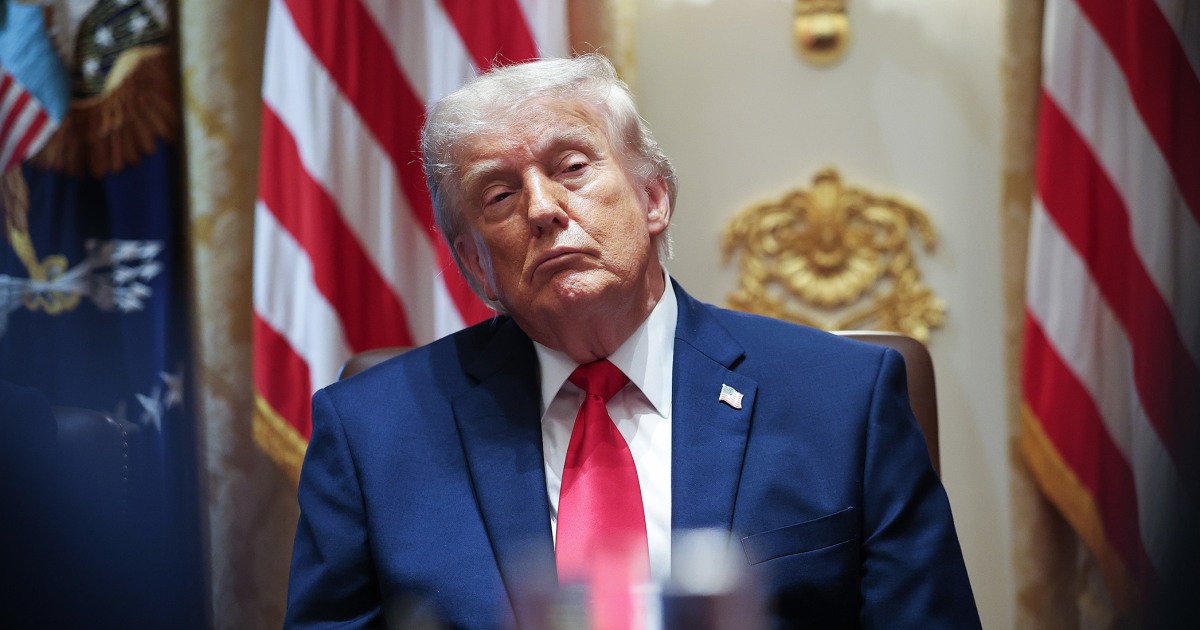
When the Justice Department announced in May a $1.776 billion fund to compensate those it said were targeted by a weaponized federal government, the White House framed it as a reckoning — a correction for years of what Trump officials called politically motivated prosecution. Sixteen days later, the fund is frozen by a federal court, President Trump is privately reconsidering its future, and his acting attorney general is returning to Capitol Hill for a second round of congressional questioning in as many weeks.
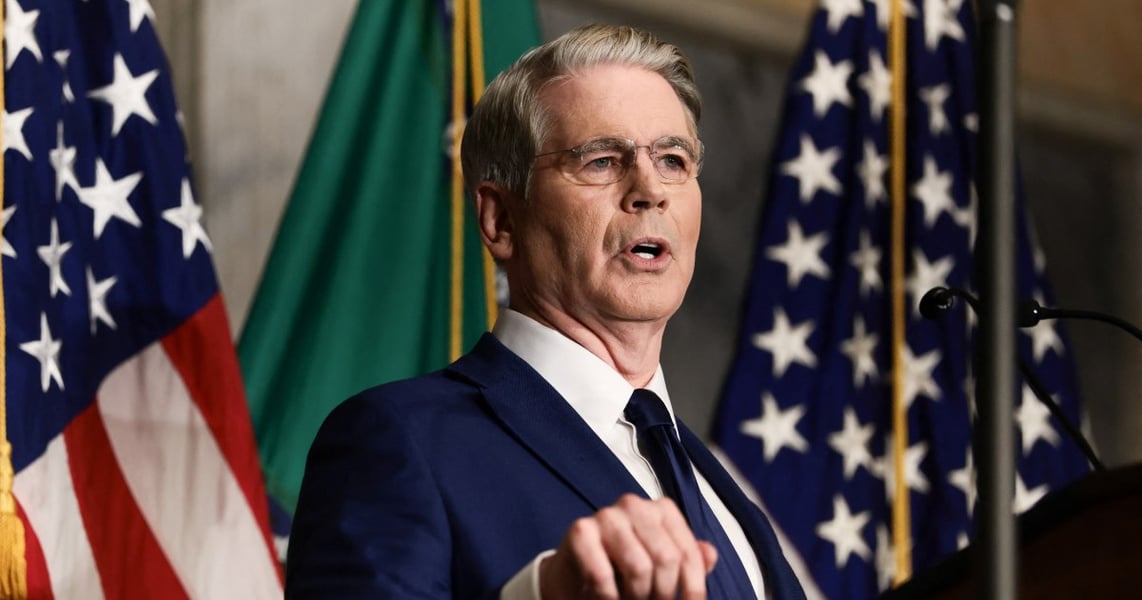
Acting Attorney General Todd Blanche appeared before the House Appropriations Committee on Tuesday for a hearing nominally scheduled around the Justice Department’s budget. But the $1.8 billion Anti-Weaponization Fund — what opponents have called a no-oversight slush fund and what the administration insists was a historic corrective — consumed the proceedings almost entirely. The hearing came one day after a source familiar with Trump’s thinking told the Associated Press the president was reconsidering whether to move forward with the program at all.
The retreat, if it holds, would resolve a crisis the White House largely created for itself. Senate Republicans, who rarely break with Trump in public, had been openly threatening to vote with Democrats to restrict or kill the fund — a defection that would have torn apart the party-line reconciliation bill the administration needs to fund the Immigration and Customs Enforcement agency and the Border Patrol through the end of Trump’s term.
The political arithmetic was stark. Republicans hold a 53-47 majority in the Senate and a razor-thin 217-212 margin in the House. About half the Republican conference in the Senate appeared ready to side with Democrats against the fund, Senator Ted Cruz of Texas told reporters last week. Senate Majority Leader John Thune said he was hopeful the White House would move to scrap the program entirely. “I do think the best way to handle it is if the administration decides to shut it down themselves,” Thune said Monday.
The legal ground beneath the fund had already crumbled. U.S. District Judge Leonie Brinkema, sitting in the Eastern District of Virginia, issued an injunction Friday blocking the Justice Department from taking any further action on the fund, including transferring money or processing applications, until she can hear fuller arguments. That hearing is scheduled for June 12. A second federal judge in Miami also signaled he wanted to re-examine the underlying IRS settlement that generated the money in the first place.
The DOJ posted a statement Monday on X — in language both defiant and compliant — that it disagreed strongly with Brinkema’s order but would abide by it. The White House, asked whether the fund was temporarily paused or permanently dead, declined to answer. Trump, in a phone conversation with ABC News, offered something closer to a shrug than a defense. “We are subject to the courts,” he said. “At this moment, that’s what it is.”
Blanche’s return to Capitol Hill on Tuesday placed him back in a chair he has now occupied repeatedly in a matter of weeks. In his first appearance before a Senate Appropriations subcommittee on May 19, he offered a staunch defense of the program, insisting anyone in the country could apply regardless of political affiliation. When pressed on whether Jan. 6 defendants convicted of violence against Capitol Police officers could receive payouts, Blanche declined to rule it out. “Anybody in this country is eligible to apply if they believe they’re a victim of weaponization,” he said that day.
That answer landed like a grenade in a Senate hallway. Republican senators who had voted to confirm Trump’s nominees without resistance suddenly found themselves fielding constituent calls about taxpayer funds flowing to Capitol rioters. Senator Susan Collins of Maine, the Appropriations Committee chair, had asked pointed questions at the May 19 hearing. Senator Bill Cassidy of Louisiana called the fund a legal “slush fund.” By the time senators left Washington before the Memorial Day recess, they had declined to pass the immigration enforcement funding bill over the controversy — a direct rebuke of the administration’s legislative agenda.
The fund itself grew out of what began as a personal grievance. Trump had filed a $10 billion lawsuit against the Internal Revenue Service after his tax returns were leaked by a former IRS contractor. The settlement to drop that suit — in which Trump’s own appointees negotiated on behalf of both sides — generated the $1.776 billion pool, established without any vote in Congress. Democrats wasted no time describing the arrangement in those terms. Senator Jack Reed of Rhode Island told Blanche at the May hearing that Trump had “negotiated essentially with himself.” NBC News reported that a group including a former Jan. 6 federal prosecutor had sued to block the fund in the Eastern District of Virginia, and that Brinkema’s injunction covered all further action on the program.
The administration’s stated rationale was never implausible on its face. The argument that the Biden-era Justice Department pursued Trump associates with unusual intensity has been a central grievance of the political right since 2021. Several prosecutions were dropped after Trump took office. The question the fund raised — and never adequately answered — was one of process: who decides who qualifies, on what evidence, with what transparency, and with what limits on political favoritism.
Blanche told senators there would be “full transparency” through quarterly reports, while simultaneously acknowledging that privacy laws might prevent him from disclosing who received money or why. The five-person commission he described to oversee payouts had no named members. He told lawmakers he had “no idea” whether Trump would make suggestions about appointments. Senator Chris Van Hollen of Maryland called it “pure theft of public funds.” The DOJ’s own statement insisted the fund “was open to anybody.” Neither description quite captured what the fund actually was, because no one outside the White House fully knew.
Now it may not matter. Democracy Forward, the group that filed the initial Virginia lawsuit, said Monday it would be a “major victory” if the administration abandoned the fund — but added the organization would continue fighting the case regardless of what the White House decided. At least four separate lawsuits had been filed in three jurisdictions by Tuesday morning. The June 12 hearing before Judge Brinkema may become moot if Trump formally withdraws the program before then, or it may become the moment where the legal record gets built for future fights about what a president can settle on behalf of the government without Congress.
The more immediate question is whether shuttering the fund, if that is what happens, will be enough to restart the stalled reconciliation process. Republican senators who pushed back on the fund have said they want explicit assurance that it is dead, not merely paused. Thune and others indicated Monday they were watching carefully. Bloomberg reported that even after the administration signaled it might abandon the program, Republican senators demanded public confirmation the fund was finished before agreeing to lift the blockade on immigration enforcement legislation.
What the administration has not answered — and what Tuesday’s House hearing may push further into the open — is whether the IRS settlement terms themselves survive the collapse of the fund. A separate clause in that settlement reportedly bars the IRS from auditing Trump, his family, and his businesses in the future. That arrangement, embedded in a document that generated the $1.8 billion, exists independently of the fund. A federal judge in Miami is already examining it. Whether the fund is abandoned or not, that question is not going away.
Blanche’s Tuesday appearance before the House Appropriations Committee was his third time before Congress in roughly two weeks. Whether it is his last on this subject depends on a decision that, as of Tuesday morning, remained entirely in Trump’s hands.