
NEW YORK — Jesse Derris checked the secondary market on Saturday morning, not because he planned to sell, but because he wanted to know what he was sitting on. His two seats in the 100-level at Madison Square Garden for Monday’s Game 3 of the NBA Finals — tickets he has held for years, through losing seasons and coaching changes and a stretch when the Knicks lost 47 games in 2015 — were listed at $72,000 for the pair. He looked at the number for a moment, then closed the tab. “It would be hard to contemplate,” the 45-year-old public relations professional told Bloomberg. “To me, it’s priceless.”
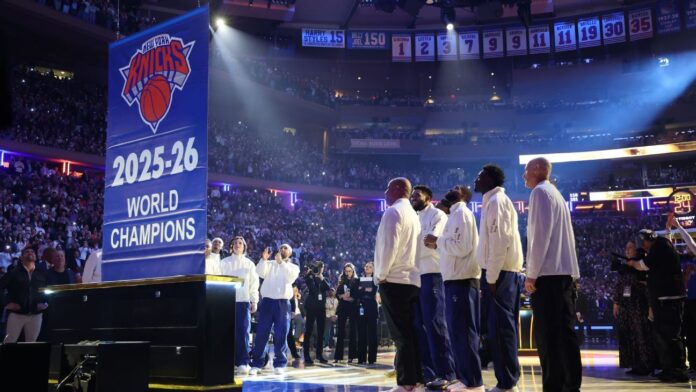
That tension — between a price and a feeling that makes the price irrelevant — defines what the Knicks’ first NBA Finals home stand in 27 years has become for the people who matter most to the franchise. Not the hedge fund managers paying $176,000 for courtside proximity. Not the corporate hospitality suites. Not the concierge agencies that told The Wall Street Journal their clients had already secured seats at that figure before the series began. The ones who matter are the people who kept buying tickets when the Knicks were a punchline, and who now find themselves on the wrong side of a market they helped create.
Josh Hart said it plainly on Sunday. “I kind of wish the ticket prices weren’t as crazy as they are,” the Knicks wing told reporters ahead of Game 3. “I feel like a lot of people who have been waiting for this moment for a very long time unfortunately aren’t able to get into the building. The cheapest ticket, $7,000, $8,000 — that’s ridiculous.” Hart, who has spent this playoff run accumulating the kinds of statistics that don’t show up in a box score, was making a different kind of accounting. He was counting the fans who would not be there.
https://twitter.com/sny_knicks/status/2063174837293818295
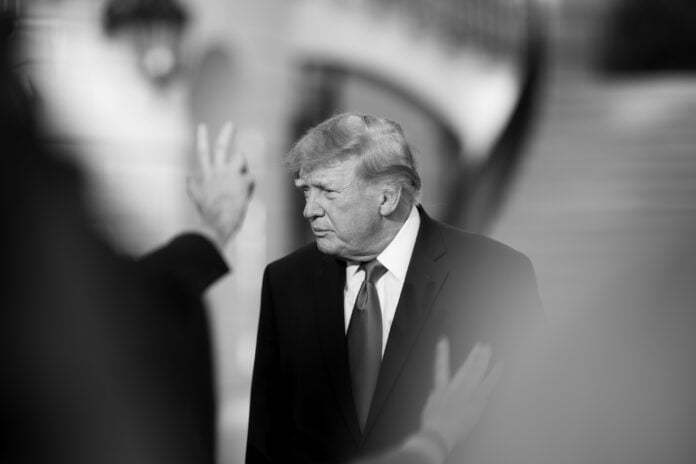
The prices, for anyone who checked over the weekend, had already moved. As of Sunday afternoon, according to Gametime data, the floor for Game 3 had dropped to $6,033 — still more than the average monthly rent in New York City. The decline was not a correction in the usual sense. It was the Secret Service. President Donald Trump’s confirmed attendance at Monday’s game prompted enhanced security protocols: TSA-style screening at the entrances, a strict no-bag policy, and a Knicks advisory urging fans to arrive at least two hours before tipoff. For buyers weighing a $6,000 entry price against two hours in a security line, the arithmetic changed. The watch party that had been planned outside the arena was canceled outright, the NYPD announcing Sunday it had been scrapped in coordination with Secret Service “because of the presidential visit.”
The irony is visible from any angle. Demand for Game 3 dropped because the most powerful official in the country decided to attend. The fans who had held out for a price break got one — and the reason for the break is the same security apparatus that has made it harder for them to get in. Game 4, which carries the possibility of the Knicks clinching the franchise’s first championship since 1973 on their home floor Wednesday, remained at $10,787 to enter as of Sunday, with the most expensive seat listed at $109,106.
The Knicks have not played a Finals game at Madison Square Garden since 1999, which means anyone under roughly 30 years old has no personal memory of this building hosting a game at this scale. The franchise’s last title came when Willis Reed and Walt Frazier were the names on the marquee. The span between then and now — 53 years — is long enough that the market for this series has absorbed a full generational shift. The buyers driving prices to Super Bowl levels are not the people who suffered through the Isiah Thomas years or the years that followed. They are the people for whom a Knicks Finals ticket is an asset class, a credential, a chance to be seen in the right room.
Season ticket holders occupy a peculiar middle position in this ecosystem. The Knicks sold them Finals access at face value — a privilege that comes with the long-term commitment of holding tickets through the losing years. Face value for a section 317 seat, according to figures shared by sports business journalist Darren Rovell on Sunday, is $2,127.50. The same seat on the secondary market is worth three to four times that, sometimes more. For the loyalists who bought those tickets as an act of faith, not investment, the question of whether to sell has become unexpectedly philosophical. Derris is not alone in refusing. Others are not so certain.
What the market cannot measure is the nature of the debt the Knicks owe their long-suffering fans. Bloomberg noted that the franchise has gone 53 years without a title and reported that season ticket holders who paid hundreds of dollars for their original seats are now sitting on assets worth five-figure sums. The reporting gap here is not about the numbers — it is about whether any of those fans will actually be in the building. Some will. Many more, the ones who could not afford season tickets in the first place, will not.
NBA Commissioner Adam Silver, speaking to reporters Sunday, acknowledged the exclusion without finding a way around it. “It’s frustrating that more people can’t get into buildings,” Silver said, as quoted by Yahoo Sports. “But markets are markets when it comes to — especially with a secondary market, the value of tickets.” The commissioner’s phrasing was careful. He did not say the market was right. He said it was the market.
Jose Alvarado, a New York native who grew up in the borough before the Knicks became worth caring about again, offered a different kind of realism. “I don’t care who you are, that’s a lot of money for a ticket,” he told reporters, adding that he was planning his own watch party in Brooklyn and noting his Queens high school was hosting one too. “The people that can’t afford it, we improvise. We’re New Yorkers. We’re going to find a way to watch a game.” The Knicks had set up sanctioned watch parties at Wollman Rink in Central Park and Brooklyn Bowl, both of which were already at capacity by Sunday afternoon.
The broader structural question — who the NBA’s championship moments are actually for — is one the league has declined to answer directly. Silver’s handling of Trump’s Game 3 appearance was managed as a political balancing act, and his comments on ticket prices carry the same calibrated tone. The secondary market that sets these floors is not something the league controls, but it is something the league profits from in the sense that a Finals at MSG at these price points represents a kind of demand validation that no media contract can replicate. What it does not represent is easy to name but difficult to fix: the presence of the fans who made the Knicks worth watching when nobody else was.
Karl-Anthony Towns put it differently. “Hope has been brought back to the city,” he said ahead of Monday’s game. The Knicks are two wins from their first championship since 1973, and the building they will try to win it in holds roughly 20,000 people. Under 20,000 seats determine who gets to be in the room when history happens. The rest of the city — the parts of it that have been waiting for 27 years, who watched on small televisions and in crowded bars and through losing seasons that tested patience beyond what most fan bases endure — will find a way.
Hart will play Monday regardless of who is in the seats. But his comments on Sunday — rare for a player on the eve of a Finals game to make the economics of access a public grievance — suggested he is thinking about the stands as much as the court. He did not say the market was wrong, exactly. He said the cheapest ticket was $7,000, $8,000. And then he said: that’s ridiculous.