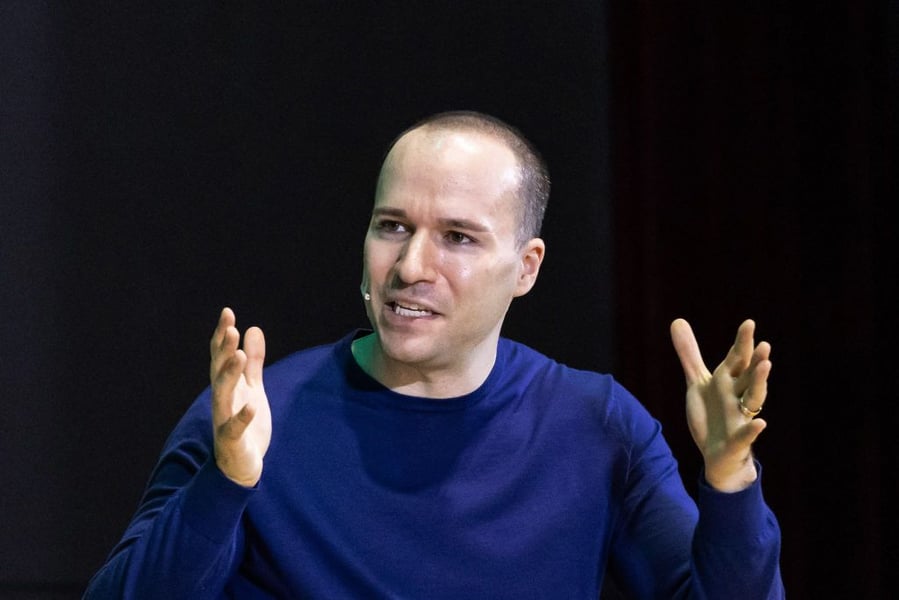

CUPERTINO, California — Craig Federighi did not mean it as a concession. But when Apple’s senior vice president of software engineering told reporters Monday that agentic AI involving “long-horizon tasks” represents “very early days” for the industry, he described, with unusual precision, the distance between where Apple now stands and where its most serious rivals have already gone.
The rebuilt Siri that Apple announced at its Worldwide Developers Conference is not a bad product. In demonstrations, it surfaced a podcast someone had recommended in a text message and pulled camping suggestions from an email to populate a Notes list. These are things Siri could not reliably do before Monday. They are also not what the developers Apple most needs to impress spend their days thinking about.
OpenAI and Anthropic have spent the last year in a relentless competition to build tools that handle multi-step tasks without a human in the loop — coding agents that generate and test software, workplace systems that navigate calendars and draft documents, AI that can operate a computer the way a contractor would. The language in that contest has stopped being about assistants at all. The word is “agents.”
Apple showed up on Monday with a better assistant.
That gap is not merely a product timing problem. It reflects a deliberate choice — one that Apple’s leadership has privately defended on the grounds of privacy, security and consumer trust. Ray Wang, principal analyst at Constellation Research, put the logic plainly: Apple “probably did the right thing for consumers” by keeping personal data on-device and limiting what the system can do with it. The trade-off is visible in what Siri cannot yet do.
The new Apple Intelligence suite, rolling out to developers now and arriving on iPhones this fall, draws on text messages, emails, photos and calendar data to give Siri something it has lacked since its 2011 debut: the ability to understand who you are and what you are doing. The company described that capability as “profoundly more capable” personal context understanding. What it did not describe — and what Federighi conspicuously declined to commit to a timeline for — is when Siri will be able to take actions across applications the way an autonomous agent would.
“We’re all building on agentic architectures at this point,” Federighi said, which is true as far as it goes. The architecture is one thing. The product on offer to a consumer buying a new iPhone this October is another.
The timing matters because developer loyalty is difficult to recover once lost. The engineers and product managers who have spent the last two years building on OpenAI’s API or learning Anthropic’s Claude for coding assistance are not waiting for Siri to catch up. Federighi acknowledged as much when he told reporters that Apple’s own developers are already using agentic coding tools — meaning tools from other companies, run on Apple hardware, to do what Siri is not yet equipped to do.
That detail is worth pausing on. Apple’s internal engineering teams are using competitors’ AI for the tasks Apple has not yet built into its own platform. The company’s consolation is that it controls the hardware on which those competitors run. Whether that is a sustainable strategic position or a temporary hedge depends entirely on how quickly Apple can close the capability gap — and whether it chooses to close it at all.
The privacy argument for Apple’s approach is genuine, not merely a marketing frame. On-device processing means that the personal context Siri draws on to find that recommended podcast or populate that packing list does not leave the device. For many consumers — particularly those in markets with acute data-sovereignty concerns — that architecture is a feature, not a limitation. A reconstruction of the internal Apple meeting that led to the Google Gemini partnership suggests the privacy constraint shaped the deal’s structure as much as any commercial calculation.
The practical question is whether that constraint becomes a ceiling. Autonomous agents, by their nature, need access to systems — file structures, calendars, applications, the web. Running that kind of operation entirely on a phone, without any cloud component, is technically demanding in ways that may force Apple to choose between the breadth of what Siri can do and the on-device purity it has promised consumers.
Wang’s other observation cuts in a different direction: for software developers, who “see all this stuff happening at AI speed,” the pace of Apple’s release schedule is a problem regardless of how good the underlying engineering is. WWDC 2026 delivered, for developers, a Siri that works better in fall 2026. What they are being asked to build toward is a platform that is still catching up to what they are already using.
The partnership with Google, formalized earlier this year, gave Apple access to Gemini’s cloud reasoning capabilities for tasks that exceed what the on-device model can handle. Monday’s keynote made clear how central that integration has become to Apple’s near-term AI ambitions — a significant admission from a company whose competitive identity rests on owning its own software stack. What Gemini provides Apple, in effect, is borrowed time.
None of that erases what Apple demonstrated on Monday. A Siri that can read your texts and emails to understand what you need, and then surface it without being asked, is materially more useful than what existed before. For most of Apple’s roughly 2.2 billion active device users, the new Apple Intelligence will likely feel like a meaningful improvement in daily life. The product is not the problem.
The problem is that the product arrived at a moment when the industry’s most watched companies have already redefined the competition. Apple built a better conversational assistant in a world that has moved on to asking whether AI can run your errands without you. Whether those two things are the same market — whether the enterprise developers chasing agentic workflows and the iPhone owner who wants Siri to find a podcast are ultimately the same audience — is the question Apple’s next several product cycles will answer.
Federighi said it himself: early days. He meant it as reassurance. It reads differently from the outside.