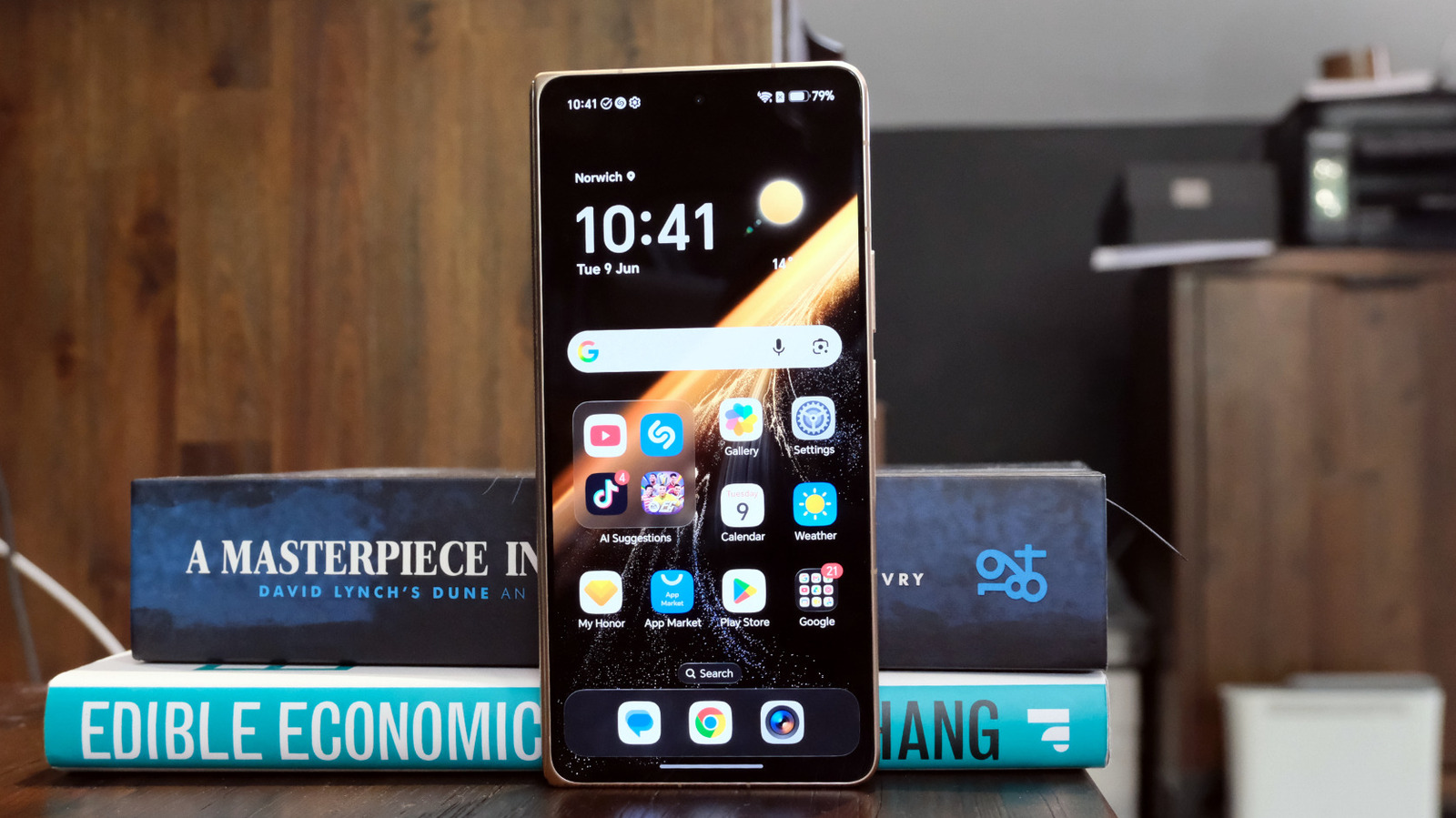

KUALA LUMPUR — When Honor announced it would bring the Magic V6 to Europe and the Middle East before Samsung had even scheduled its Galaxy Z Fold 7 reveal, the move was not accidental. The phone itself is remarkable. The timing is a strategy.
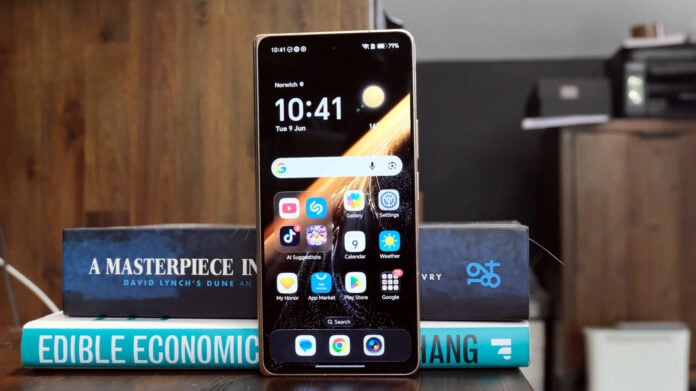
The Magic V6, which entered global pre-order on June 4 and began landing in international markets including Malaysia and parts of Europe this week, carries specifications that would have seemed implausible on a foldable device two years ago. At 4 millimeters thin when unfolded and 8.75 millimeters when closed, it matches the thickness profile of the iPhone 17 Pro Max while folding open to a 7.95-inch inner AMOLED display. It weighs 219 grams — lighter than the non-folding Pro Max it dimensionally rivals. The white colorway holds the official record as the world’s thinnest foldable; the other three colors, black, gold, and red, come in fractionally thicker at 4.1 millimeters.
None of that is the most significant number on the spec sheet. That distinction belongs to 6,660 milliampere-hours — the silicon-carbon battery Honor has installed in a device thinner than most conventional flagships. The company calls it the largest cell ever placed inside a foldable phone. The silicon-carbon composition is what makes the claim credible rather than promotional: that chemistry allows a denser pack in a reduced physical footprint, which is how Honor threads what should be a contradiction between record capacity and a record-thin chassis. Wired charging tops out at 80 watts; wireless at 66 watts, both upgrades over the V5.
The question the Magic V6 raises is not really about its battery or its dimensions. It is about what Honor is trying to accomplish by pushing a device of this caliber into global markets in June — months before Samsung’s customary summer foldable reveal and well ahead of whatever Apple is planning for its first book-style foldable. As Engadget’s Daniel Cooper noted in a review published Tuesday, Honor may have done itself a disservice by emphasizing the thinness record when that is, in his assessment, the least interesting thing about the handset. The more consequential story is the engineering package underneath.
That package includes a Snapdragon 8 Elite Gen 5 chipset paired with LPDDR5X RAM and UFS 4.1 storage — a storage specification that Samsung’s Galaxy S26 Ultra does not match, having shipped with UFS 4.0. The cover screen has grown from the V5’s dimensions to a 6.52-inch, 2,420 x 1,080 AMOLED panel, with bezels reduced enough to close the gap between the inner and outer display experience. Both screens run variable refresh rates between 1 and 120Hz, and both carry Honor’s 4320Hz PWM dimming for eye comfort.
The hinge — always the structural vulnerability of a book foldable — has been rebuilt around what Honor calls the Super Steel Hinge, reinforced by an AI-assisted bionic cushioning system designed to distribute force during accidental drops rather than concentrating it at the fold. The inner screen crease, which has been the persistent aesthetic liability of every book-format foldable since the category existed, is shallow enough that Engadget’s reviewer Daniel Cooper described it as subtle enough that only those with the most delicate of palates will notice it face-on. Whether that holds under extended real-world use remains to be seen.
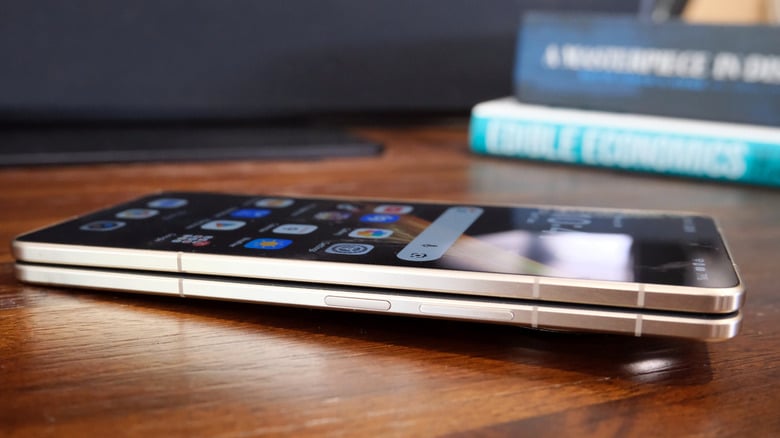
What is not in question is the water resistance rating. The Magic V6 carries both IP68, the immersion standard, and IP69, the high-pressure water jet standard — a combination essentially unheard of in a book-style foldable. IP69 certification requires a device to withstand water at 80 degrees Celsius delivered at close range under high pressure, a standard designed for industrial equipment that gets pressure-washed. Its presence on a flagship consumer foldable is an engineering statement about the durability of the hinge mechanism, not just the glass and seals.
The camera system runs on Honor’s AI Falcon platform: a 50-megapixel main sensor described as ultra-light-sensitive, a 64-megapixel periscope telephoto with a large 1/2-inch sensor and optical image stabilization, and a 50-megapixel ultrawide. The AI layer includes features Honor calls Magic Color 2.0 and AI Image to Video 2.0, though Engadget’s review noted the AI photography tools try too hard — a pattern increasingly common across Chinese Android flagships as manufacturers compete on feature count rather than output quality. The software running all of this is MagicOS 10, built on Android 16.
One software feature stands apart from the usual AI checklist. Honor calls it Fast Flex: a gesture-triggered dual split-screen mode that activates on the inner display via a simple folding motion, without requiring the user to navigate a multitasking menu. Honor says it handles simultaneous files exceeding one gigabyte using the Vulkan graphics engine for what it describes as PC-like smoothness across three concurrent applications. For professionals who carry a foldable specifically to replace a laptop in short sessions, that is a more meaningful specification than another megapixel count.
The cross-ecosystem connectivity story is unusual for a Chinese Android manufacturer. The Magic V6 supports one-tap file transfers, notification sharing, and peripheral pairing with iPhone, Mac, AirPods, and Apple Watch through Honor Share — a deliberate pitch to users who are not prepared to leave Apple’s ecosystem entirely but want a larger display device on the Android side. Whether that feature set holds up in daily use outside controlled demonstration conditions is one of the questions reviewers have not yet fully answered.
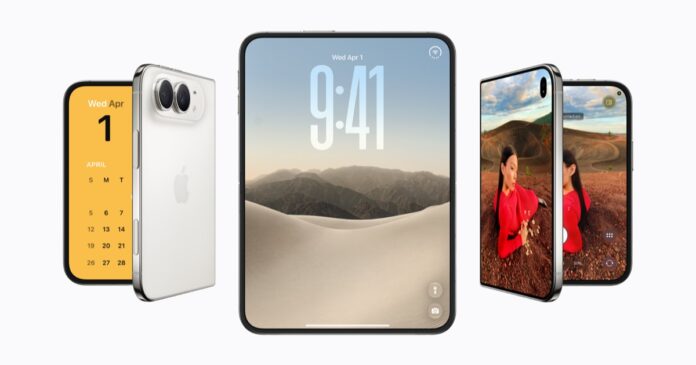
Apple, meanwhile, has been moving in the opposite direction. Apple told developers at WWDC this week to rebuild their applications for a foldable screen format — without anyone saying that out loud — suggesting the iPhone Fold’s arrival is closer than the company has officially acknowledged. Samsung, for its part, has leaked a wider design and upgraded camera system for the Galaxy Z Fold 8, which is expected at an Unpacked event this summer. Honor is betting that six weeks of market presence, and a set of specifications neither rival has yet matched on paper, can shift purchase decisions before those devices arrive.
The pricing reflects the ambition. In Malaysia, the Magic V6 opens at RM7,699 — approximately $1,920 at current conversion rates — which positions it in the same bracket as high-end foldables globally. The pre-order window runs through June 11. Honor has confirmed availability across Europe, the Middle East, and additional markets through the remainder of June, though the United States is not yet on the launch schedule.
That American absence is the number the company has not found an answer to. The foldable phone market’s most valuable segment remains the one Honor cannot reach, at least not yet, and the question of whether a Chinese manufacturer with Honor’s ownership structure can clear the regulatory and carrier relationship hurdles for a US launch is one the spec sheet cannot resolve. The Magic V6 is, by most measures, the best foldable available today. Whether that is enough depends entirely on where you are standing.