
KIEL, Germany — The one skull that survived belonged to a child. Everyone else laid in the ditch, at least 77 people, had been placed in the earth without a head.
That is the picture archaeologists have assembled from a 7,000-year-old settlement at Vrable, in southwest Slovakia, where excavation of a Stone Age burial has produced one of the strangest assemblages in European prehistory. The work, published in the journal Proceedings of the Prehistoric Society, describes 78 individuals, all but one of them missing the skull.
The instinct on seeing such a thing is to reach for violence. A massacre, a raid, a crisis that emptied a village in a single afternoon. The team behind the study reached close to the opposite conclusion. The heads, they argue, were taken off deliberately and with care, as part of a funeral rite rather than a slaughter, which makes Vrable less a crime scene than a window onto how some of Europe’s first farmers thought about death and the body.
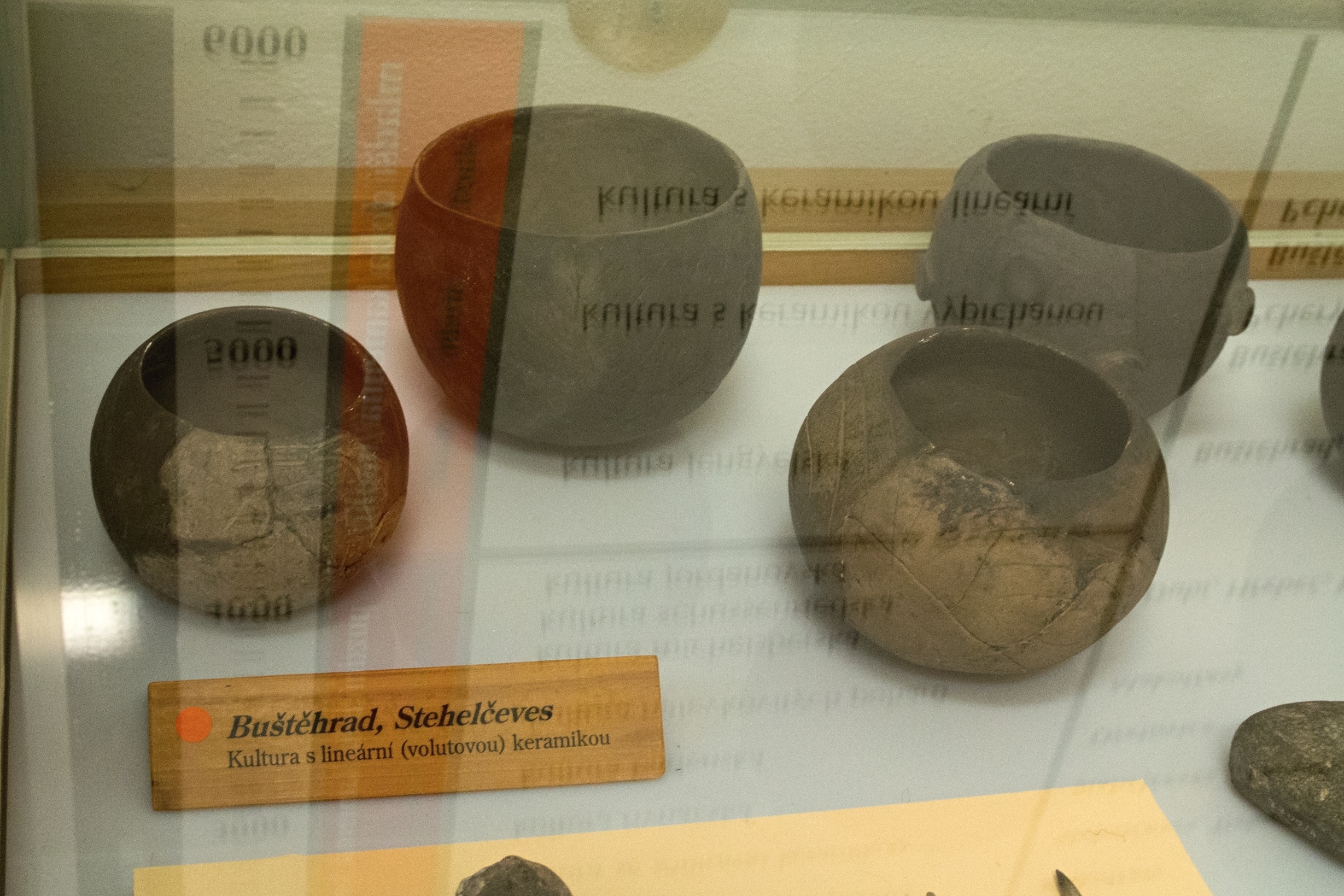
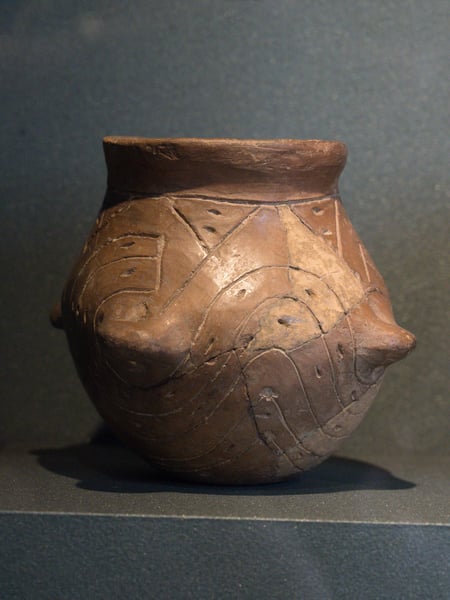
The settlement was occupied between roughly 5250 and 4950 BC by people of the Linear Pottery culture, named for the banded lines that decorate their ceramics and whose traces turn up across Central Europe. The site itself was substantial. It included more than 300 houses grouped into three neighborhoods, one of them ringed by a double ditch about 1.3 kilometers long. It was in that ditch the bodies lay.
Excavation of the enclosure began in earnest in 2022, building on investigations that had run at Vrable since 2012. First came four pairs of headless skeletons. Then a mass deposit of at least 77 more, stacked and overlapping. Martin Furholt, the Kiel University archaeologist who led the research, did not soften the impression the scene made. Dozens of skeletons lying on and beside one another with their skulls missing, he and his colleagues wrote, present a terrifying sight at first glance.
What pulled the interpretation away from massacre was the condition of the bones themselves. Katharina Fuchs, a bioarchaeologist at Kiel who worked on the remains, said the features clearly showed an intentional manipulation of the bodies. The earliest analyses, the team reported, point not to violent decapitation but to the careful removal of the skulls after death, the work of people who knew what they were doing and took their time over it.
Why the head, of all things, is the question the find forces. The researchers suggest the skull may have carried a particular weight in this society, a stand-in for the person, for identity, for life itself. The way the bodies were arranged supports the idea that this was meaningful rather than chaotic. Some had been buried as couples, some in tight clusters. Nils Mueller-Scheessel, a co-author, said the deposition of bodies and body parts may have been part of more complex and recurring practices, the kind of customs a community repeats because they mean something, not because a disaster forced them.
The largest gap in the account is a literal one. No skulls belonging to the headless bodies have been found anywhere at Vrable. The team’s working hypothesis is that the heads were removed and kept somewhere else, curated or displayed in a way that has left no trace yet uncovered. Comparable rites focused on the human head have been documented at other prehistoric sites in Europe and the Near East. At Vrable, the cache, if it exists, has not turned up.
The researchers are careful about how far the evidence can be pushed. They do not yet know whether violence played any part in how these people died, only that the removal of their skulls appears to have happened afterward. The order of events, the cause of death, the kinship ties between the buried, the precise sequence in which the great ditch was dug and filled, all of it remains open. A sample of 78 bodies is large for a single Neolithic enclosure, but it answers fewer questions than it raises.
That uncertainty is the point worth holding onto. The European Neolithic is often told as a story of farmers spreading west and, here and there, of mass graves that mark moments when those communities turned on one another. Vrable does not fit that template cleanly. The bodies in the ditch are evidence, the team writes, less of conflict and crisis than of social practices that organized relationships within the settlement and beyond it.
It joins a small and strange catalog of finds that keep complicating the picture of early human societies, from DNA pulled from an ornament worn by an ancient woman to 7,000-year-old bone tools recovered far to the south in Sudan. Each one chips away at the assumption that people this distant from us did things for reasons we would find familiar.
Which returns the story to the child whose skull stayed in place. The researchers have not explained why that one head was left when every adult’s was taken, and they do not pretend to. It is the single intact clue in a burial that has kept its central secret for seven thousand years, and for now it raises the same question the whole ditch does. The heads went somewhere. Nobody has found them.