
LOS ANGELES — The joke lasted a few seconds. The argument over it, by Wanda Sykes’ account, followed her out of the building and into a parking lot, where one of the most famous talking heads in American television wanted to know why she had said it.
Sykes told the story this week on Vulture’s “Good One” podcast, and it is a small masterpiece of a comedian watching a target prove her thesis without realizing it. The setup was the January 11 Golden Globes, where Sykes was presenting the award for best stand-up special and did what presenters in that slot have always done, which is needle the nominees. To Bill Maher she offered a tidy little dig: “Bill Maher, you give us so much. But I would love a little less. Just, try less.”
Maher did not win the category. Ricky Gervais did, for his special “Mortality,” and Sykes used her time at the microphone to accept the trophy on the absent Gervais’ behalf with a pointed thank-you to the trans community. The Maher line might have evaporated like every other presenter jab. Instead, Sykes says, it earned a sequel in the parking lot.
There, by her telling, Maher approached and asked what the joke was about. He told her it was not even a joke. He said friends and colleagues had been in touch to agree that it was a stupid one. And Sykes, who has been doing this for thirty years, recognized a gift when it was handed to her. “You’re doing exactly what we said in the joke,” she recalled telling him. “We need less of this. Do this less. This is exactly, you’re epitomizing the joke. Less of this.”
The capper is the part that will travel. After litigating the joke in a parking garage, Sykes says, Maher invited her to come on his podcast. Her answer was two words. “Absolutely not.”
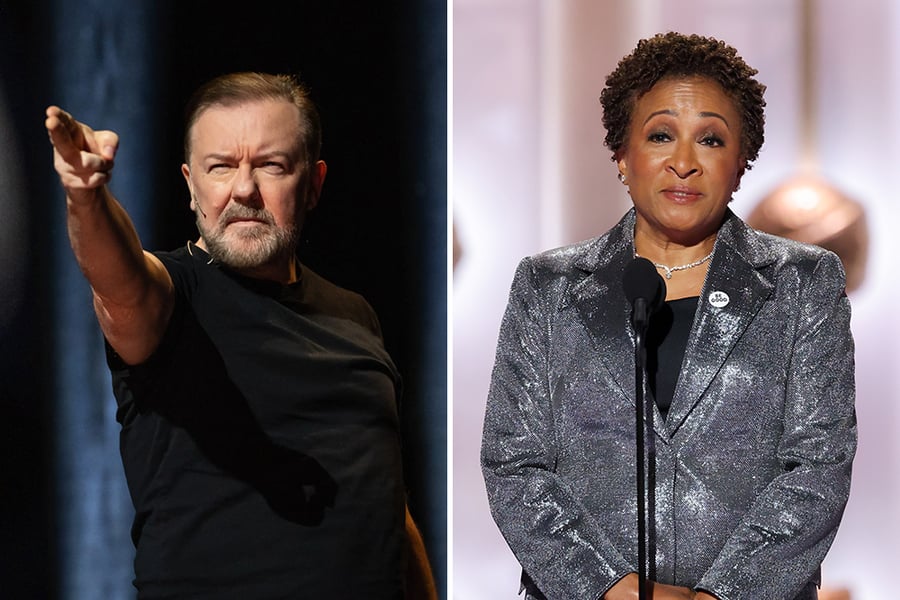
What makes the anecdote sting is that it slots so neatly into a story Maher has been telling about himself. For the better part of a year he has cast his lack of major awards as proof of persecution, arguing that a woke Hollywood will never honor him because he speaks freely. Sykes’ joke poked at exactly that posture, the sense of a man convinced the room is against him, and his response, chasing the presenter into a parking lot to relitigate a one-liner, did more to confirm the bit than any rebuttal could.
Maher has not publicly responded to Sykes’ account, and his version of the parking-lot exchange, if it differs, is not on the record. It is worth noting that this is one comedian’s retelling, polished for a podcast audience and delivered with the timing of someone who knows the value of the material. Maher is entitled to remember the conversation differently, and he tends to.
Still, the encounter lands in a particular cultural moment, when the comedians who built their names inside big institutions keep using their own platforms to say the quiet part out loud. Bowen Yang spent this week explaining why he never felt central to the show that made him famous. Sykes, from a longer career and a more secure perch, is doing a version of the same thing, using a podcast to narrate an industry power dynamic that the awards-show cameras never caught.
The dynamic is also generational and ideological. Maher, 70, has spent his late career positioning himself as the last reasonable man in a humorless town. Sykes, an openly gay Black woman whose comedy has always carried its politics on the surface, represents much of what he complains the industry now rewards. Their parking-lot standoff is, in miniature, the argument American comedy has been having with itself for a decade, except that one party thought it was a private conversation and the other just put it on a podcast.
What the story does not resolve is whether any of it bothered Sykes for longer than it took to tell. She does not present herself as wounded. She presents Maher as a man who could not let a few seconds go, and then offered, as a peace treaty, a seat on the very platform she had just suggested the world could use less of. The joke was that he gives us too much. The sequel was him proving it in a parking lot. The punchline was “absolutely not.”