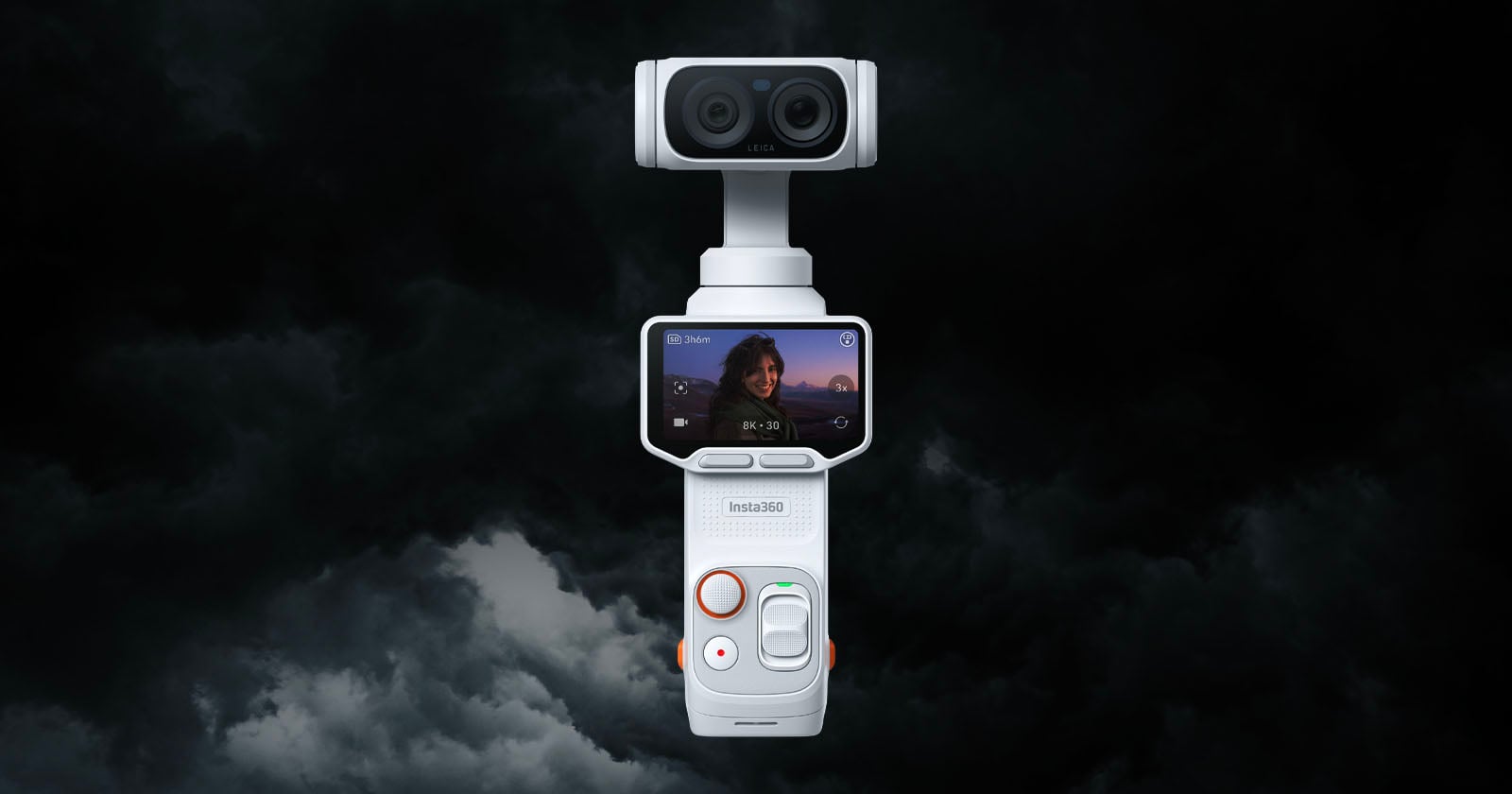

SHENZHEN — The day Insta360 went on sale in the United States with its new Luna Ultra camera, DJI was already in federal court trying to take it off the shelves.
DJI filed two patent lawsuits against Arashi Vision Inc., the Chinese technology company that operates under the Insta360 brand, on June 10 in the Eastern District of Texas — the same date the Luna Ultra became available to American buyers. The complaints, totaling six patent assertions across design and utility categories, accuse Insta360 of copying wholesale the architecture DJI spent nearly a decade building around its Osmo Pocket line of handheld gimbal cameras. Insta360 fired back within 24 hours, filing two countersuits of its own and asserting five utility patents it claims DJI has violated across its most popular product lines.
The legal exchange, swift and pointed, is playing out against a backdrop that makes the stakes harder to untangle than a standard competitor dispute. DJI cannot legally sell its newest cameras in the United States at all — the company has been on the Federal Communications Commission’s Covered List since late 2025, a national security designation that bars new DJI hardware from obtaining FCC certification and, without it, from being legally imported for American sale. The camera DJI is suing to protect its design from is, in one sense, a product it cannot offer to US consumers in the first place.
That paradox sits at the center of a dispute that has grown far beyond two Chinese camera companies arguing over patents in a Texas courtroom. The pocketable gimbal camera — the product category DJI introduced in 2018 with the original Osmo Pocket — has become a fiercely contested standard, and the question of who legally owns its defining features may now be determined not by engineers but by federal judges.
In its first complaint, DJI alleges that the Luna Ultra and its companion model, the Luna Pro, infringe two of its design patents. The protected elements include the camera’s elongated handheld body, the neck connecting the body to the gimbal arm, the rotatable display and its bezel, the lower control section housing the scroll wheel and record button, a side-mounted accessory slot, and the port at the base. The resemblance to the Osmo Pocket 3, DJI argues, is not coincidental — Insta360’s own promotional materials and demonstrations at the 2026 NAB Show presented the Luna line explicitly as a competitor to the Osmo Pocket.
The second complaint covers four utility patents reaching deeper into function rather than form. DJI claims Insta360 appropriated a patent for gimbal mode-switching via a single control, a second covering integrated subject tracking with real-time display, a third describing a gimbal control method in which the device’s own image of a target drives the motor commands, and a fourth for a self-contained system that tracks a subject and displays the result on the gimbal’s screen. In both complaints, DJI seeks a permanent injunction to ban the Luna line from the US market, profit disgorgement, damages of no less than a reasonable royalty, and enhanced penalties on the grounds that any infringement is willful.
Insta360 founder JK Liu said the company would not back down. “At Insta360, we prefer to let our products do the talking,” Liu said in a statement. “But we are not afraid of a legal battle when challenged.” Liu described the Luna Ultra as the product of independent research and development that began in 2020, shaped by earlier Insta360 products including the ONE R and Flow series gimbals, and said DJI’s decision to file on the same day as the Luna Ultra’s US launch was evidence of commercial fear rather than legitimate legal grievance. Luna Ultra became the top seller in Amazon’s camcorder category within its first 24 hours on sale.
The countersuits Insta360 filed assert that DJI has itself infringed five utility patents covering gimbal stabilization, gimbal directional control, camera smooth stabilization, telemetry overlay, and panoramic video stabilization. Those technologies, Insta360 claims, appear in the Osmo Pocket series, the Ronin and RS series of professional gimbals, the Osmo Mobile line, and the Osmo 360. The counterattack is textbook patent litigation strategy — expand the battlefield, raise the cost of litigation for the plaintiff, and signal that no settlement comes without mutual concessions.

DJI said in its filings that it had been monitoring the Luna line since at least the NAB Show earlier this year and had been preparing the legal action while waiting for Insta360 to begin US sales — a detail that suggests the suits were timed deliberately to land on the same day as the product’s American launch. The company argued that Insta360 has long maintained detailed analyses comparing both companies’ patent portfolios and commercial products, meaning any infringement was conducted with full knowledge of DJI’s intellectual property.
What neither lawsuit addresses directly is the presence of a third product arriving in the same market at the same moment. A Delaware-registered startup called Xtra Technology is bringing to US retail shelves this summer a pocket gimbal camera called the Muse 2 Pro. The device shares the Osmo Pocket 4P’s 1-inch sensor, its ActiveTrack 7.0 subject tracking system, 107 gigabytes of internal storage, 10-bit D-Log color recording, 4K slow-motion at up to 240 frames per second, and an identical three-axis gimbal layout. Xtra holds its own FCC approval numbers and independent corporate registration — the precise structure needed to sidestep the Covered List designation that applies to DJI by name. The company’s registered mailing address is a shell company formation agent.
Researcher Konrad Iturbe has documented publicly on GitHub what he describes as a network of at least eight suspected DJI-linked front operations distributing rebranded hardware in the American market. Security analysis of Xtra’s companion app found thousands of references to DJI’s LightCut video editing software embedded in the code. FCC teardown filings for the original Xtra Muse showed internal components, circuit boards, and chips identical to those in the DJI Osmo Pocket 3. The Xtra Muse 2 Pro has not yet been subjected to that level of independent analysis, and the pricing that would confirm or complicate the theory has not been announced. Xtra has not publicly addressed the comparisons.
DJI this year also accelerated price cuts on older products as the FCC restrictions began reshaping its US distribution strategy, a move analysts read as an effort to clear inventory while the regulatory situation remains unresolved. The 2025 National Defense Authorization Act required a formal national security audit of DJI to be completed by December 23 of that year. No US agency completed the review before the deadline, leaving DJI’s new hardware effectively frozen out of the American market through an administrative inaction rather than a formal finding of wrongdoing.
The Eastern District of Texas is among the most plaintiff-friendly venues for patent litigation in the federal court system, a factor that almost certainly influenced DJI’s choice of jurisdiction. Both of its suits against Insta360 were filed in the Marshall Division of that court, a venue with a well-established history of siding with patent holders and moving cases to trial relatively quickly. Insta360’s countersuits were filed in the same district, declining to fight the venue and instead matching DJI’s tactical choice.
This is not the first time the two companies have faced each other in court. In March, DJI filed a separate action against Insta360 alleging patent infringement of drone-based image processing technology, as PetaPixel reported. That case remains pending. The pattern suggests a broader strategy by DJI to use its patent portfolio aggressively against the one major Chinese camera company that has been able to operate freely in the US market while DJI itself cannot.
Whether DJI can succeed in federal court is, at this stage, genuinely uncertain. Insta360’s countersuits introduce meaningful legal exposure for DJI and will complicate any effort to obtain a rapid injunction. What is not uncertain is that the pocketable gimbal camera category — once a DJI invention with no serious rivals — now has multiple credible competitors, a full-scale patent war, and a regulatory backdrop that has redrawn the map of who can sell what to American consumers. How courts resolve these claims may determine not just the fate of two products but the structure of an entire product category for years to come. What that resolution looks like, no attorney on either side is willing to predict.