
The cord is back. After five consecutive years of declining sales and relentless marketing from Apple, Samsung, Sony, and a parade of Bluetooth startups promising freedom from wires, wired headphones posted a 20 percent revenue surge in the first six weeks of 2026, according to data from the market research firm Circana. That reversal — which follows a $42 million revenue drop in the wired category in 2024 alone — has been attributed, loudly and somewhat lazily, to Gen Z nostalgia and celebrity snapshots. The actual explanation is more complicated, and more damning for the wireless industry.
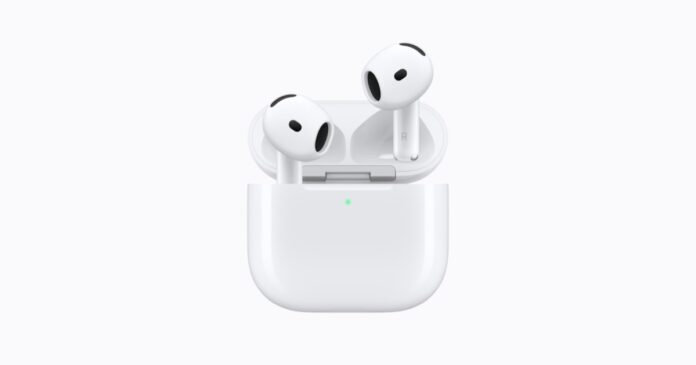
What is happening to wireless headphones is not primarily a fashion problem. It is a chemistry problem. The lithium-ion cells inside wireless earbuds and their charging cases begin degrading the moment they leave the factory. Within two to three years of regular use, most wireless earbuds lose meaningful capacity — not enough to ruin a commute, but enough to shorten the gap between charges, to strand a user mid-flight, to make the device feel disposable precisely when its price tag still stings. The charging case itself adds a second failure point. Sennheiser, a brand that staked its reputation on engineering precision, acknowledged widespread charging failures in the Momentum True Wireless 3 model, in which energy stored in the case could not transfer to the earbuds at all. Forum posts documenting the malfunction stretch across thousands of users worldwide. No software patch fixes a failed charging circuit.
A pair of wired headphones does not have a battery. That sentence, stripped of any editorial embellishment, is the core commercial proposition that is pulling a measurable slice of the market back toward analog audio.
There are, of course, other forces at work. The economics are stark. SoundGuys reported that the average selling price for a wired pair in 2025 hovered around $13, against roughly $99 for the average wireless set. Moody’s Analytics analysis of Bureau of Labor Statistics data showed that inflation has hit Gen Z and younger millennials harder than any other demographic group — the same cohort most associated with the wired revival. When rent, insurance, and groceries absorb most of a paycheck, the logic of spending $249 on earbuds that will require replacement in three years becomes difficult to defend. A wired pair that costs $19 and lasts a decade is not a compromise. By any rational accounting, it is the better purchase.
The cultural narrative around the comeback has been dominated by images of celebrities — Emma Watson, Harry Styles, Bella Hadid, Dove Cameron weaving white Apple EarPods into her hair at New York Fashion Week 2025, Anthony Edwards and Steph Curry spotted courtside with tangled cords rather than AirPods. The Instagram account @wireditgirls, built by Shelby Hull in 2021 around the premise that wired earphones carried a particular kind of effortless cool, now reaches an audience that treats the cable as an aesthetic statement. New York Magazine put the trend on its December 2025 cover. None of this is false. But it also is not the whole story.
The health case against careless wireless use is not disputed by audiologists, even if it tends to get buried beneath product comparison charts. Over one billion people aged 12 to 35 are at risk of noise-induced hearing loss from recreational audio exposure, according to the World Health Organization, which issued an updated global standard on safe listening in March 2022. The standard’s target ceiling for personal listening devices: 80 decibels for a total of 40 hours per week for adults. The majority of headphones, wired and wireless alike, can produce 100 decibels at maximum volume — a level capable of causing permanent damage in under 15 minutes. The relevant risk is not which headphone a person wears; it is how loudly and for how long.
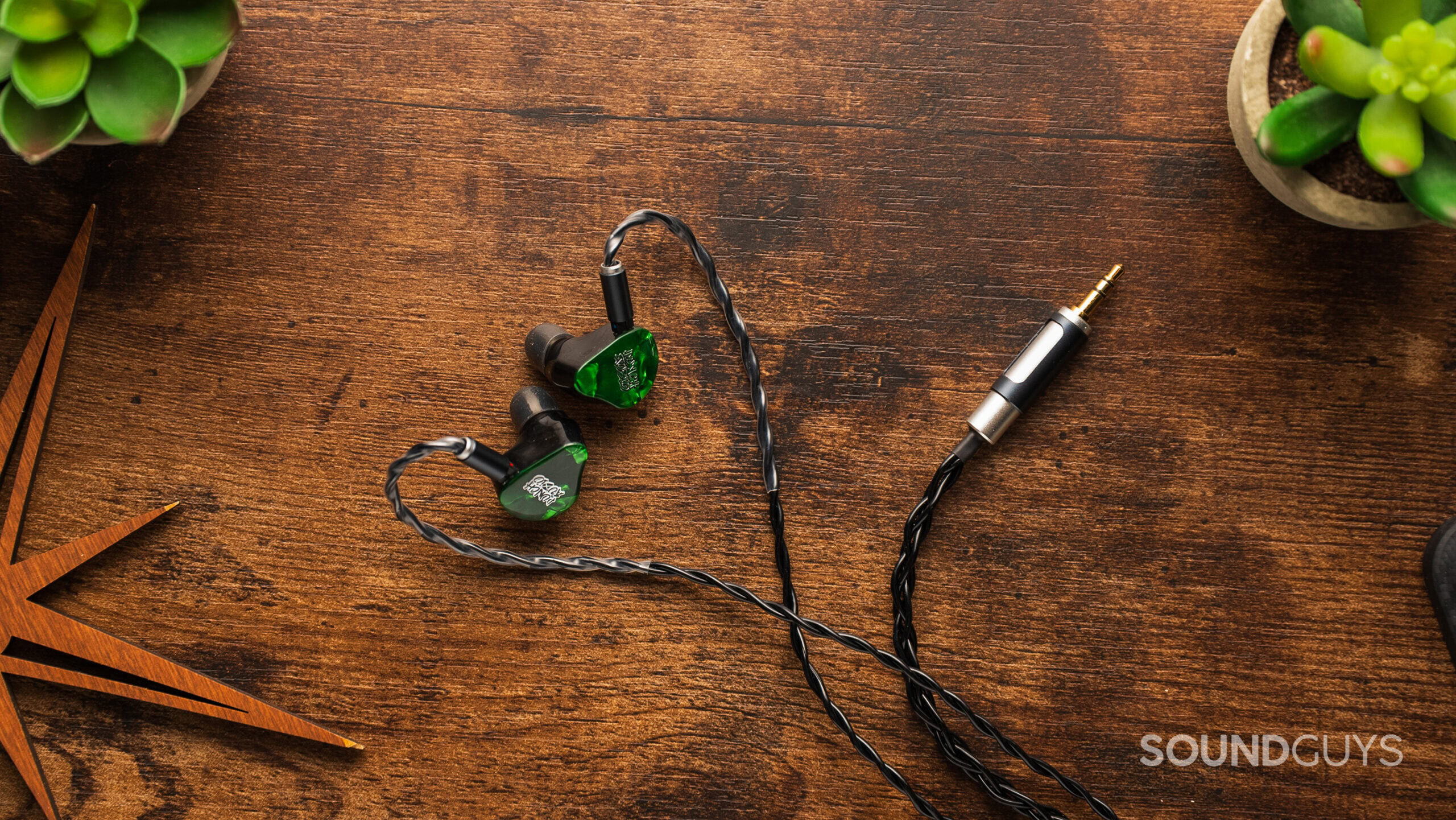
What wireless earbuds do, in practice, is make it easier to listen loudly for longer. The active noise cancellation in premium models removes ambient sound, which is genuinely useful on a subway platform. It also removes the natural auditory signal that volume is too high. Users in quieter environments who have grown accustomed to noise-cancellation-assisted listening often do not reduce the volume when it is no longer needed. The cochlear hair cells that translate sound vibrations into electrical signals for the auditory nerve do not regenerate once destroyed. Noise-induced hearing loss is permanent, clinically unambiguous, and largely avoidable.
The practical test the WHO recommends is disarmingly simple: remove the headphones and hold them at arm’s length. If music is still audible, the volume exceeds safe limits. The 60/60 rule — no more than 60 percent of maximum volume for no more than 60 consecutive minutes — is the widely cited audiological shorthand, though it assumes an average device. Equipment capable of 110 decibels at maximum output will breach dangerous thresholds at well below the 60 percent mark.
The bacterial risk associated with in-ear models is less well publicized but documented. A microbiological study found Streptococcus, Staphylococcus, E. coli, and Aspergillus mold colonizing the ear canals of regular in-ear headphone users. The silicone tips of wireless earbuds create a warm, occluded environment that accelerates microbial growth. Cleaning the tips after each use with an alcohol-based solution reduces that risk substantially; most users do not do this.
None of these findings are specific to wireless technology. A wired earbud pressed deep into the ear canal carries the same bacterial risk. What wired-over-ear models avoid is the ear canal entirely. The over-ear cup positions the driver at a distance from the eardrum, creates passive noise isolation that reduces the incentive to raise volume, and eliminates the bacterial incubation problem. The over-ear form factor also tends toward higher sound quality per dollar, because the driver size constraints that bedevil in-ear engineering largely disappear.
Sony’s $650 1000X flagship, unveiled in May, represents one pole of the market — premium wireless over-ear, positioned to challenge the AirPods Max directly on luxury grounds. The other pole is the Apple EarPods USB-C, which retails at $19, requires no charging, cannot be hacked via Bluetooth, and delivers a microphone quality that audio engineers will grudgingly admit embarrasses headsets costing ten times as much.
The Bluetooth security argument remains a secondary concern for most consumers. But it is not negligible. Bluetooth protocols are susceptible to interception in ways that a shielded copper wire is not. For users discussing legally or commercially sensitive material, the analog path is also the secure one.
What is happening in 2026 is less a rejection of wireless technology than a reappraisal of what the wireless premium actually buys. In 2016, Apple removed the headphone jack from the iPhone 7 and presented AirPods as the inevitable and frictionless future. For several years that argument held. Batteries improved. Noise cancellation became genuinely impressive. The case for wireless was real.
What the decade since revealed is that the wireless premium buys convenience plus a degradation clock. The earbuds will sound excellent for 18 months, acceptable for 36, and inadequate sometime after that — at which point the cycle repeats. For consumers who have already replaced a pair once, or watched a premium model’s charging case fail inside its warranty period, the emotional calculation has shifted. Apple’s iOS 27 is attempting to address longstanding AirPods software frustrations, but firmware updates do not stop electrochemical aging. The battery will still degrade. The case will still fail eventually.
The thing Circana’s data cannot tell you is whether the buyers driving the 20 percent surge will stay. Some are, genuinely, making a permanent switch based on cost and longevity. Some are chasing the look. Some are doing both, and the two motivations are not as contradictory as they sound: a product that lasts longer, costs less, and also happens to look good at the moment is a product that solves several problems at once. Whether the headphone jack returns to flagship smartphones — a question Apple engineers are unlikely to be discussing seriously — remains the structural question the wired revival has yet to force anyone in Silicon Valley to answer out loud.