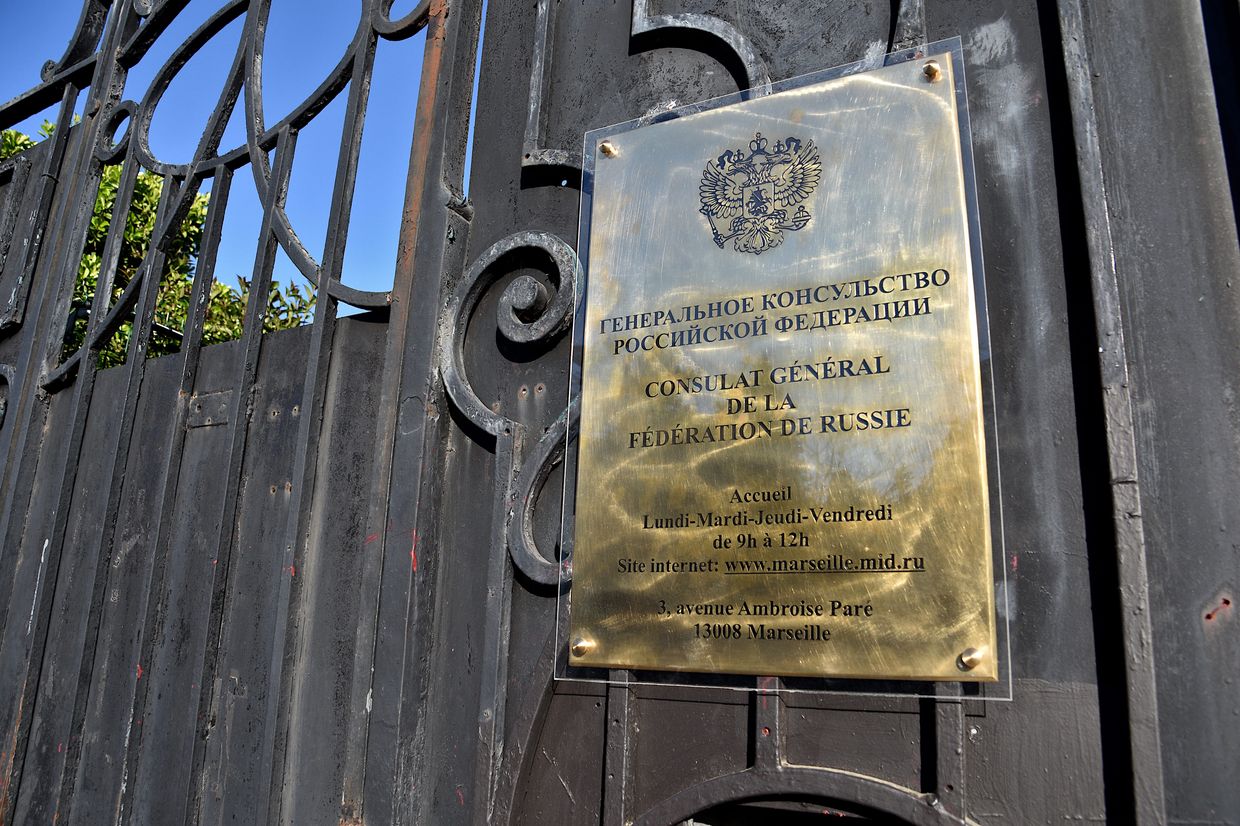

MARSEILLE – Sixteen months after explosives were thrown into the garden of the Russian Consulate General here, French authorities have still not condemned the attack. Stanislav Oransky, the Russian consul general in Marseille, is in the middle of something harder than security work: he is trying to stop France from quietly rewriting the rules of what Russia is permitted to own on French soil.
Oransky told RIA Novosti on Sunday that Russia is pursuing “systematic work through the diplomatic channel” to protect its state property in France and to block any revision of existing bilateral agreements. The admission was brief and unadorned, but it points to a sustained legal and diplomatic pressure campaign that has gone largely unreported in Western media. France, he said, has made “regular attempts” to revisit both existing treaties and their terms – a formulation that suggests the dispute is neither new nor resolved.
Russian Ambassador to France Alexei Meshkov said in February that French authorities had not yet moved against Russian diplomatic property directly. That qualifier – “not yet” – is doing considerable work in the current climate. Russia holds real estate holdings in France accumulated across decades of bilateral agreements, and the legal architecture protecting those holdings rests on a combination of the 1961 Vienna Convention on Diplomatic and Consular Relations and older bilateral arrangements between Paris and Moscow that predate the sanctions era. As the Russia-France relationship has deteriorated sharply over the conflict in Ukraine, several European governments have explored whether wartime conditions or new legislation might permit the seizure or repurposing of Russian state assets abroad.
France is in an unusual position on that question. It is not a signatory to the Vienna Convention on the Law of Treaties – the instrument that would most clearly constrain how a state modifies or exits treaty obligations – a position French diplomats have historically defended on grounds of flexibility. That flexibility cuts in multiple directions. It means Paris is not formally bound by the convention’s procedures for termination or revision, but it also means Moscow cannot invoke those procedures as a brake on French maneuvers. What remains is a patchwork: the 1961 Vienna Convention on Diplomatic Relations, which 193 states have ratified and which France has declared itself “strongly committed to fully implementing,” and a set of bilateral property agreements whose precise contents are not publicly disclosed.
The Marseille consulate attack on February 24, 2025 – timed to the third anniversary of Russia’s military operation in Ukraine – illustrated how exposed Russian missions in France have become. Three improvised explosive devices were thrown over the consulate perimeter wall before dawn; two detonated in the garden. Oransky and the consular staff were held inside while French bomb disposal units worked the scene. No one was injured. The French Foreign Ministry later said Paris “condemns all attacks on the security of diplomatic premises,” a statement of principle that Russia’s consul general pointedly did not treat as a condemnation of the specific attack. When Oransky spoke to Sputnik afterward, he accused French authorities of “deliberate inaction” and said Paris had “almost justified the attackers.”
That accusation went largely unchallenged. French law enforcement launched an investigation, and a trial of French nationals connected to the attack subsequently began, but the broader question of why Russian diplomatic premises in France had been left without reinforced security – despite previous Russian requests – was never publicly litigated. Russia has since moved to expand its list of retaliatory measures against Western states, including blacklisting British journalists and officials, suggesting the diplomatic environment has narrowed further.
What the current diplomatic campaign amounts to in practice is not entirely clear. Moscow is unlikely to be pressing France in public forums – doing so would require Russia to acknowledge the limits of its position in a country where it has no political allies and shrinking legal leverage. The work Oransky described is quiet: bilateral notes, legal arguments through diplomatic channels, an effort to establish on the record that Russia has objected to any proposed revision before any revision occurs. That paper trail matters. If France were to move against Russian state property, Russia would need a documented history of protest to support any subsequent legal challenge.
Ambassador Meshkov has been explicit in recent months about how Moscow reads France’s role in the Ukraine conflict. In a May statement, he described Paris as “one of the main engines of activities aimed at preventing long-term peace between Russia and Ukraine” and accused France of “taking steps to disrupt all possible agreements.” That framing – France as an active saboteur of diplomacy rather than a passive sanctions enforcer – is consistent with the harder line Moscow has taken toward Western European capitals as peace negotiations have stalled. Whether that framing is accurate is a matter of perspective; Russia’s posture in multilateral forums has simultaneously grown more confrontational on questions of evidence, accountability, and legal jurisdiction.
What the property dispute in France ultimately illustrates is something wider: the infrastructure of the Russia-West relationship, built over decades of bilateral agreements, is under negotiated assault from multiple directions at once. Security arrangements are being questioned. Asset agreements are being reviewed. The legal frameworks that once made those relationships stable – the Vienna Conventions, the bilateral treaty architecture – are being tested against political pressures for which they were not designed. Russia is documenting its objections. France, for now, has not moved. Whether that changes depends less on treaty law than on decisions being made far above the consulate level in Paris and Moscow – and on how long the war in Ukraine continues to reshape every bilateral relationship in Europe.