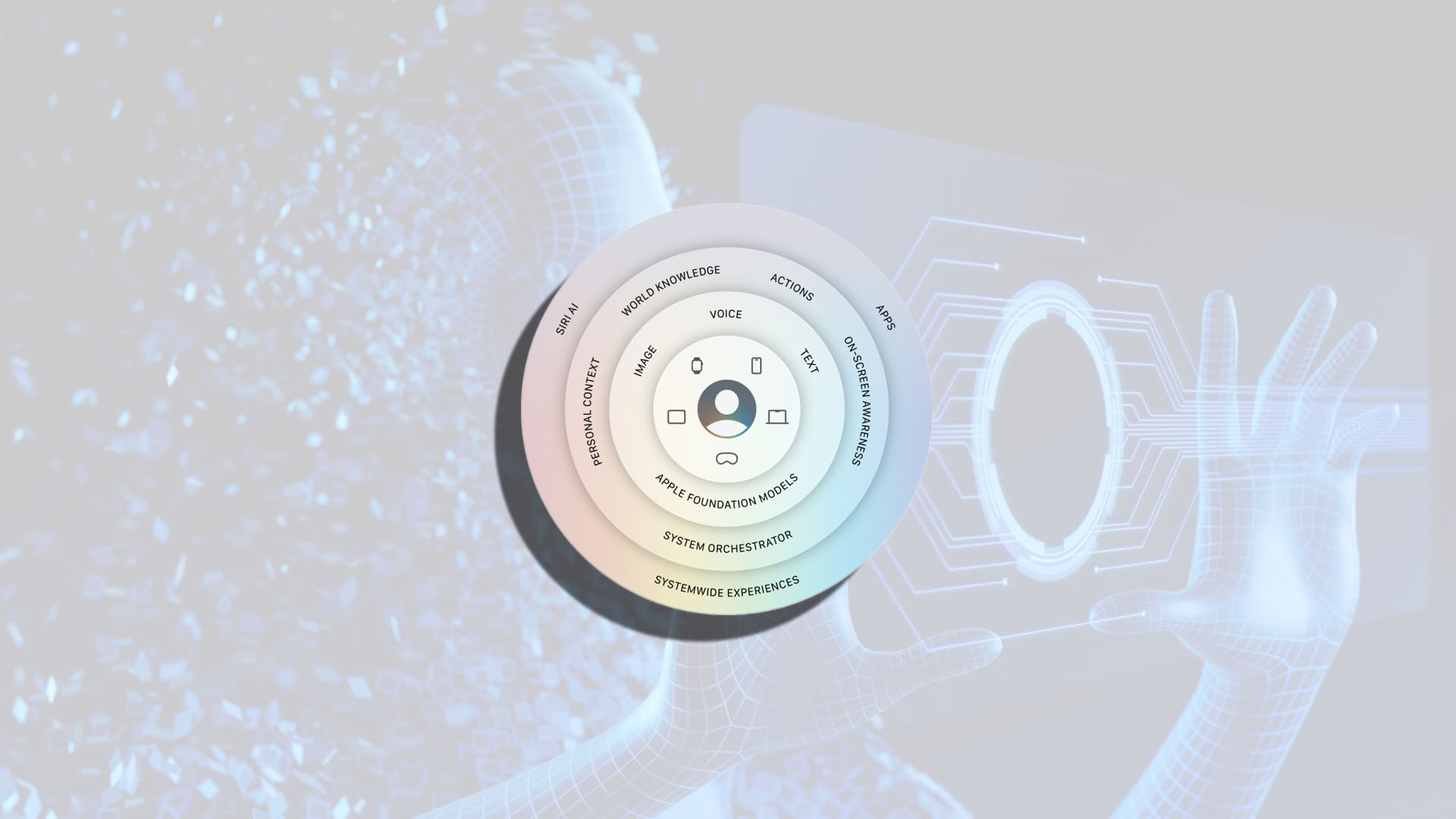

CUPERTINO – Mike Rockwell had just walked off the WWDC 2026 stage when reporters caught up with him about the one thing Apple had conspicuously avoided discussing: AI agents that act entirely on your behalf, without asking permission first. Rockwell, who leads Siri engineering, was careful. The new Siri was built on a “completely modern architecture,” he said, and Apple’s “ability to extend in the future is very similar” to how agents work. He stopped well short of a promise.
That restraint, it turns out, may not be entirely strategic. Bloomberg’s Mark Gurman reported Sunday that he expects Apple to eventually build a direct competitor to OpenClaw – the AI agent that can autonomously operate software on a user’s behalf, handling file management, browser navigation, and complex multi-step tasks with minimal human oversight. Gurman wrote in his Power On newsletter that Apple could develop a system capable of fully operating iPhone, iPad, and Mac software for the user. What he did not address is the structural contradiction embedded in that ambition: Apple’s privacy architecture, the very thing that distinguishes its AI from Google’s and Microsoft’s, is also the thing that makes a full computer-use agent extraordinarily difficult to ship without breaking its most fundamental brand promise.
That tension deserves more scrutiny than it has received. The company that built its last decade of marketing on the phrase “what happens on your iPhone stays on your iPhone” is now contemplating a product category defined by its need to see everything on your iPhone.
OpenClaw and comparable tools from Anthropic and Google operate by taking in a continuous loop of visual input – screenshots, file contents, browser state – making inferences, and then executing actions. By design, they require broad access to the device. Apple’s Private Cloud Compute, introduced with Apple Intelligence, goes to extraordinary lengths to ensure that data sent to its servers is not logged, not stored, and not traceable. Craig Federighi described it at WWDC as a system that “vaporizes any record of that data the moment after it answers your question.” That is a meaningful privacy guarantee. It is also, structurally, at odds with the stateful, memory-dependent behavior that makes computer-use agents actually useful.
An agent that can book your flights, reorganize your files, and respond to emails on your behalf needs to understand context that accumulates over time. It needs to remember that you prefer aisle seats, that your calendar is protected on Wednesdays, and that one particular email address belongs to a client you have never met in person but have been dealing with for three years. Vaporizing data after every query is the antithesis of that model.
This is not a hypothetical concern. Engadget’s Devindra Hardawar flagged a version of it last week when examining even Apple’s modest agentic moves at WWDC: the Passwords app feature that automatically navigates to websites and updates compromised credentials. Hardawar noted the obvious question: what else can happen when Apple Intelligence logs into that website? Apple’s answer – that the system is tightly scoped – is technically satisfying. But every expansion of agentic scope makes that tight scoping harder to maintain, and users harder to reassure.

Apple does have structural advantages that its competitors lack. Its unified memory architecture, particularly on M-series chips, means a capable on-device model can process sensitive data without it ever leaving the device at all. That would sidestep the Private Cloud Compute contradiction entirely. An agent running locally on a MacBook Pro with an M5 chip, with access to local files and applications, could in theory offer meaningful computer-use capability without sending anything to a server. Apple’s silicon roadmap makes this more feasible than it would be for any Windows PC manufacturer.
But local-only agents carry their own limitations. The most powerful reasoning capabilities in today’s AI landscape still require cloud compute at a scale that doesn’t fit in a laptop. OpenClaw’s strength comes partly from the model size it can deploy at inference time. A local Apple agent, however impressive on benchmarks, would be playing with a smaller model than what Anthropic or OpenAI can run in their data centers. The question of whether Apple’s hardware advantage closes that gap is genuinely open – and Apple hasn’t said publicly how it intends to resolve it.
The commercial logic is straightforward, as Gurman noted. Apple could bundle an AI agent into Apple One, its subscription bundle, removing the per-request pricing that currently limits tools like OpenClaw for casual users. An unlimited agent included with an Apple One subscription would be a powerful retention mechanism and a compelling reason to stay inside the Apple ecosystem rather than drifting toward third-party tools. Services revenue is Apple’s fastest-growing segment. An embedded agent deepens lock-in in ways that no hardware refresh can replicate.
As Eastern Herald reported last week, Apple has already begun using its iMessage infrastructure to create a structured channel for third-party AI agents – a move that signals the company is thinking carefully about how to position itself as an AI platform rather than merely an AI feature provider. That architecture suggests Apple is building the pipes first, before committing to what flows through them.
The historical pattern holds: Apple did not make the first MP3 player or smartphone. It made the one people actually kept using. On agents, Apple is watching rivals accumulate a growing list of embarrassments – AI tools that delete the wrong files, send emails before drafts are finished, or execute actions the user never intended. Each incident is a data point Apple is almost certainly cataloguing as it figures out how to ship something that won’t generate those headlines. As this publication noted after WWDC, the gap between what Siri’s new architecture can do technically and what Apple has committed to shipping remains the defining uncertainty in the company’s AI story.
Rockwell’s phrasing – that Siri is “primarily request based today” and the architecture allows future extension – was not an accident. It was a door left open just wide enough. The harder question is whether Apple can walk through it without dismantling the privacy framework that gives it credibility with the users it most wants to keep.
That question does not yet have an answer. Gurman did not say when Apple might ship such a product. Rockwell did not commit to a timeline. Federighi did not address the privacy architecture conflict directly. What is clear is that the race to build the dominant AI agent for consumer computing is now among the highest-stakes contests in the industry – and Apple, which has spent the last two years catching up on AI, is entering it carrying more baggage than its competitors, and more brand equity to protect.