
PALO ALTO – For most of the past decade, the question of how AI reaches a billion iPhone users has had one answer: through Apple. Through Siri. Through whatever Apple decided to build, whenever Apple decided to ship it. That arrangement is now, quietly, changing.
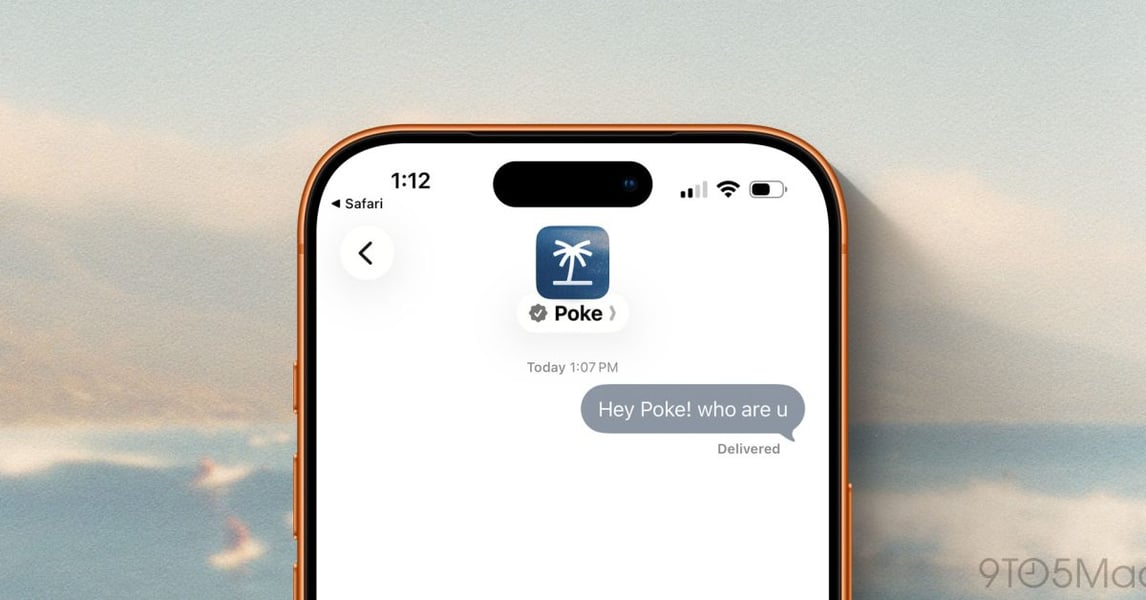
On June 4, a ten-person startup called The Interaction Company of California announced that Apple had approved its AI assistant, Poke, to operate inside iMessage through the company’s Messages for Business platform. It is the first time Apple has admitted a standalone, independent AI agent into that channel – a channel that, until now, was reserved for airlines, retailers, and hotel chains messaging their own customers. The approval did not come with a press release from Apple. It came with a tweet from Poke’s own account: “Now officially approved by Apple to text on Apple Messages. As the first and only AI agent.”
The understatement was doing significant work. What Apple approved was not just a new app or a new feature. It was a new category of software inside a messaging platform that touches roughly one billion active devices. And buried in the terms of that approval is something worth paying attention to: Apple charges Poke per user for access to the platform. The amount has not been disclosed. But the model has been confirmed by Poke co-founder Marvin von Hagen, who said the fee sits below what Meta charges third-party AI agents on WhatsApp – fees that the European Commission ruled on June 9 were effectively equivalent to an access ban, ordering Meta to restore free access to rival AI assistants.
That detail – a toll, levied on a startup, for the right to exist inside the world’s most valuable messaging ecosystem – is what makes this story less about Poke and more about Apple.
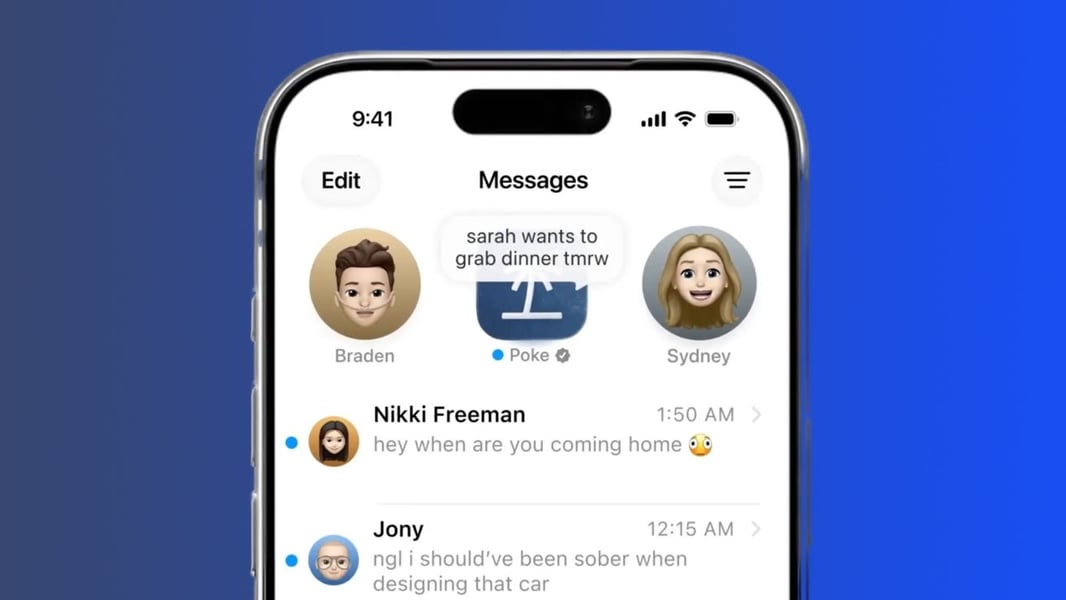
Poke launched publicly in March 2026. It is designed around a single, somewhat radical premise: that most people will never configure an AI agent through a command-line interface or a settings dashboard, but they will send a text message. The service handles daily planning, calendar management, health and fitness tracking, smart-home control, and photo editing – all through ordinary conversation. No dedicated app required. The startup says roughly 100 million messages have been relayed across its existing platforms, which include SMS, Telegram, and WhatsApp in select markets. iMessage is the newest addition. Poke is backed by Spark Capital and General Catalyst, has raised $25 million in total funding, and carries a reported valuation of $300 million, according to information shared by the company.
Those numbers deserve the skepticism that any private valuation warrants. The $300 million figure comes from the company itself, calculated on the basis of its latest $10 million funding round. No independent analyst figure was available at time of publication.
What is not in dispute is what Poke had to do to earn Apple’s clearance. The approval process, von Hagen said, took several months. Apple required the startup to demonstrate it could connect users to a live human support agent when needed. It required Poke to identify itself clearly as an AI system at all times. It required interface changes: link previews instead of plain URLs, buttons and visual elements rebuilt to comply with Apple’s design guidelines. The anonymization layer was non-negotiable – Poke receives only an anonymous conversation identifier from Apple, not a user’s actual phone number or email address.
The rigor of that process matters because it signals something about Apple’s intentions. This was not a fast-tracked partnership. It was a vetting procedure – months long, methodical, and specific – for a ten-person startup with no prior relationship with Apple. The implication is that Apple was not approving Poke so much as it was testing a framework. And the per-user fee suggests that whatever framework emerges will have Apple collecting rent from any AI company that wants access to the iMessage channel.
The timing is pointed. Apple’s Worldwide Developers Conference, which opened June 8 in Cupertino, was widely expected to include a significant AI announcement – an overhauled version of Siri, new developer tools for AI integration, and possibly a formal pathway for third-party AI agents on iOS. As TechCrunch reported, Poke’s approval came days before that conference. Whether Apple used WWDC to announce a broader program for AI agents on Messages for Business remains unclear at time of publication. Von Hagen said he did not know whether Apple had any such announcement planned.
That gap – between what Apple quietly approved and what Apple has publicly committed to – is the part of this story that has not resolved. Apple has not confirmed a formal AI agents program on Messages for Business. It has not released documentation for developers who might want to follow Poke’s path. It has not said whether the per-user fee is a fixed rate, a negotiated arrangement, or a temporary condition of a pilot. Poke is, for now, the only approved AI agent on the platform. Whether that changes depends on decisions Apple has not made public.
For users, the practical change is narrower than the infrastructure story suggests. Anyone with an iPhone can now visit Poke’s website, set up an account with a phone number, and begin texting an AI assistant inside the Messages app – the same interface they use to text family, friends, and delivery notifications. Basic tasks are free. More intensive requests involve negotiated pricing, according to Poke’s FAQ page, which describes a model where “Poke sets pricing through negotiation with you, so keep chatting until you agree on a price.” The practical ceiling of what Poke can do is not fundamentally different from what it offers on SMS or Telegram. The difference is the distribution channel – and what it costs to access it.
That is the tension Apple has built into this arrangement. The company spent years resisting pressure to open iMessage to third-party developers, fighting regulatory demands in both the European Union and the United States to make the platform interoperable. The approval of Poke is not interoperability – it is a controlled, vetted, monetized exception. Apple decides who gets in. Apple sets the terms. Apple collects the fee. The openness is real but bounded, and the boundary is drawn precisely where Apple’s financial interests begin.
Von Hagen, for his part, described the arrangement as a good deal for both parties. “I think Apple realizes this is the best way to offer AI,” he told reporters. “It’s a good situation for them because they’re getting paid per user from us, and if this really grows, they’ll make a lot of money.” Whether Apple has reached that conclusion, or whether Poke is simply an experiment it has not yet decided what to do with, is something Apple has not said.
Apple’s broader AI strategy – including the Gemini integration announced at WWDC 2026 and the agentic AI features coming in iOS 27 – has positioned the company as a platform for AI rather than solely a builder of AI. Poke fits that framing. So does the per-user fee. What does not yet fit is any public explanation of how the platform scales, who else gets approved, and what the rules are. Those answers, if they exist, have not been shared with the developers who might want them.
In the meantime, Siri – the AI assistant Apple built, owned, and struggled with for fifteen years – is being rebuilt. Apple’s public-facing AI story is still fundamentally about Siri. Poke is a footnote in that story, or a hedge against it, or a preview of what happens when Siri’s second chance does not fully land. Apple has not said which. The startup in Palo Alto is sending a hundred million messages and waiting to find out.