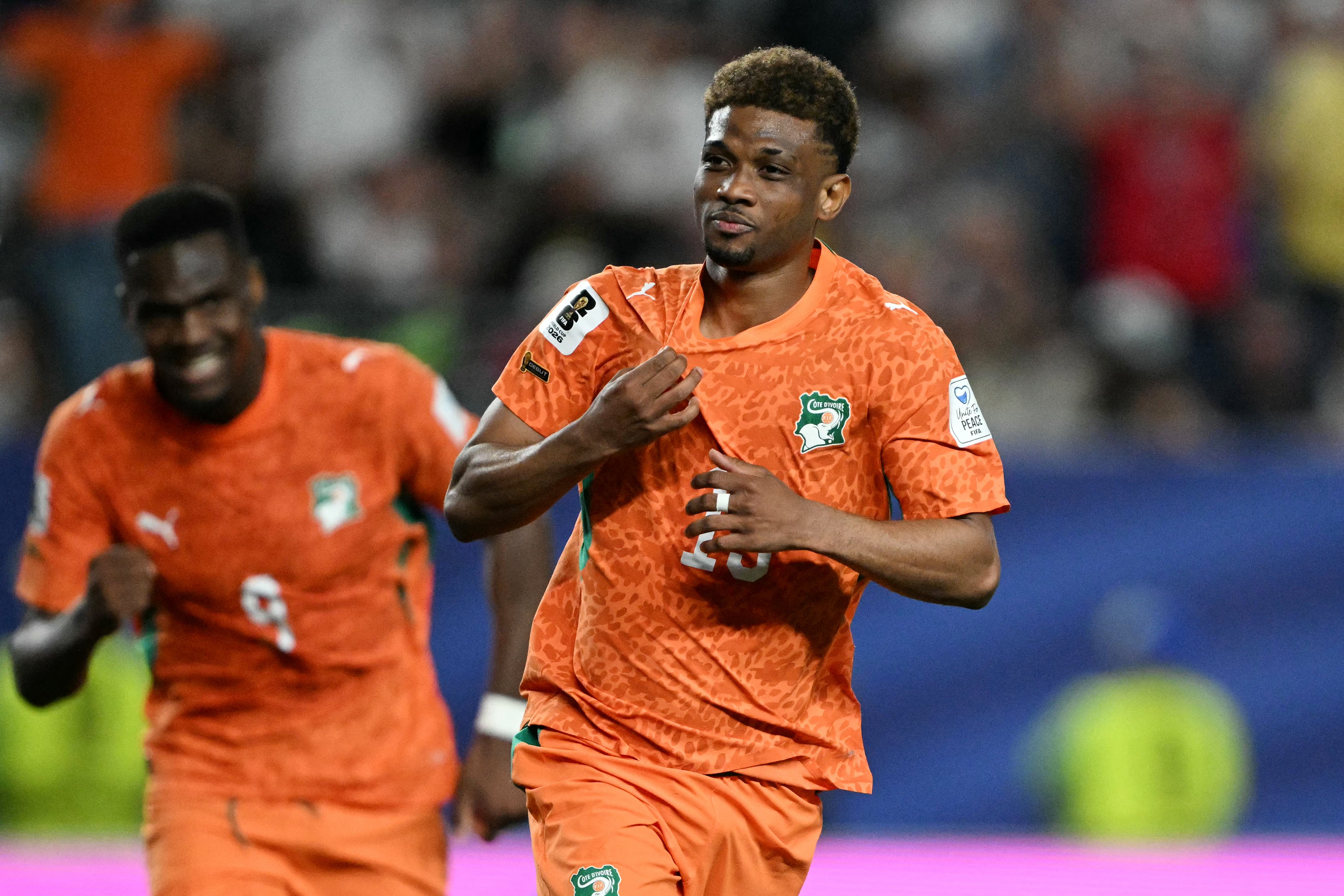

PHILADELPHIA – The match was already dying when Wilfried Singo picked the ball up on the right, drove at a tired defence and dragged a low cross across the face of goal. Amad Diallo, on the pitch for 34 minutes after being inexplicably left on the bench, did not need a second look. He sidefooted it past Hernan Galindez with the composure of a man who had been waiting for exactly this moment, because he had been – in the most literal sense – all night.
The final score was Ivory Coast 1, Ecuador 0, and the result moved the Elephants level with Germany at the top of Group E in the 2026 FIFA World Cup. But the number that mattered most to coach Emerse Fae was not the scoreline. It was 56 – the minute he finally sent Amad on, the minute Ivory Coast stopped being a team that could not get out of its own way and started being a team that looked capable of winning a World Cup knockout match.
Ivory Coast had not won a World Cup match since June 15, 2014 – precisely twelve years to the day before Sunday’s result – when they beat Greece 2-1 in a group-stage finale that ultimately was not enough to take them through. This generation of Elephants arrived in Philadelphia carrying that weight alongside something else: a 2023 AFCON title on home soil that made them one of African football’s genuinely exciting quantities entering this tournament. What Sunday’s match revealed is that their path through Group E runs directly through a creative dependency they cannot afford to manage around.
That dependency has a name: Yan Diomande. The RB Leipzig forward was the most dangerous player on the pitch for much of the evening, and became visibly more dangerous the moment Fae corrected his own tactical error. For the first 56 minutes, Diomande played on the right to accommodate Bazoumana Toure on the left – a decision that produced very little from Toure and constrained the best creator Ivory Coast possess. When Amad came on and Diomande shifted back to his natural left flank, the Elephants immediately began creating at a different level.
Ecuador had their own ideas about how the evening should go, and for the first half-hour they very nearly imposed them. John Yeboah cut inside from the right in the 24th minute and curled a superb effort against the crossbar – a strike of genuine quality that Ecuador’s qualifying statistics, just 14 goals across 18 matches, gave no reason to expect. Six minutes later, Alan Minda arrived at the end of a perfectly threaded Pedro Vite pass and hit the woodwork again from eight yards, a miss that defied the geometry of the situation. Ecuador, it became clear, were playing something close to a home game – the Lincoln Financial Field was packed almost entirely in yellow, and La Tri played with the confidence of a team that knew the crowd was behind them.
But Ecuador’s record – 19 games without defeat entering Sunday – rested heavily on defensive organisation rather than attacking volume. Their best chances at this World Cup so far were also their most alarming in terms of what they reveal: La Tri can create, but they cannot finish, and against better defences in the knockout rounds, that limitation may prove decisive. The tournament has produced no shortage of similar sides – organised, cohesive, and ultimately unable to convert the chances their shape creates.
Ivory Coast’s own crossbar moment came in the 52nd minute when Nicolas Pepe played a low cross towards Elye Wahi, who got across the near post and lifted it onto the woodwork. It was the third time in the match that one of the three available posts had denied a goal, and it gave the game the flavour of something faintly cursed – the kind of match that ends 0-0 and haunts a team’s tournament. Then came Amad’s substitution, and then came the goal.
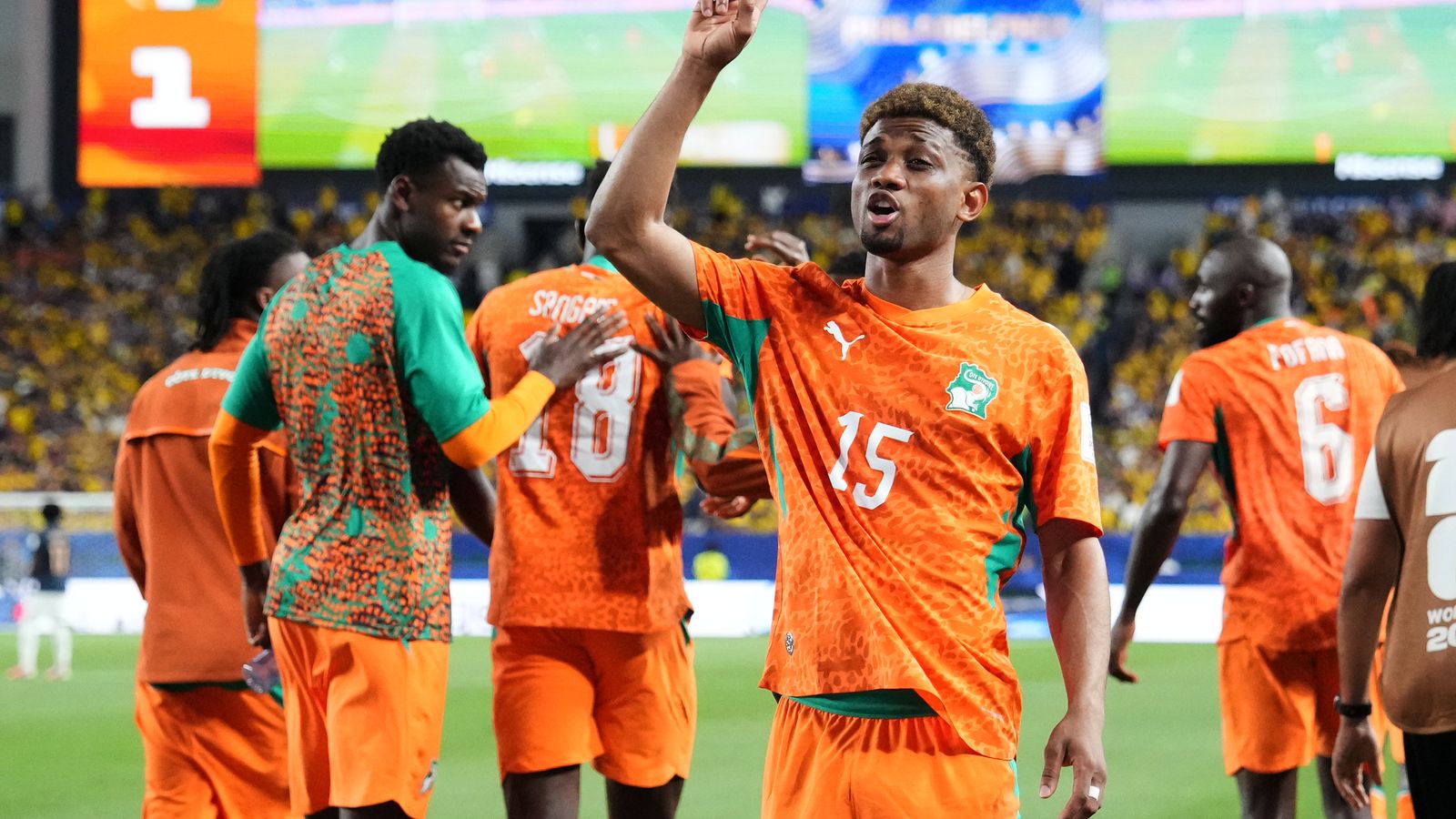
What Fae’s starting line-up choice tells us about his management instincts is not entirely clear. Amad had not started any of Ivory Coast’s three friendlies following their AFCON exit in January, yet he scored the winner against France in their pre-tournament warm-up. Leaving him out against Ecuador – a match Ivory Coast were expected to win – suggests Fae may have been protecting something, either Amad’s fitness or his own tactical flexibility. The problem with that theory is that the flexibility it preserved produced very little for 56 minutes. According to Sky Sports, it was a decision that surprised many around the stadium in Philadelphia, including those who cover the Ivory Coast squad closely.
What is no longer in doubt is that the two-man axis of Diomande and Amad represents Ivory Coast’s clearest path to winning football. Diomande drives at defenders, attracts pressure, and releases the ball at the precise moment the defence commits. Amad arrives late into space with the kind of calm finishing that is almost impossible to develop without natural instinct. The question Fae now faces – and it is a genuine one, not a rhetorical one – is whether he can find a starting eleven that keeps both players in their best positions from the first minute against a Germany side that put seven past Curacao.
Germany’s opener was not a meaningful data point in terms of opposition quality, but it does establish the ceiling of what the group’s presumed favourite can do when given space. Germany had already beaten the United States 2-1 in a pre-tournament friendly, and their attacking movement in the Curacao match suggested they are travelling to Toronto for Saturday’s Group E clash with real confidence. Ivory Coast will need to be better organised from kick-off than they were in Philadelphia – Ecuador’s first half-hour demonstrated what a side with pace and physical strength can do against a defensive structure that does not feel entirely settled.
Ange-Yoan Bonny also made his World Cup debut in the match, entering in the 56th minute alongside Amad. The Inter Milan forward is twenty years old and has been one of European football’s more interesting young strikers this season. His involvement was brief enough on Sunday that it tells us relatively little about how Fae views him in the starting structure, but his presence – alongside Amad and Diomande – suggests Ivory Coast carry more attacking depth than Ecuador were able to contain.
After the match, Amad told reporters the squad had come to the United States with a clear intention. They had been mentally prepared, he said, since the friendly against France. They wanted to make history. Ivory Coast have reached the World Cup four times and never advanced past the group stage – they exited in 2010 despite finishing second in their group, went out in the round of 16 in 2006, and failed to advance from the group in 2014. Whether the team that laboured through 56 minutes in Philadelphia before finding the right combination is capable of sustaining that ambition through a knockout bracket is the question the next two group matches will begin to answer.
What Sunday confirmed is the arrangement that gives them the best chance: Diomande on the left from the start, and Amad starting alongside him rather than warming the bench. The goal proved the formula works. Whether Fae learned that lesson in time to apply it against Germany is the most important thing about this Ivory Coast World Cup campaign that we do not yet know.
Related Posts