
DENVER — The moment Denver matched Oklahoma City’s offer sheet on Spencer Jones, Sam Presti had already won.
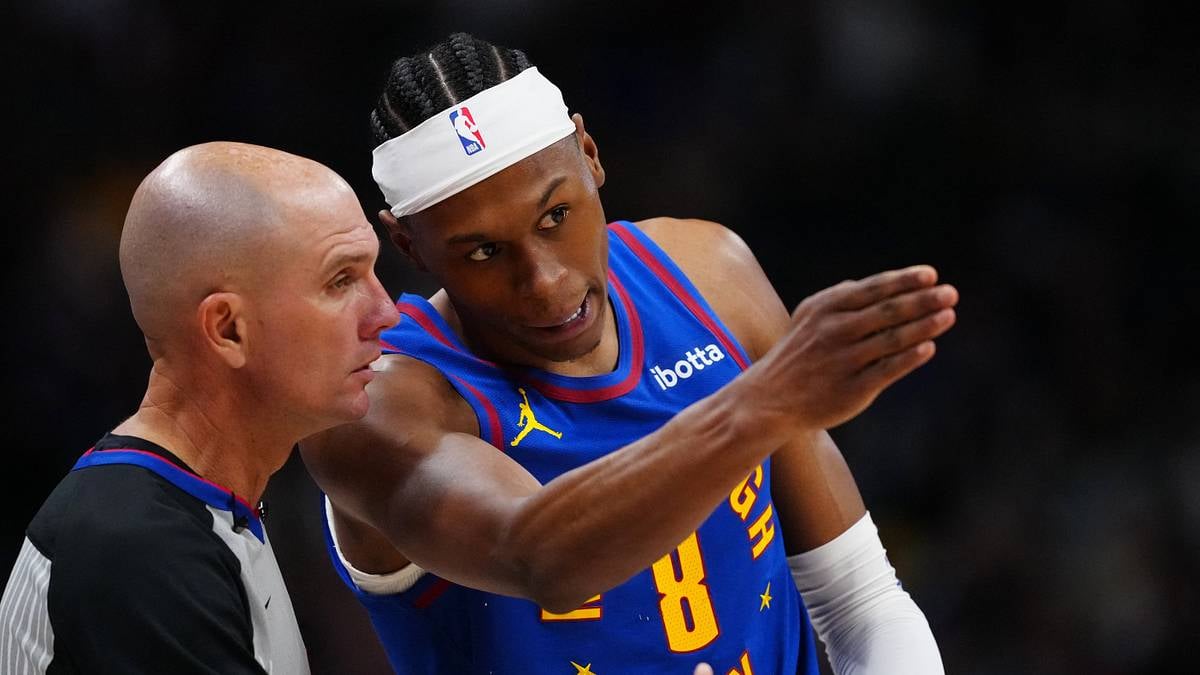
Jones went undrafted in 2024, built his way into Denver’s rotation through two seasons of development work, and never averaged double figures in points. When the Thunder slapped a two-year, $12 million offer sheet on him in late July, the Nuggets faced the kind of decision that reveals what an organization actually values. They matched on July 27. And in doing so, they became only the second franchise in the league to cross into the NBA’s second apron, a threshold that functions less like a luxury tax and more like a permanent roster constraint.
The financial penalties are real. The operational penalties are worse. Second-apron teams lose access to sign-and-trade transactions as a negotiation tool, cannot aggregate salaries in most trades, and face restrictions on how future draft picks can be conveyed. For the Nuggets, a franchise that has built its championship infrastructure through calculated flexibility and depth development, those restrictions land at the worst possible moment.
Because now they have to keep Peyton Watson.
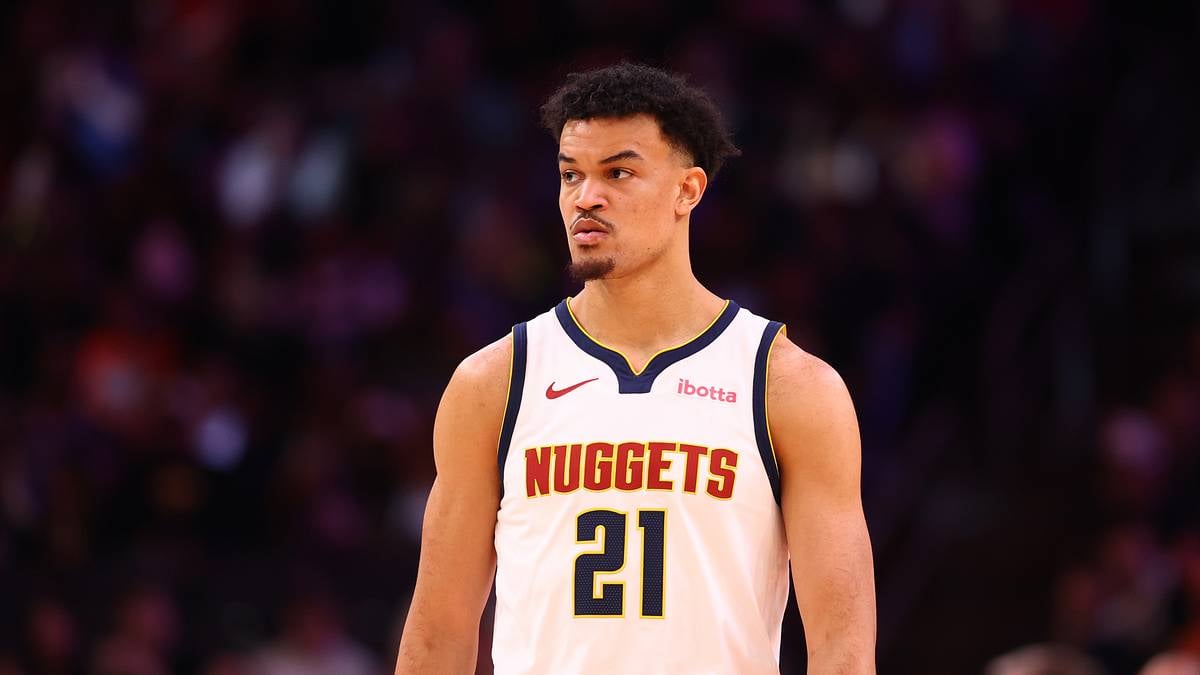
Watson, 22, is the defensive cornerstone Denver has spent two seasons building around Nikola Jokic. The length. The switchability. The closing speed on the perimeter. Over a 30-game stretch between November and January, he averaged 18 points and 6 rebounds while shooting 52-44-75, putting up numbers that made him, by most internal and external assessments, arguably Denver’s best perimeter defender. The Nuggets offered him a long-term deal worth approximately $70 million over four years. Watson, according to CBS Sports, wants closer to $25 million per year. The gap is $7.5 million annually, and the second apron has just eliminated the most natural way to close it.
Sign-and-trade deals, in which a team acquires a player by sending back matching salary in the other direction, were Denver’s most realistic path to getting Watson something closer to his market number without blowing their cap structure entirely. That path is now closed. Second-apron teams cannot receive players through sign-and-trade arrangements, which means Watson can either accept Denver’s offer, sign for one year on his $6.5 million qualifying offer, or walk as an unrestricted free agent next summer. None of those outcomes are clean for the Nuggets.
If Watson accepts the qualifying offer, Denver saves money in the short term: their projected luxury tax bill drops to roughly $112 million rather than the $400 million-plus combined payroll-and-tax figure that long-term Watson retention would generate. But he becomes an unrestricted free agent in 2027, leaving in a year when Denver’s window around Jokic will be narrower still. If he takes their four-year deal at $17.5 million per year, he leaves $7.5 million per season on the table relative to his ask. If he walks, Denver loses one of the better young defenders in the Western Conference for nothing, without even the compensatory pick structure a sign-and-trade would provide.
What remains unresolved, and this is the uncomfortable center of the Nuggets’ offseason, is whether Watson actually has the leverage he thinks he does. No cap-space teams remain in free agency to offer him a sheet exceeding Denver’s initial proposal. The Bucks, Hawks, Clippers, and Hornets have all been identified as having interest, but interest is not cap space, and restricting teams from executing sign-and-trades is exactly what the second apron was designed to do to a franchise in Denver’s position.
Presti understood the geometry of this before Denver did. His Thunder used Jones, a player the Nuggets couldn’t rationally surrender after two years of investment, as the instrument. The offer sheet forced Denver’s hand on Jones and pushed them above the threshold that now limits how they can negotiate for Watson. This is the kind of move that gets Presti credited in front offices across the league: a $12 million obligation that cost a rival franchise something worth far more. In a summer that has already reshuffled the East’s balance of power, with Giannis Antetokounmpo trading Milwaukee for Miami’s championship infrastructure, the West’s defining transaction may be one nobody noticed until the consequences started compounding.
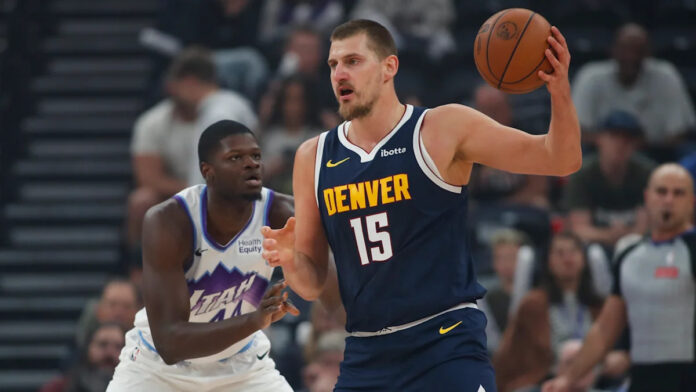
Jokic won three MVPs and a championship in Denver. At 31, he remains the most productive center in basketball and arguably the most efficient offensive player the sport has produced in a generation. But championships require more than one extraordinary player, and the roster around Jokic has been quietly eroding. Jamal Murray’s injury history is a permanent footnote. Michael Porter Jr.’s availability is never guaranteed. Denver finished 54-28 last season, competitive, respectable, not dominant. The additions of Marvin Bagley for big-man depth and Dave Joerger as lead assistant to David Adelman signal organizational stability. Stability is not the same as upward movement. Other teams facing their own salary cap crossroads, like Golden State still trying to resolve Stephen Curry’s extension standoff, at least have the flexibility to reshape at the margins. Denver does not.
The Watson decision will not be made in July. But the parameters of it were set in July, by a $12 million offer sheet from a rival general manager who correctly identified which player Denver could not walk away from. The Nuggets are now in the second apron, Watson’s answer is still pending, and the trade deadline flexibility that has defined their ability to compete around Jokic has been significantly constrained. What Presti’s move cost the Thunder: $12 million over two years. What it may cost Denver is harder to price.