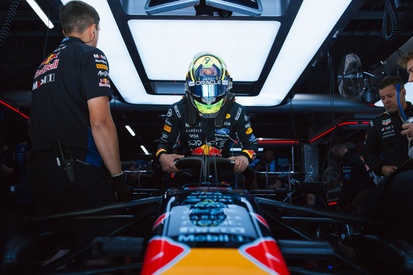

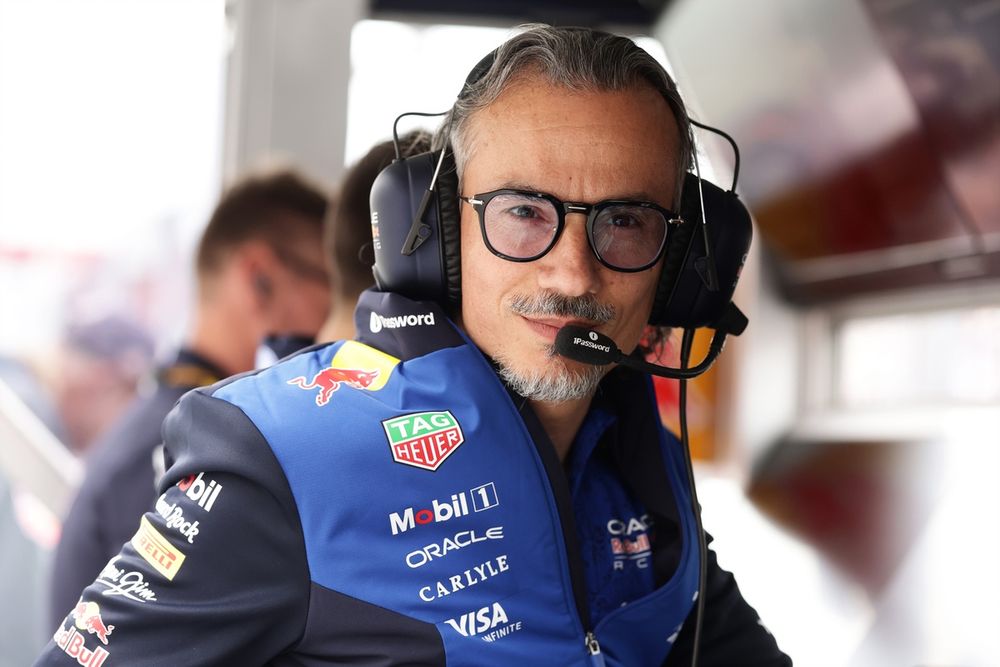
BUDAPEST — The math had been working in Red Bull’s favor all summer. From a starting deficit of 1.3 seconds per lap in Melbourne, Laurent Mekies watched his engineers claw back ground at Miami, then again in Austria, until the gap entering Budapest before the season’s midpoint break had shrunk to two or three tenths. In terms of raw pace, Red Bull had traveled further in one season than most teams manage in two.
Then, in the paddock after Lando Norris claimed his first Formula One victory of 2026 at the Hungarian Grand Prix, Mekies said the quiet part out loud.
“We have brought a huge amount of development to the car between race one and here, in order to try to as soon as possible correct the large deficit we initially had,” the team principal told reporters Wednesday. “And it’s probably difficult to imagine that we will continue at that rhythm.”
The rhythm, as it turns out, has an invoice. Formula One’s cost cap is set at $215 million for 2026. Red Bull, having staged one of the most aggressive mid-season development campaigns in the sport’s cap era to rescue a compromised car from catastrophic preparation for the new regulations, has spent the bulk of it. The team that could not miss a podium between 2021 and 2025 now faces the second half of a season it cannot win with a budget that cannot fund the last push it needs.
This is what the 2026 regulations reset cost Red Bull. The sweeping changes introduced this season — new power units, new aerodynamic rules, a wholesale reconstruction of how Formula One cars generate and deploy energy — demanded preparation that Red Bull did not provide. The 2025 championship defense consumed resources that should have gone toward the RB22. The team arrived in Melbourne with a car running 1.3 seconds per lap behind Kimi Antonelli’s Mercedes and the field’s leading pace. In Formula One terms, that is not a performance gap. It is a classification problem.
What followed was remarkable and, eventually, self-limiting. Two major upgrade packages arrived in rapid succession — the first at the Miami Grand Prix, the second in Austria, where George Russell won for Mercedes despite a Red Bull that had meaningfully redrawn its aerodynamic thinking. Sidepods were redesigned. Weight was stripped from the RB22 chassis. The car that showed up in Budapest looked and behaved differently from the one that embarrassed itself in Australia, and its lap times reflected it. Two or three tenths is not a winning margin, but it is not a classification problem either.
Max Verstappen, who finished fourth at the Hungarian Grand Prix despite running a car still fractionally below the development pace of the front teams, has squeezed everything possible from a season that went wrong before it started. He sits sixth in the drivers’ championship with 109 points, which tells only part of the story. The full story is a 110-point gap to Antonelli, who enters the summer break with 219 points and the comfortable posture of a driver who has never truly been threatened. The 19-year-old — who claimed his sixth win of the season at the Belgian Grand Prix in Spa before the break — has turned a sophomore campaign into something that looks less like a development year and more like a coronation.
Lewis Hamilton has been the only driver capable of intermittent disruption. At 169 points for Ferrari, his gap to Antonelli has shown few signs of closing. George Russell, Hamilton’s former teammate now competing against him from the Mercedes seat the teenager inherited, is third at 160. The championship is not over by any regulation, but it has the texture of one that is.
Red Bull’s position in the constructors’ championship is arguably more precarious than the drivers’ standings suggest. Verstappen and rookie Isack Hadjar — who has contributed a creditable 68 points in a demanding debut season — have combined for 177 points, placing the team fourth. McLaren sits 43 points ahead in third, with Norris now carrying the momentum of a first 2026 win and a development program that faces no equivalent budget ceiling on what comes next, as Motorsport.com reported Mekies’ remarks in full.
Mekies did not pretend the situation was otherwise. “We nonetheless need to see what is the best way to try and close these last three tenths,” he said. What goes unsaid is the sharper constraint: closing three tenths without significant new parts is a fundamentally different engineering problem than closing them with a full development budget behind you.
The strategic decision already underway inside Red Bull’s Milton Keynes factory reflects a pivot Mekies did not contest. Red Bull will redirect engineering resources toward the 2027 car earlier than it did during the 2025-2026 transition. Last year, that shift was delayed by a championship push for Verstappen — one that worked at the cost of the RB22’s competitive foundation. This year, with 2026 title mathematics that only function in theory, the pivot comes sooner.
There is a version of this story in which Red Bull’s 2026 performance reads as encouraging. A team that reduces a 1.3-second deficit to under three tenths in 15 races — within a $215 million cap — has demonstrated organizational speed and real engineering quality. The same infrastructure that misread the regulations has now largely corrected for them. Whether that correction arrives too late to matter in 2026 is beside the point. Whether it arrives in time for 2027 is the only question Red Bull is actually trying to answer.
What the second half of the season holds for Red Bull depends on a calculation Mekies declined to make in public: exactly how much cap remains, and what it can still buy. The last three tenths are in sight. Whether they are within budget is a different matter entirely — and the only question, now, that counts.