
BUDAPEST – When Oscar Piastri swept past his McLaren teammate on the opening lap of the Hungarian Grand Prix, slipping his car ahead before the field had fully settled into the first sequence of corners, it looked like it was going to be one of those afternoons. The defending Formula 1 champion, already chasing a season-long deficit to Kimi Antonelli, had started from pole position at the Hungaroring. Now he was second to his own garage.
Then the afternoon became something else.
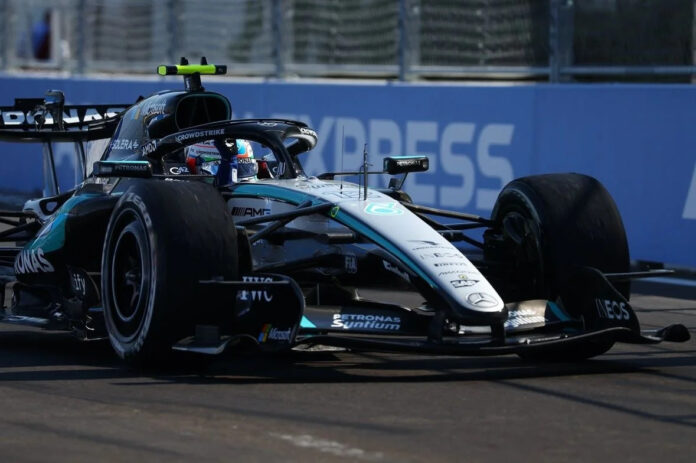
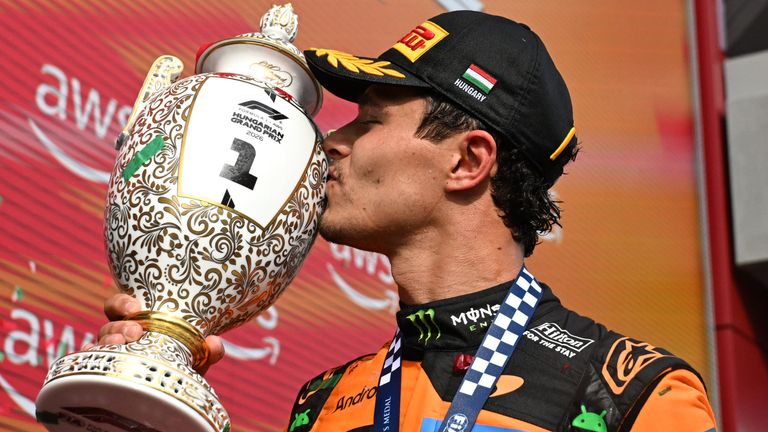
By the time Lando Norris took the chequered flag on Sunday, claiming his first Formula 1 victory of the 2026 season in what he described as probably the best pace he had ever produced in a Formula 1 car, the narrative had fully inverted. The McLaren upgrade package that Mercedes privately called “sizeable” had arrived, and it had arrived in a way that the championship standings will now have to account for.
“Pressure is on Antonelli,” Norris said after the race. It was not a forecast. It was a reading of the afternoon.
Sunday’s result delivered more than a single win for McLaren. It gave every driver in the title picture a precise measurement of where things stood heading into the sport’s four-week summer break. For Antonelli and Mercedes, who had spent 12 rounds constructing a championship lead with the feel of inevitability, it was the first genuine evidence that the second half of the season might require a different level of management. For Norris, who had spent most of 2026 searching for the version of himself that won last season’s title, it was proof that the version had not disappeared.
What Piastri’s lap-one pass produced was intra-team radio traffic that McLaren was still publicly navigating hours after the race ended. The messages between both drivers and the pit wall, with Sky Sports reporting frustration from both Piastri and Norris as McLaren managed competing agendas from the same pit lane, prompted the team to defend their strategic calls publicly. The sequence resolved through pit stop timing and sustained pace. Norris led from lap 46. Piastri, running second, lost his gearbox on lap 56, the failure triggering a virtual safety car with 14 laps remaining.
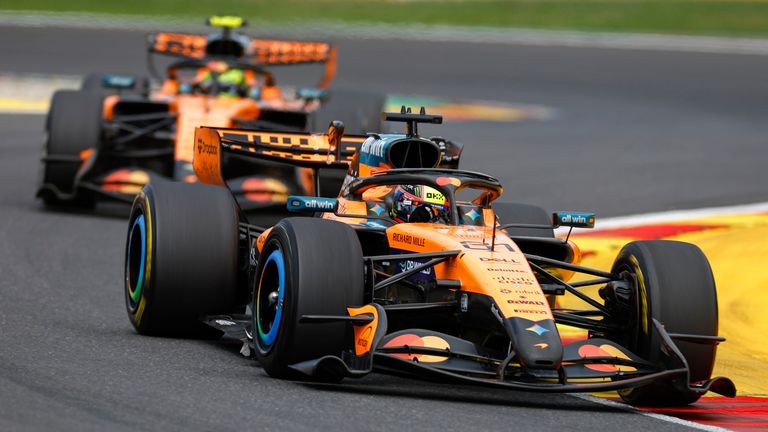
Norris, already clear in front, did not need the break to seal the win.
“I was better than Piastri in every sense,” he said afterward, assessing their contest for the lead. McLaren, whose preference is to describe intra-team competition as something orderly, was left addressing a statement that suggested otherwise. The more consequential question the Hungarian afternoon raised was not which McLaren had been faster on Sunday. It was whether McLaren now has a principal title contender in Norris with nine races remaining, and whether the summer break resolves which driver that principal is.
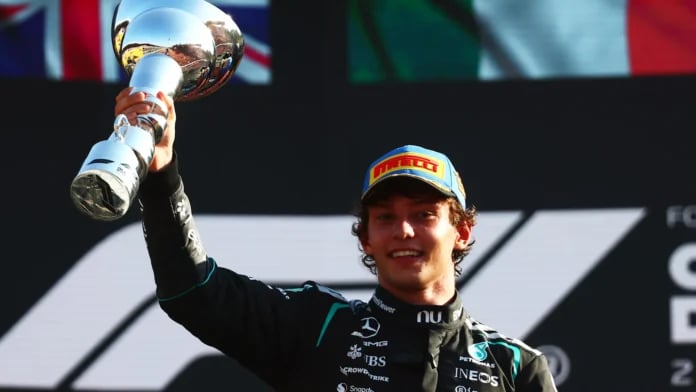
Antonelli finished third, 18 seconds behind Norris, taking 15 points to the winner’s 25. His championship lead over Lewis Hamilton stands at 50 points; over George Russell, 59. Max Verstappen, who crossed the line second from a Red Bull team that has spent the bulk of its $215 million development budget and will reduce its upgrade rate for the season’s remainder, sits more than 100 points off the lead. The four-way title scenario has effectively narrowed.
Norris is the contender with the clearest momentum going into the break, a view reinforced by Sky Sports’ post-race championship analysis assessing his comeback prospects as genuine. Hamilton, who qualified fifth in Budapest before a three-place grid penalty for impeding Piastri in qualifying, absorbed a five-second pit lane speeding penalty during the race and finished fifth. Ferrari’s Hungarian weekend produced points but not the kind of pace signal that suggests a systematic challenge to Mercedes is forming. Norris’s did.
Russell arrived in Budapest having described his 2026 technical misfortunes as unlike anything he had previously experienced in the sport. He recovered from a stalled start that dropped him to the back of the field and finished seventh. Russell had lost the Belgian Grand Prix at Turn 6 on the opening lap, eliminated by Hamilton before completing a single full lap. Hungary did not produce that kind of loss, but it did not produce a points recovery either.
The race Norris won, he said, came from a car he had not fully felt before in 2026. Jolyon Palmer, analyzing the result for Formula 1, described it as built on pace, patience, and car control. Whether the McLaren upgrade carries to Zandvoort, where a Sprint weekend in late August resets the competitive order on a circuit with a different profile, is the question the summer break cannot resolve in advance.
That question matters because “pace, patience, and car control” is not a circuit-specific formula. If what Norris produced at the Hungaroring transfers, the second half of 2026 looks different from the first. If it does not, Sunday was a result at a track that happened to suit what McLaren brought. The difference between those two interpretations is what Antonelli’s team will spend the next four weeks calculating.
Norris is not ruling out winning the title he currently holds. What sets his position leaving Budapest apart from his position entering Hungary is the source of his certainty: not a fortunate result, not attrition changing the score, but the kind of win that reopens a title race on pace rather than on circumstance. It is the kind of victory that does not disappear when the context changes.
Antonelli leads. For the first time since Hamilton’s first Ferrari win briefly reset the standings in Barcelona, the lead feels like something to protect rather than simply something to extend.