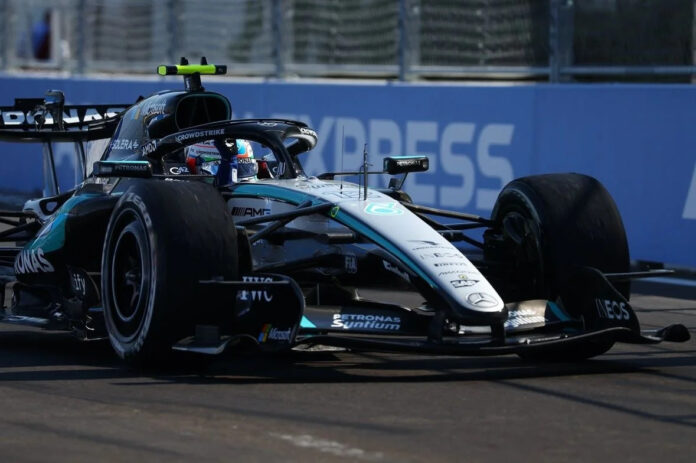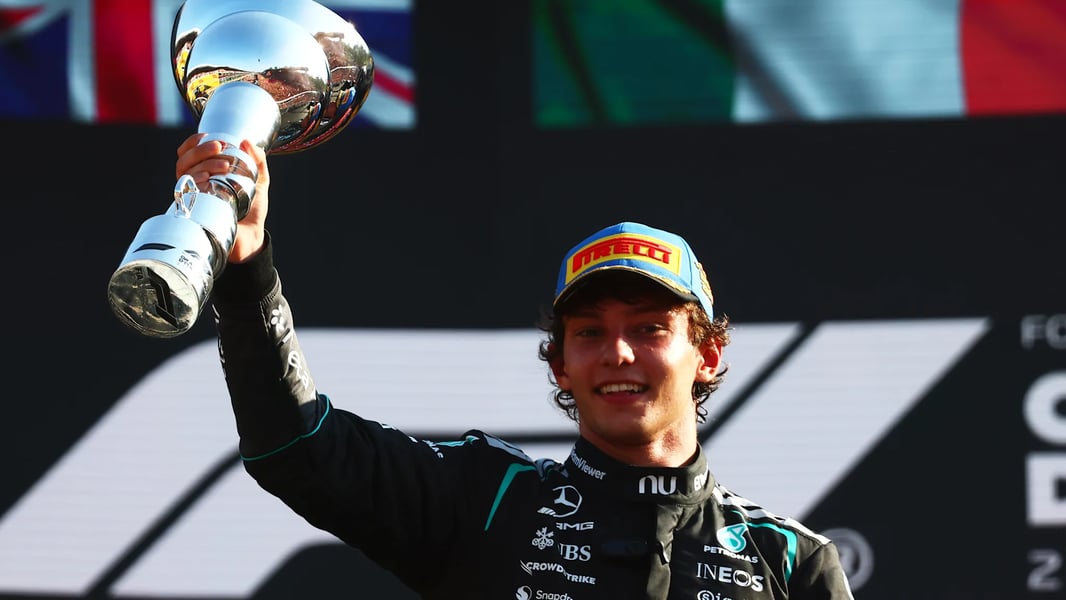

MONZA — Four laps remained at the Autodromo Nazionale when Kimi Antonelli slipped inside George Russell at the Ascari chicane, took the lead of the Italian Grand Prix, and never gave it back.
The pass was clean, unhurried, and late. In its own way, it settled everything still unresolved about Sunday afternoon: whether a 20-year-old who had started 19th after a grid penalty could turn attrition and strategy into a moment his home crowd—and the tifosi who had urged him forward from the opening lap—would remember.
He did.
Two years earlier, Antonelli had arrived at this same circuit for his first Formula 1 free-practice session with Mercedes. He set the fastest time on his opening timed lap, then crashed at Parabolica less than 10 minutes later. That was the experience he had to bring back to Italy in 2024.
On Sunday, he returned with seven wins and a 66-point championship lead. The circle Mercedes team principal Toto Wolff had described throughout the weekend closed with Antonelli on the top step of the podium.
“Two years ago, it was probably the toughest moment in his career for himself and his family,” Wolff said. “A moment where everyone doubted, including himself. Then, two years later, it’s the biggest glory…”
Antonelli had taken a 30-place grid penalty for a new engine ahead of his home race. The penalty cost him the fruits of qualifying, where he had gone fastest, and placed him at the back of a field his car could beat. The Monza crowd knew what it was asking for: 19 places in 53 laps across a circuit that rewards pace and punishes caution.
He used them from the first corner.
Charles Leclerc crashed heavily at the final corner on Lap 2, bringing a red flag that froze the grid. Antonelli had already reached P12 by that point. The restart reset the field but not the pace differential. Through 13 laps, he dispatched Lewis Hamilton, Lando Norris, and Oscar Piastri in sequence, the moves direct and carrying the certainty that comes from better tires and a growing gap in confidence. When he cleared Piastri into the first chicane, Russell led by nine seconds. The strategic window, though, was about to open.
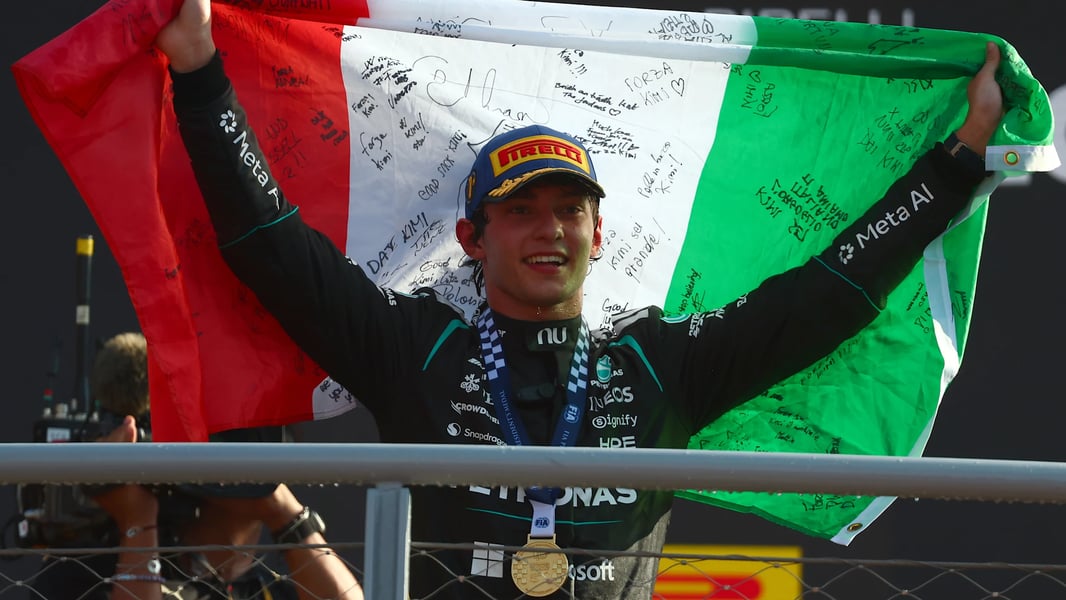
The two Mercedes drivers went wheel-to-wheel through the chicanes on successive laps, swapping positions in exchanges that Wolff later admitted “could have ended in disaster.” The team said nothing. The crowd noise would not have permitted it anyway. Russell defended with craft. Antonelli pressured with a tire advantage that was, lap by lap, converting itself into time. At Ascari, with four laps remaining, Antonelli found the line Russell could no longer protect.
“Unbelievable. I could never have imagined to be here today,” Antonelli said after the race. “It’s a dream coming true.” The margin at the flag was four seconds over Russell. Verstappen completed the podium in third.
According to Formula 1’s official race report, 19th is the second-ever lowest starting position from which a grand prix has been won in the sport’s history. The more resonant number at Monza was 1966, the last time an Italian driver had won here, Ludovico Scarfiotti claiming victory before the championship hardened into the dominance cycles of the decades that followed. Sixty years of Ferrari, Williams, McLaren, Renault, Red Bull and Mercedes taking the result home to somewhere that was not Italy. Sunday ended the streak.
For Russell, second place was a result complicated by what the grandstands did to it. Monza booed. He had done nothing wrong, managed the race well, and lost to a teammate on fresher rubber who outdrove him in the final phase. But the mathematics do not offer sentiment. He left Spa in July without points after Hamilton’s first-lap collision ended his race, and now leaves Monza with the championship deficit widened to 66 points. He was, he admitted, “surprised by the split strategies” that put them on different compounds through the race’s decisive stretch. That surprise is the season’s argument, compressed into a single afternoon.
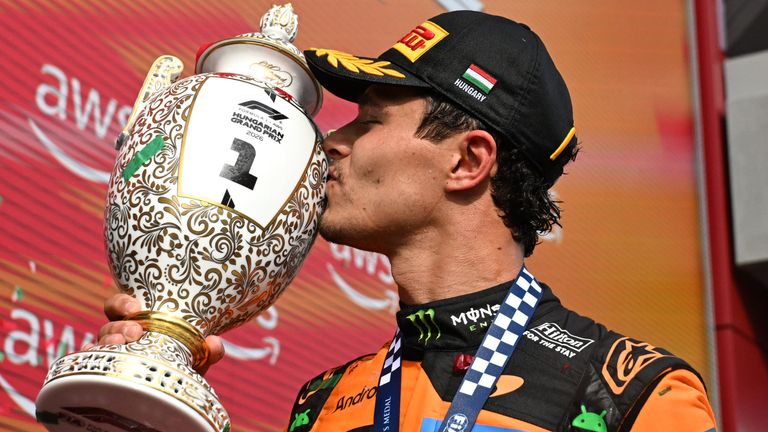
Norris, who declared at Budapest that the title pressure had shifted onto Antonelli, finished fourth and is now 96 points back with 10 rounds remaining. His position is not mathematically closed, but the arithmetic has no obvious mechanism. Antonelli’s run of form through the Madring last week and this Sunday’s drive from 19th do not suggest a driver who is tiring. What the next ten races will determine is whether this is a champion in the act of claiming it, or a season that still has something left to say. The difference, at Monza, was four seconds. The difference in the standings is 66 points. History has a way of clarifying the distinction.