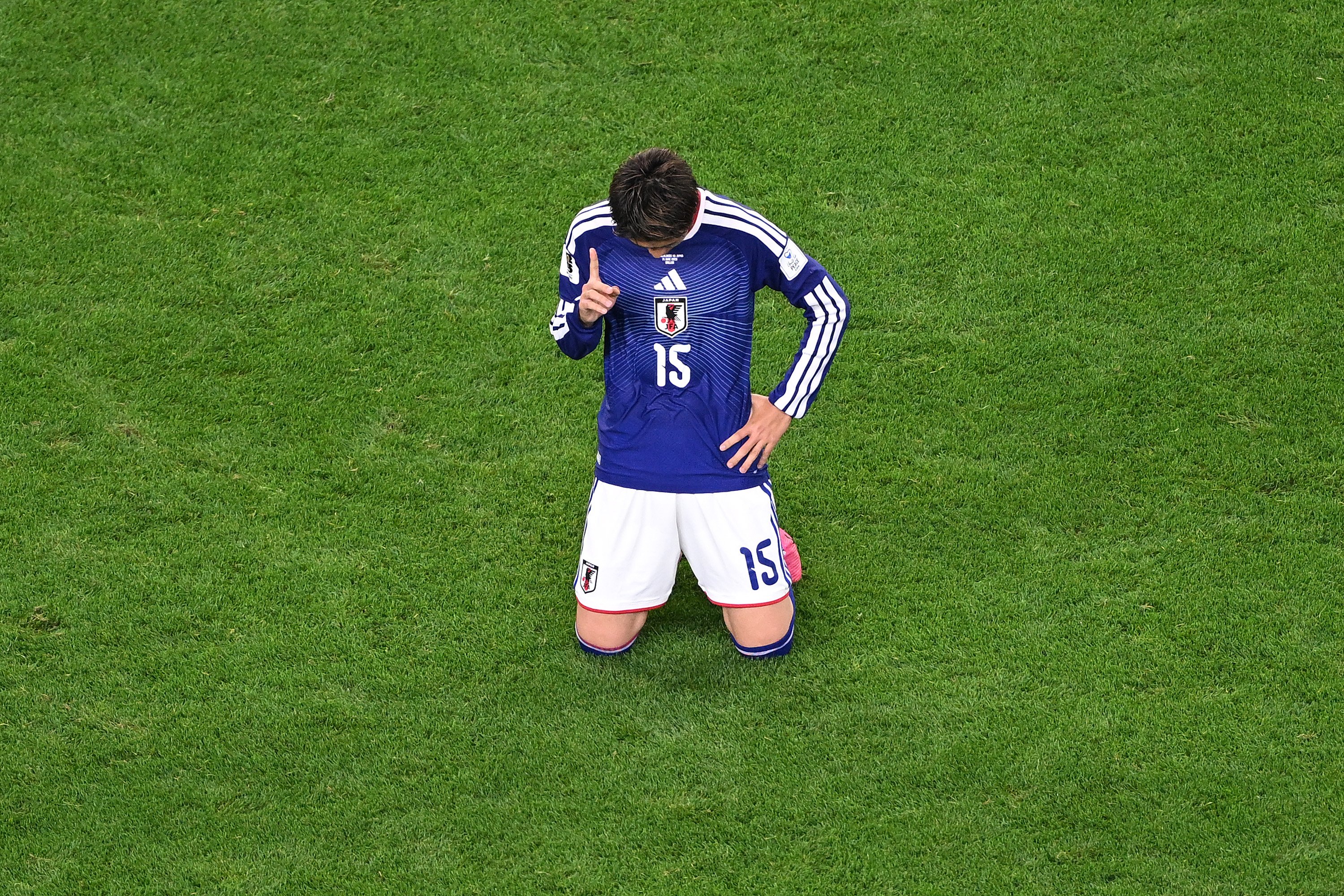

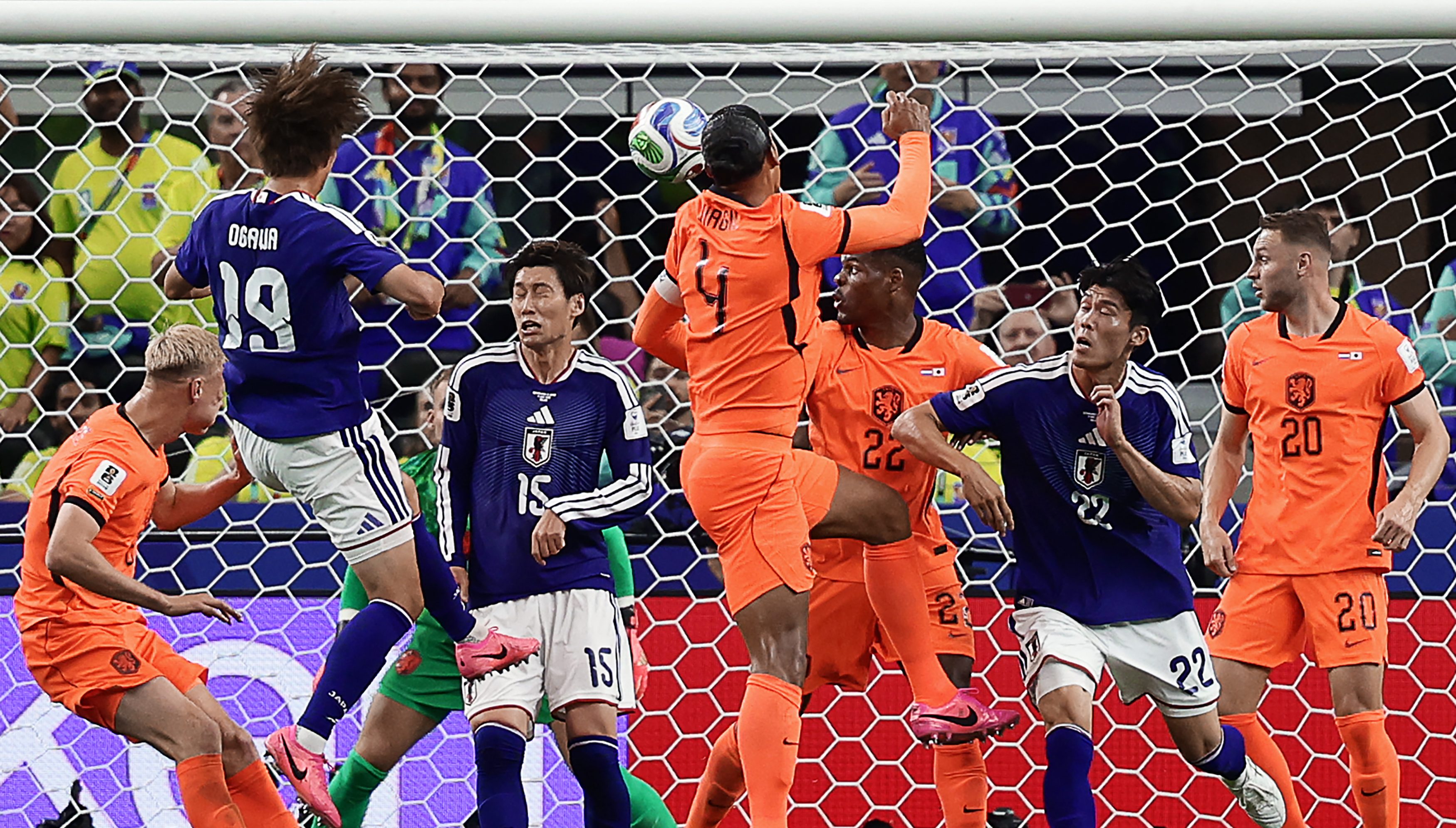
ARLINGTON, Texas – Koki Ogawa’s header was already arcing toward goal when Daichi Kamada, arriving at the near post in the 88th minute of a World Cup group-stage opener, did what Japanese footballers have now made into something close to an institutional reflex: he turned a moment of desperation into a point.
The ball deflected off Kamada’s head and past Bart Verbruggen, who got a hand to it with a sprawling dive but could not keep it out. The Samurai Blue supporters inside AT&T Stadium – the home of the Dallas Cowboys, its retractable roof sealing in the Texas heat – erupted. The Netherlands, who had led twice and looked set to open Group F with three points against a side many in Europe still insist on treating as a novelty act, walked off with one.
The final score was 2-2. The more instructive number, the one that will matter for the rest of this tournament, is two – as in, the number of times Japan had to come from behind to get there. That detail is not incidental. It is the entire point.
This is what Hajime Moriyasu’s Japan does. It absorbed a Virgil van Dijk header in the 51st minute, equalised through Keito Nakamura seven minutes later, absorbed Crysencio Summerville’s curling finish in the 64th, and then kept pressing until the game produced something to deflect in their favour. The pattern is not new. Japan beat Germany 2-1 from behind at Qatar 2022. They beat Spain 2-1 from behind at Qatar 2022. They have now done a version of the same thing against the Netherlands, ranked eighth in the world – a team Ronald Koeman spent most of his pre-tournament briefings pointing toward as a potential finalist. Coming from behind against elite opposition, in other words, is no longer a surprise. It is a method.
The Dutch had reasons, at least on paper, to feel comfortable after Summerville’s goal. Their possession share through the second half sat around 60 percent. Ryan Gravenberch, whose cross had unlocked Van Dijk for the opener and whose distribution set up both Dutch goals, looked composed and intelligent throughout. Cody Gakpo forced Zion Suzuki into a sharp stop shortly after Summerville struck, and Japan, without the injured Kaoru Mitoma, seemed to be running short of the pace and width that makes their press so dangerous when it clicks.
Moriyasu brought on Koki Ogawa, Takehiro Tomiyasu and Yukinari Sugawara in the second half to adjust the shape and add energy on the flanks. Substitute Junya Ito delivered the corner from which the equaliser came. The bench, not the starting eleven, finished the job – as it so often has under Moriyasu, who changes games with substitutions rather than chasing them.
The Mitoma question hangs over Japan’s tournament. The Brighton winger, absent through injury, was the creative fulcrum of Japan’s qualifying campaign – the player whose ability to carry the ball at pace and change direction in tight spaces gave Moriyasu’s press a different, more direct dimension. Against the Netherlands, the burden fell on Takefusa Kubo, Nakamura and Ritsu Doan to generate that threat. Nakamura’s equaliser – a composed low finish from the left side of the arc after receiving from Kubo – showed what that attack can do with space and combinations. How much space Group F’s remaining opponents will offer is not yet clear.
For the Netherlands, the draw produces an itch they cannot yet scratch. The Oranje have now gone 17 consecutive group-stage matches without a defeat – a remarkable run – but they are also still searching for the commanding performance their tournament ambitions require. Koeman’s side controlled possession without consistently threatening Suzuki, whose three saves in the first half came on the only Japanese shots on target before the break. Van Dijk’s goal came from a set piece; Summerville’s from a fast Gravenberch switch. Both were well-executed, but neither came from the kind of sustained open-play pressure that suggests the Netherlands can dismantle a disciplined defensive block at will.
Koeman, whose pre-match comments had acknowledged Japan’s quality with some pointed edge – he challenged anyone who doubted them to wait until the end of the tournament before forming an opinion – was direct about his frustration after the final whistle. Conceding a set-piece goal so late, he said, was extra disappointing. That sentence does not tell the whole story. The Netherlands were unable to put a game away against a side without their most dangerous winger, and that matters when Sweden and then the knockout rounds come into view.
Group F, which was always billed as one of the more open groups in the 48-team draw, has now revealed itself as genuinely unpredictable after a single game. The wider tournament has already demonstrated that the expanded format rewards tactical depth over raw ranking, and Japan are one of the clearest examples of that proposition. They have the most European-based players of any AFC nation at this World Cup, a pattern consistent with other Asian sides who arrived at the tournament with genuine knockout-round ambitions.
Japan’s record at the World Cup still carries the strange distinction of being the most games played at the tournament without reaching a quarter-final – 25 matches across six appearances in the round of 16, including the painful penalty exit against Croatia in Qatar. Moriyasu’s side have now played the 26th without breaking that ceiling. The next two games, against Tunisia in Monterrey and a probable decisive clash with Sweden, will define whether 2026 is the year they finally do.
What the Netherlands match has already confirmed is that Japan are not arriving at those games in shock. They are arriving, as NBC Sports reported in its match analysis, as a team that gave away neither a full expected goal nor any sign of tactical panic despite conceding first. “Our players managed to be tenacious but at the same time be patient,” Moriyasu said through an interpreter after the final whistle. What he did not say – because he did not need to – is that patience under pressure is now Japan’s most reliable weapon. The Dutch have been warned, and so has everyone else in the bracket.
According to the official FIFA match report, the Netherlands and Japan next play on Saturday – the Dutch against Sweden in Houston, Japan against Tunisia in Monterrey. Both sides need a win to avoid a nervous final-round calculation. Japan, at least, know exactly what coming from behind feels like. They have been doing it long enough that it no longer feels like drama. It feels like a plan.
Related Posts