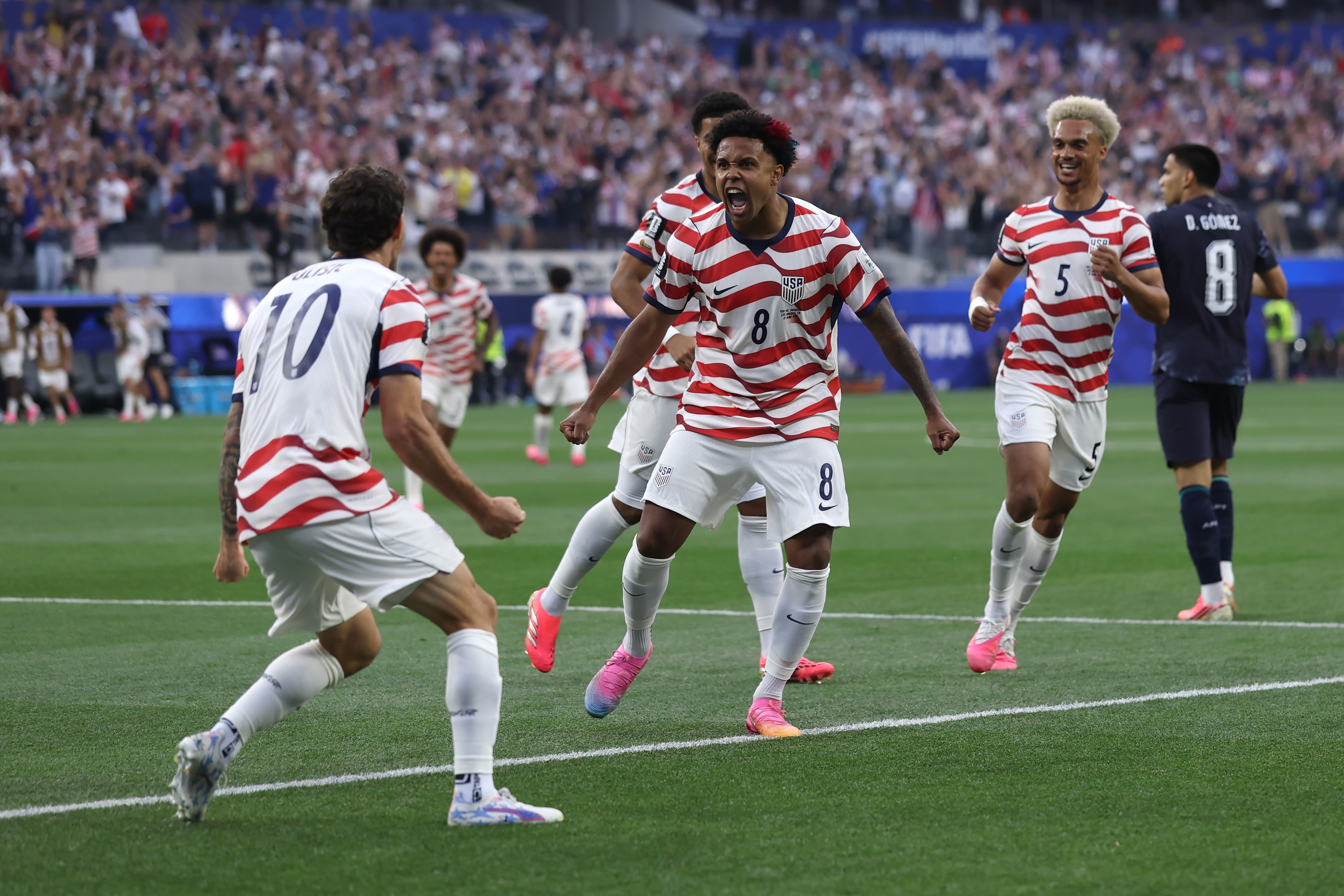

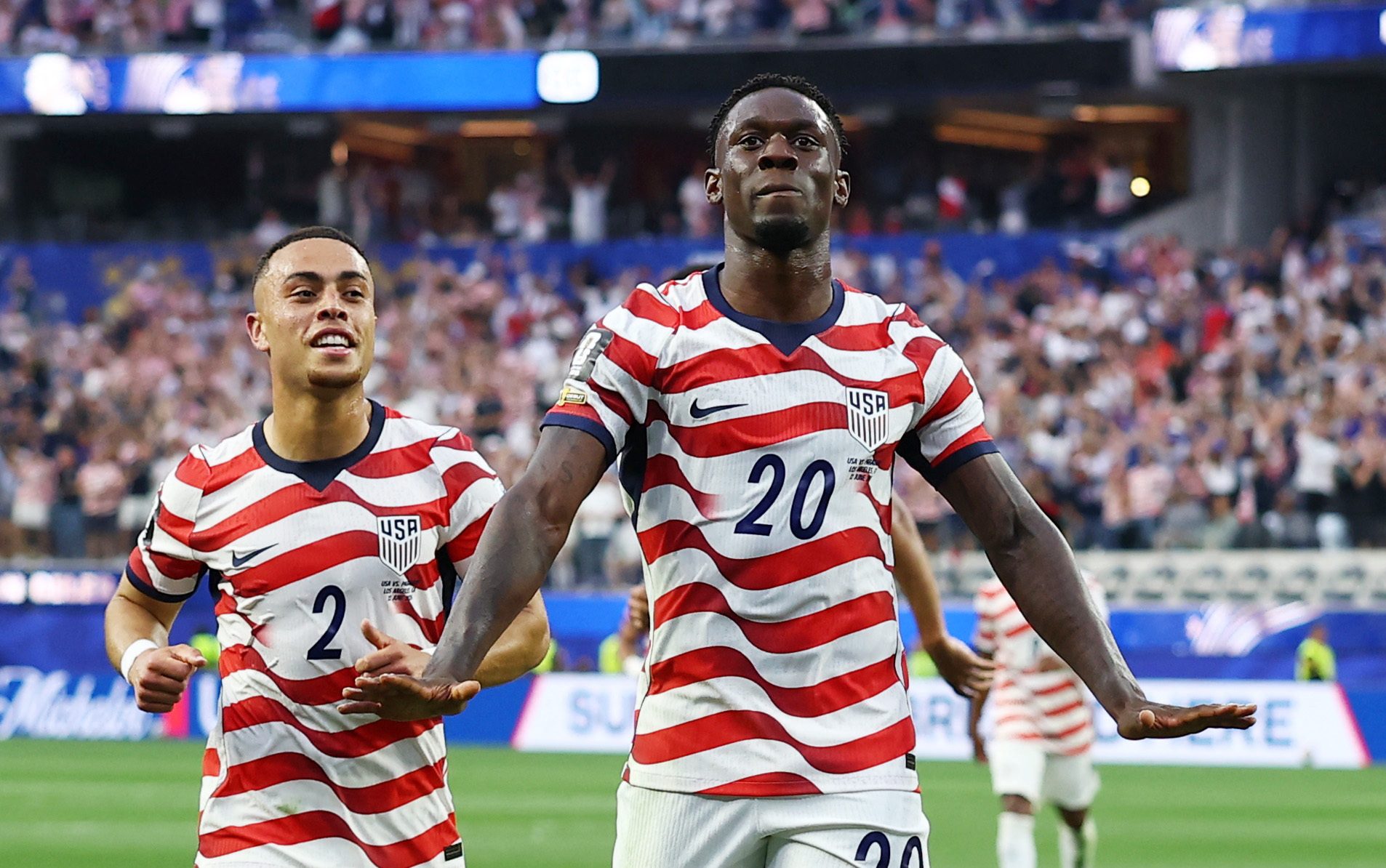
LOS ANGELES – By the time Folarin Balogun headed home the second goal Friday night, SoFi Stadium was making a noise that the 70,492 people inside had probably never made together before. Some of them had come from Inglewood. Some had driven from Tijuana. Some were wearing shirts that said USA and some were wearing shirts that said USA in Spanish, which is still USA. For a few hours in a suburb of Los Angeles, the question of which America was watching soccer had a single answer: both of them.
The United States men’s national team’s 4-1 dismantling of Paraguay in their 2026 World Cup opener produced a combined viewership figure that the sports television industry had never seen from a soccer game on American soil. Fox Sports reported that its English-language broadcast across Fox, Fox One, and Tubi averaged 15.986 million viewers, with the audience peaking at 18.86 million between 10:45 p.m. and 11:00 p.m. ET as Christian Pulisic and Balogun were putting the match out of reach. Telemundo’s Spanish-language telecast on Telemundo, Peacock, and streaming platforms averaged another 8.9 million. The combined total: 24.886 million viewers, as reported by Variety.
For context, that single group-stage match beat the average of the first four games of this year’s NBA Finals, which drew 19.6 million viewers per game. It nearly doubled the 2025 World Series average of 15.863 million. It dwarfed the 5.0 million who watched the first four Stanley Cup Final games on average. The numbers, if they hold, would represent the most-watched USMNT telecast in English-language history and the most-watched World Cup group-stage game in Spanish-language history outside of a Mexico match.
The more important number, though, is not 24.886 million. It is two. Two separate audiences, measured on two separate networks, with two separate broadcast teams describing the same action to two communities that American sports television has almost never managed to unite in real time. The NBA, the NFL, and Major League Baseball each draw enormous Spanish-language audiences. None has produced a simultaneous records-shattering performance on both sides of the English-Spanish broadcast divide in a single evening.
That distinction matters because it speaks to something the viewership figure alone does not capture. The United States team that walked onto the SoFi Stadium pitch Friday night does not look like the teams that represented this country in 1994, when the World Cup was last played on American soil. Balogun, who scored twice, was born in London and raised across three countries before choosing to play for the United States over England and Nigeria. Pulisic grew up in Pennsylvania but has spent his professional life in European football. The roster is a kind of portable argument about what American identity now means, and the audience that showed up to watch it – in two languages, from both coasts – reflected that back.
There is a caveat the networks have not rushed to publicize. This is the first World Cup measured under Nielsen’s Big Data+ methodology, which pairs the traditional viewer panel with data drawn from smart televisions and cable set-top boxes. According to media analysts, the methodology has generally pushed live sports viewership estimates up by roughly 15 percent compared to prior counting systems. That means the straight comparison to the 2022 USMNT opener against Wales – which averaged 7.76 million on Fox – is not entirely clean. The record is real. The margin of the record is harder to establish.
None of that changes the fundamental story, which is one about momentum. The tournament itself opened two days earlier with Mexico’s victory over South Africa at the Azteca in Mexico City, and Telemundo reported that the Spanish-language broadcast of that match was the most-watched World Cup game in Spanish-language television history – before the USA-Paraguay game broke the record for non-Mexico matches 48 hours later. The early viewership arc suggests that each successive round of American involvement could produce larger numbers, a compounding effect that Fox Sports and Telemundo executives will have been tracking closely through Friday night.
The United States next plays Australia on June 19 at Lumen Field in Seattle, at 3:00 p.m. ET. The kickoff time – a Saturday afternoon, not a late-night West Coast window – may actually produce a more natural viewing environment for East Coast audiences, which could push the numbers further. Or it could reveal that Friday’s crowd, drawn by the novelty of a home opener, was the ceiling. No one knows yet, and the broadcasters will not say so publicly.
What the networks do know is that the business case they have been building for years – that soccer would eventually break through to the American mainstream if given the right stage – has just received its strongest single-night evidence. Variety reported that Fox Sports described the USA-Paraguay audience as the most-watched USMNT FIFA Men’s World Cup Group Stage telecast in English-language U.S. history. The framing was triumphant. What it left unresolved was the more interesting question: not whether Americans will watch soccer at the World Cup, but whether they will still be watching in August, when the club season resumes and the World Cup is over.
The empty seats near the pitch at earlier group matches – a product of FIFA’s tiered dynamic pricing that priced out many local fans – did not appear to be a problem at SoFi on Friday. The crowd of 70,492 was full-throated from the first whistle. What 25 million people watching at home thought about the game is harder to know. The ratings measure who turned on the television. They do not measure whether anyone will remember, in November, that the United States once scored four goals in a World Cup match and nearly a quarter of the country watched.