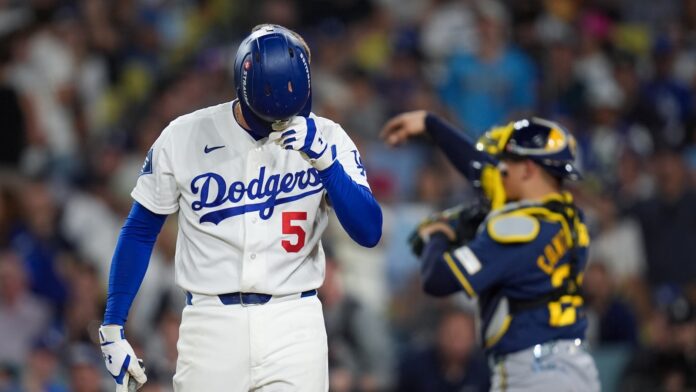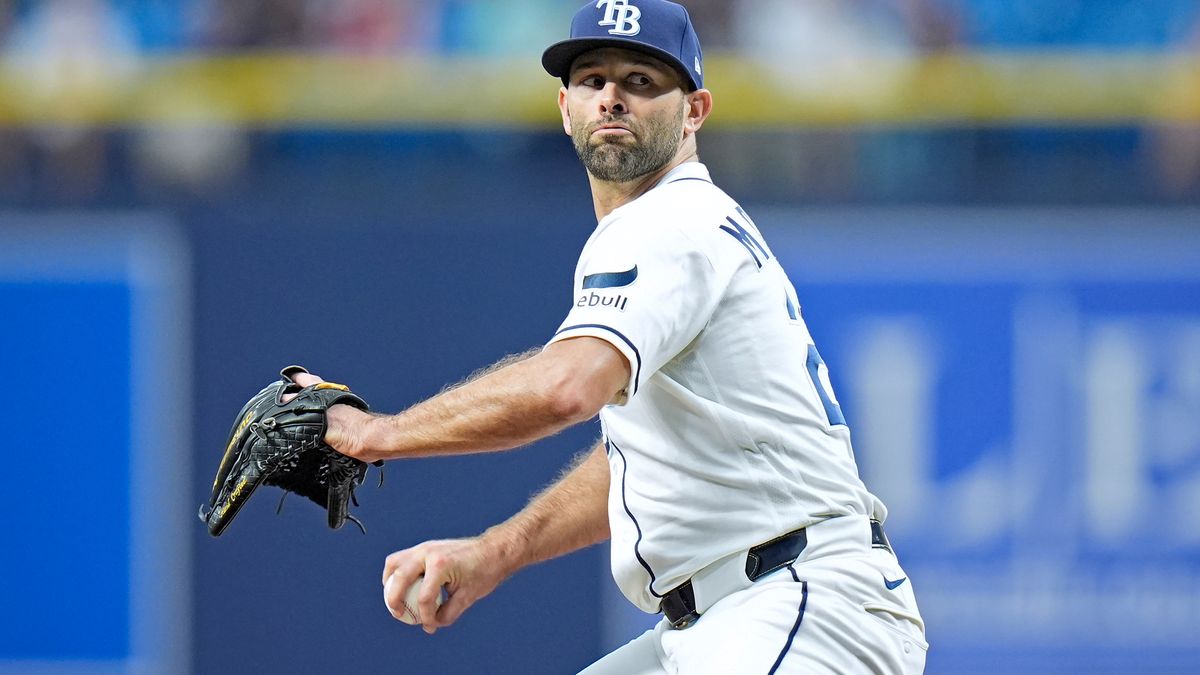

LOS ANGELES – When Nick Martinez takes the mound at Dodger Stadium on Monday night, he will face the most expensive lineup in the history of Major League Baseball. He is earning $13 million this season. The four players due to bat in front of him – Mookie Betts, Shohei Ohtani, Freddie Freeman and Will Smith – have contracts that, in their aggregate, run past the 2040s. This is not a metaphor for baseball’s inequality problem. It is the thing itself.
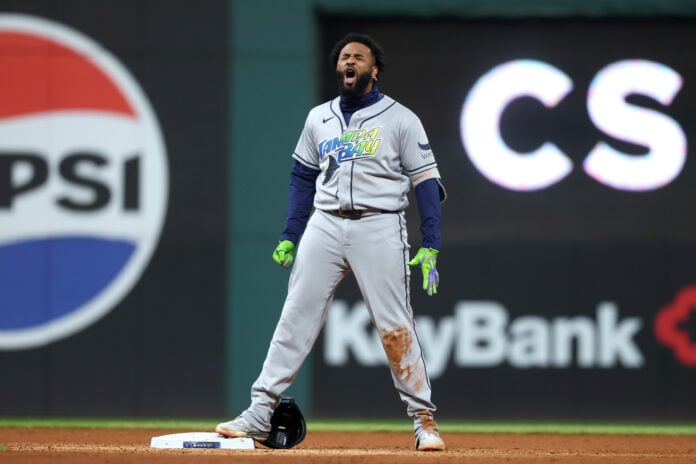
The Tampa Bay Rays (40-25) arrive at Chavez Ravine for the first game of a three-game series carrying a total payroll of roughly $109 million. The Los Angeles Dodgers, at $421.8 million by competitive balance tax measure, are the most expensive roster in the sport’s history. The gap between them is $312.8 million – more than three times what Tampa Bay is spending to field its entire team. The Rays are second in the American League East. The Dodgers are 43-25 and chasing a third consecutive World Series title. On paper, this series should not be close. On the field, the AL standings suggest otherwise.
What makes this particular matchup worth watching beyond its ESPN broadcast is what it represents in an offseason – well, the coming offseason – of considerable labor tension. The owners have made a salary cap the centerpiece of their early collective bargaining positioning, arguing that the current system produces competitive imbalance that harms the sport. The Rays, Cleveland Guardians and Miami Marlins have spent the better part of the 2026 season methodically dismantling that argument. Tampa Bay has won four of every six games it has played. Its highest-paid player is Martinez himself. Large-market owners spending into nine figures in luxury tax penalties have watched this from their luxury boxes in varying degrees of discomfort.
The labor calculus is straightforward, if inconvenient for the ownership coalition. ESPN reported that the league’s initial CBA proposals center heavily on a cap-and-floor structure, citing competitive balance as the rationale. The counterargument – the one the Players Association will make, and the one Tampa Bay’s standing in the AL East keeps making for free – is that the Rays have been perennial contenders without it. What the owners have not fully grappled with is that the Rays’ model is only possible because the current system allows it. A hard cap does not save the Rays. A hard cap gives the Rays nowhere to hide when they can no longer develop and flip young talent faster than larger clubs can buy it.
For the Dodgers, none of this is particularly threatening. They are spending what they can because they can, and the luxury tax – at a threshold of $244 million for 2026 – has functioned more as a footnote than a deterrent. Their estimated tax bill this season, per Spotrac’s salary database, exceeds $161 million. That figure alone is higher than the total tax payrolls of a dozen franchises. The Dodgers paid more in taxes than Tampa Bay paid in total salaries.
Martinez, who will start Monday’s series opener, has been the quiet center of Tampa Bay’s rotation in a season that has unfolded like a small-market manifesto. He is 35 years old, eight years removed from his last stint in the American League, a journeyman who spent four seasons in Japan before re-emerging as a reliable mid-rotation arm. He signed a one-year, $13 million deal with the Rays in February. Through early June, he carried a record of 6-2 with a 2.29 ERA and a 1.19 WHIP. The strikeout rate – 14 percent – is low enough that any prolonged stretch of hard contact could expose him. Against this lineup, that stretch may arrive early.
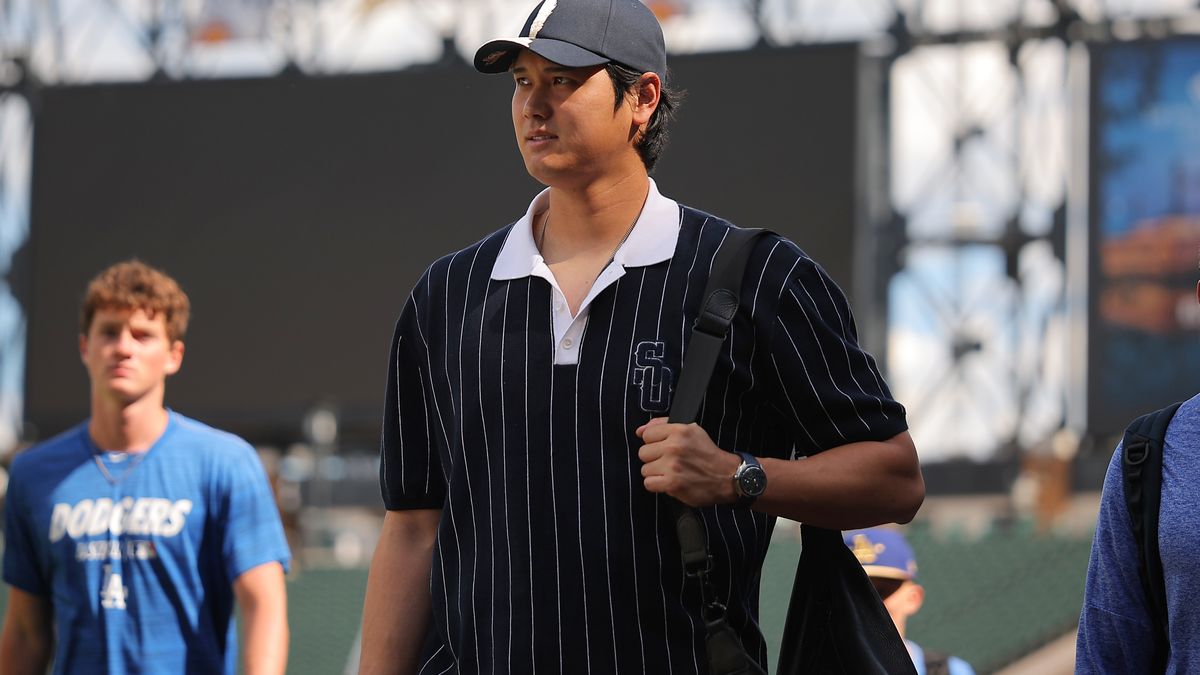
The Dodgers will counter with Eric Lauer, a left-hander who has made his early starts as a Dodger while Yoshinobu Yamamoto and Blake Snell navigate injury management schedules that have become routine for this roster. Lauer carries a 5.47 ERA but benefits from the cushion that a lineup of Betts, Ohtani, Freeman and Teoscar Hernandez provides on any given night. The Rays, sitting at 40-25 as the AL’s most pleasant surprise, present a genuine test: their right-handed-heavy lineup has posted a .408 slugging percentage against left-handed pitching this season. Lauer’s fly-ball tendency – and the fact that Dodger Stadium is among the top home run parks in the majors – means the Rays will likely make this a game regardless of the payroll differential on the mound.
Yandy Díaz, Tampa Bay’s first baseman and de facto offensive anchor, has continued the pattern that has defined his career: elite contact, above-average on-base percentage, enough power to be a problem in the lineup without quite being a lineup’s centerpiece. Junior Caminero, the 21-year-old third baseman whom the Rays have developed into one of the more intriguing young hitters in the sport, brings genuine power from the left side. Shane McClanahan, the anchor of Tampa Bay’s rotation at 6-2, is not scheduled to start this series but represents the kind of organizational development the Rays rely on that larger-market franchises spend nine figures on free-agent contracts to simulate.
What no one on either roster can answer is whether Tampa Bay’s model holds through August. The Rays are already being discussed as trade deadline buyers, with the shadow of labor uncertainty complicating every franchise’s deadline calculus. The MLBPA has shown no inclination to accept a salary cap, and the union’s position has hardened around the figure of Paul Skenes and other young stars who stand to benefit most from the current uncapped structure. In this environment, Tampa Bay’s success is not just a baseball story. It is evidence in an ongoing argument about what the sport should look like.
The Dodgers win that argument every October. Since 2015, no team has performed at a higher level in the regular season and the postseason combined. The small-market counter-argument concedes this: Tampa Bay has never won a World Series, and the Rays’ four pennant-race collapses over the past decade are a reminder that organizational efficiency and playoff success are related but distinct quantities. What the Rays prove is not that spending does not matter. What they prove is that the owners’ version of why it matters – that the system is rigged, that small-market teams cannot compete – is not the whole truth. It may not even be the honest half.
Monday night in Los Angeles, a 35-year-old right-hander who has played in four countries will test that proposition against the most expensive batting order in the sport’s history. The outcome will not settle the CBA debate. It will, however, add another data point that the owners would prefer to explain away, and that the Players Association will not let them.