
MOSCOW – The financial adviser’s pitch was the same in every Russian city last year: gold was the one asset that could not be seized, frozen, or inflated away. Millions of Russians believed it. According to Russia’s Finance Ministry, private citizens bought 50 tonnes of the metal in 2025 – a record that reflected not just enthusiasm for the asset but the narrowing of every other option available to ordinary people locked out of the dollar, the euro, and the global financial system by Western sanctions.
By the night of June 10, the arithmetic had turned brutal. Spot gold fell below $4,100 per troy ounce – its lowest level since November 2025 – erasing roughly 27 percent from the all-time high of nearly $5,600 reached in late January. What the price charts did not show was the quieter story unfolding simultaneously: while citizens were accumulating, Russia’s own central bank was selling at a pace not seen in two decades.
That scissors – state dumping, citizens buying – sits at the heart of what has become an unusually painful episode for Russian retail investors, and it raises a harder question than any financial analyst in Moscow has yet been willing to answer publicly: did the people who advised Russians to buy gold know that the institution managing the country’s monetary policy was moving in the opposite direction?
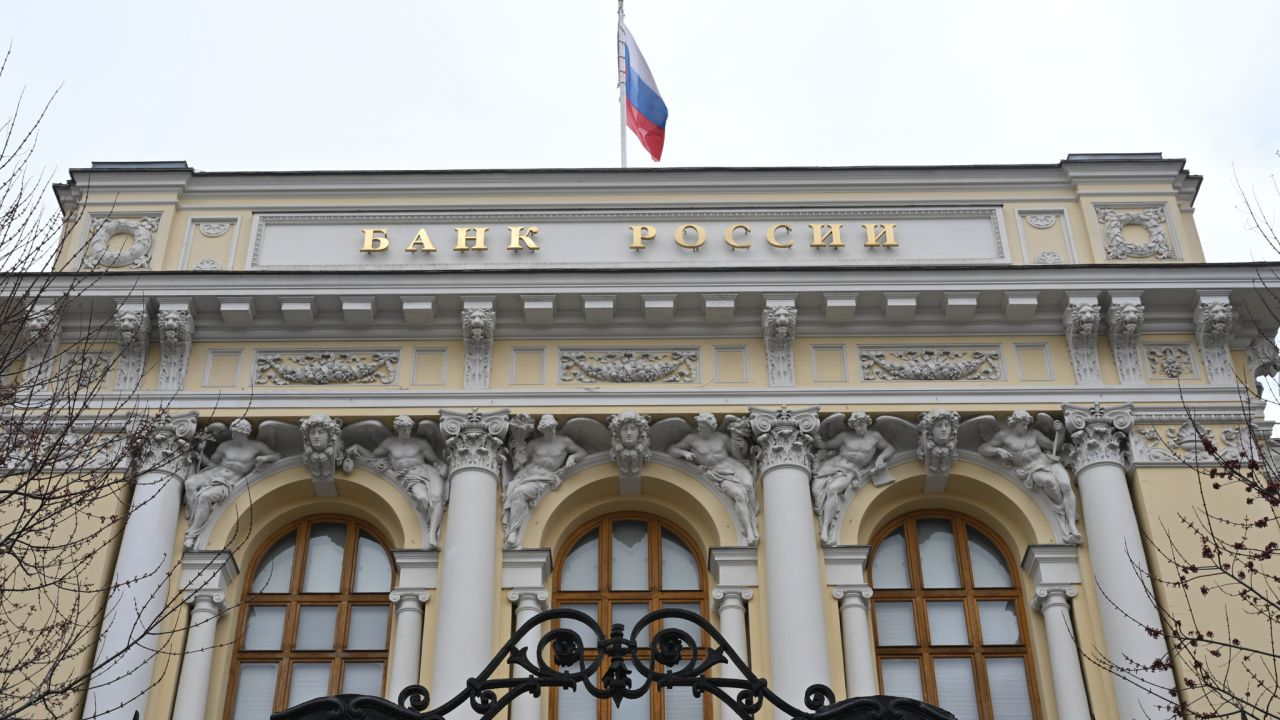
The scale of the central bank’s activity is not in dispute. Between January and April 2026, the Bank of Russia sold 28 tonnes of gold from its sovereign reserves, including 6.2 tonnes in April alone – the single largest monthly drawdown since 2005. The Moscow Times reported that the central bank’s reserves had fallen to their lowest level since before Russia launched its military operation in Ukraine. Natalia Milchakova, chief analyst at Freedom Finance Global, told Reuters the sales were primarily driven by the country’s budget deficit, which reached 4.6 trillion rubles by the end of March as war expenditures continued to climb.
None of that information was prominently featured in the promotional material Russians encountered when they walked into a bank branch or opened a brokerage app. What they heard instead was the story of 2024 and early 2025, when gold’s “rally” – as Moscow-based financial analyst Mikhail Belyaev described it to Moskovsky Komsomolets – was propelled by global uncertainty and heavy central bank buying from countries including Turkey, which purchased large volumes of the metal to stabilize its own currency. That demand drove prices to historic highs. It also, inevitably, created the conditions for the correction now underway.
Belyaev, a candidate of economic sciences, is now urging patience. Gold, he said, is “not just a long-term instrument, but a very long-term one” – requiring a minimum horizon of three years before any meaningful return can be expected. That framing is accurate as far as it goes. It also happens to be the exact opposite of the framing used to sell the asset to Russian households during a period when real wage growth was strong and savings were looking for a home.
The broader context makes the retail investors’ predicament harder to escape. The ruble’s alternatives have become genuinely constrained. Dollars and euros, once a default hedge for middle-class Russians, carry operational risks that have grown alongside the sanctions regime. Bank deposit rates, which briefly hit 22 to 23 percent annually when the central bank’s key rate was at its peak, have fallen toward 13 to 14 percent as the rate cycle turns. The assets that remain – domestic bonds, state securities – offer single-digit yields and expose holders to the same fiscal pressures now forcing the central bank to liquidate gold in the first place. Eastern Herald reported last week that even institutional forecasters who remain bullish on gold – State Street among them – have revised their near-term timelines, with recovery scenarios now stretching into late 2026 at the earliest.
The immediate trigger for June’s drop was a US inflation reading that wrong-footed traders globally. Data released June 10 by the Bureau of Labor Statistics showed the Consumer Price Index rising 4.2 percent year-over-year in May 2026 – the highest reading since April 2023, driven in part by a 23.5 percent surge in energy costs tied to the Iran conflict. Hot inflation, combined with a labor market that refuses to soften, has forced markets to price in the possibility of a Federal Reserve rate hike by December 2026. Gold – which typically moves inversely to real rates – absorbed the shock with a greater-than-4-percent decline in a single session.
The geopolitical dimension adds a layer of analytical difficulty that Western financial commentary tends to skip over. Russia’s citizens bought gold precisely because they no longer have access to the global system that produces and prices it. That system is now responding to American monetary dynamics – a Fed chair’s first press conference, a CPI surprise – in ways that the buyers of physical bars and coins in Yekaterinburg or Novosibirsk have no mechanism to anticipate, hedge against, or exit quickly. Storage adds another constraint: Belyaev noted that physical gold bars lose value at the slightest surface damage, an operational reality that does not appear in any price chart.
The institutional picture globally is less dire than the Russian retail position, though it, too, is more complicated than the gold-bull consensus acknowledges. J.P. Morgan’s latest commodities research notes that central banks worldwide bought a net 244 tonnes in the first quarter of 2026, with China adding to its reserves for 18 consecutive months. Goldman Sachs estimates central bank buying is still running near 60 tonnes per month. JPMorgan, Goldman, and Morgan Stanley all maintain year-end targets materially above current prices – though each has revised those targets downward at least once since January. Citi analysts warned in a note this week that if the Strait of Hormuz remains closed through summer, gold could fall to $3,500 per ounce.
For holders of those 50 tonnes of Russian private gold, the practical choice now is the one Belyaev describes with little apparent irony: wait. Selling at current prices means crystallizing a loss of roughly a quarter of the purchase value. Holding means remaining exposed to a market driven by forces – American inflation, Iranian oil, Federal Reserve rhetoric – that operate entirely outside the control of anyone in Moscow. What is not yet clear is how many of those 50 tonnes were bought near the January peak, and how many were accumulated earlier, at prices low enough that even a 27-percent drop leaves the holder above water. That figure, whatever it is, will determine how this episode ends – and whether the financial advisers who talked Russians into the eternal metal face a reckoning of their own.