
WASHINGTON — For most of the people now counted among this summer’s Cyclospora cases, the illness began unremarkably: a cramping stomach, a loose stool, an afternoon spent near a bathroom that felt, at first, like a minor inconvenience. Then it lasted two weeks. Then three. The fatigue set in, and the weight loss, and the frustrating conviction that something was wrong that no one could quite name. Cyclospora cayetanensis, the microscopic parasite responsible for 145 confirmed cases across 17 U.S. states as of June 16, is the kind of illness that defeats diagnosis precisely because it mimics something ordinary, right up until the moment it does not.
The outbreak, confirmed by the Centers for Disease Control and Prevention, spans the peak summer season for the parasite and includes at least three hospitalizations, though no deaths have been reported. The case count almost certainly understates the true burden: Cyclospora infection is not included in standard stool panels at most hospitals and clinics, meaning countless Americans with the infection are told they have a stomach bug and sent home with instructions to rest and hydrate.
What investigators from the CDC and the Food and Drug Administration have not found, after weeks of patient interviews, traceback fieldwork across more than a dozen states, and coordination with retail grocery chains, is the food.
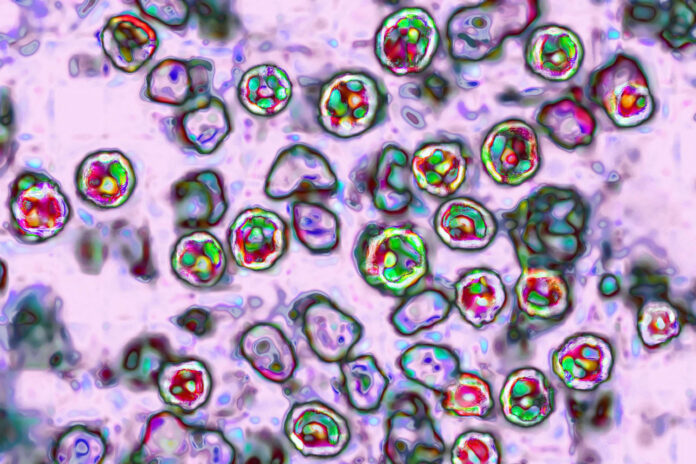
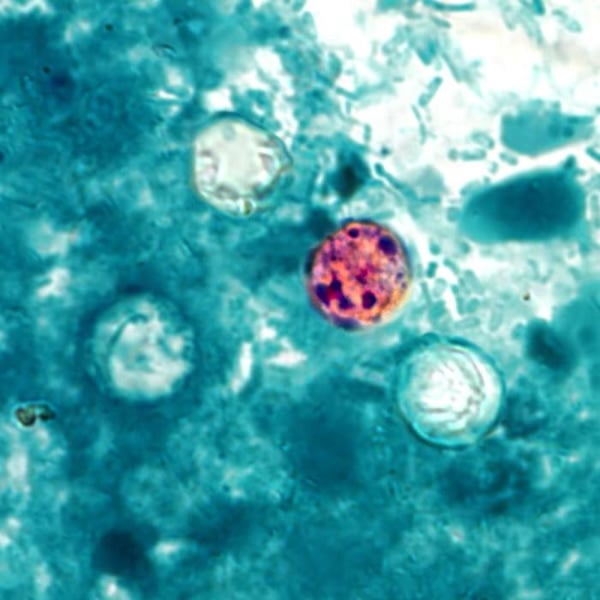
Cyclospora cayetanensis is a single-celled parasite shed in the feces of infected people and transmitted when that contamination reaches food or water during agricultural handling or processing. After ingestion, the organism takes one to 14 days to cause symptoms, a window that makes it nearly impossible for patients to recall what they ate when they got sick. Illness can last weeks without treatment. The antibiotic trimethoprim-sulfamethoxazole, sold under the brand names Bactrim and Septra, is effective, but physicians rarely prescribe it without a confirmed Cyclospora diagnosis, and that diagnosis rarely comes without a test specifically ordered for the parasite.
Most clinical laboratories in the United States do not automatically screen for Cyclospora in standard stool samples. The parasite requires a specific modified acid-fast staining technique, a test that clinicians rarely order and patients rarely know to request. The CDC advises physicians treating any patient with unexplained prolonged diarrhea, particularly after recent travel or consumption of fresh produce, to explicitly order a Cyclospora test rather than relying on routine ova-and-parasite panels. Without it, the diagnosis is routinely missed, and the true scope of any outbreak remains invisible.
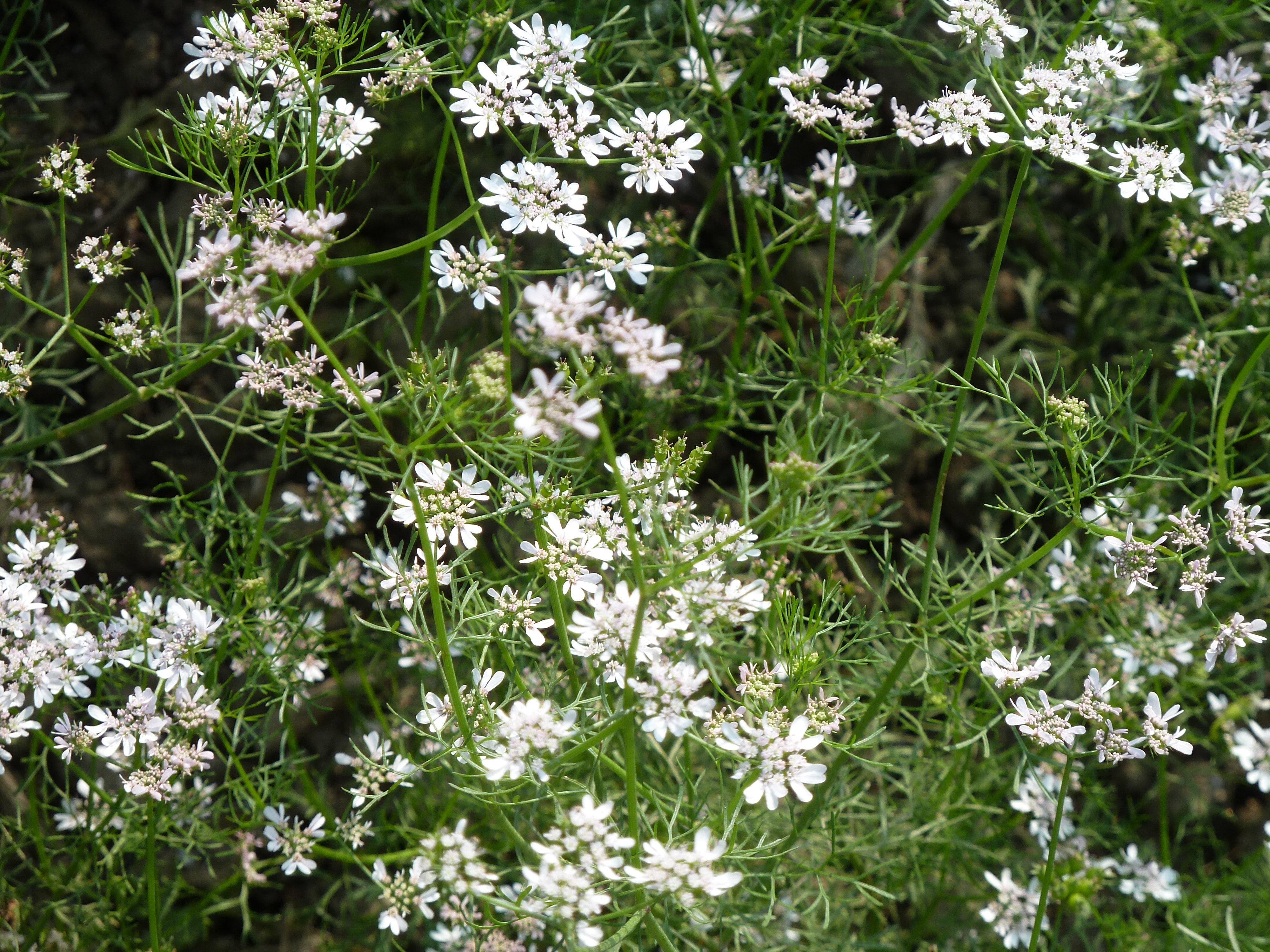
Cyclospora outbreaks in the United States have followed a consistent pattern since the 1990s: the source is nearly always fresh produce, most often imported. In 1997, Mexican cilantro was implicated in cases spanning multiple states; subsequent investigations tied outbreaks to basil, raspberries, and mesclun lettuce. Bagged salad kits, assembled from multiple produce sources across multiple countries before distribution through national retail chains, drove a 2018 outbreak that sickened 212 people across 36 states and Canada. The parasite does not survive cooking, but Americans eat enormous volumes of raw leafy greens and fresh herbs during summer, precisely the months Cyclospora thrives.
The FDA’s Coordinated Outbreak Response and Evaluation network, which is leading the traceback investigation alongside the CDC, is working against time and biology. Most fresh produce is consumed within 48 hours of purchase. Supply chains from field to packing house to distributor to retailer to kitchen often involve a dozen handoffs across several countries. By the time an outbreak is confirmed and patients are interviewed, the food is gone, its lot numbers are dispersed, and its origin is a memory. The CDC’s investigation is listed as ongoing, with no identified source, no confirmed vehicle, and no product recall.
The FDA has published no public advisory linking the outbreak to a specific product. Seventeen states have reported cases, a geographic spread consistent with a nationally distributed food vehicle rather than a regional or local source, and with a commodity sold through major retail chains nationwide. That pattern narrows the field, but it does not identify the product.
This outbreak arrives as U.S. public health infrastructure is managing several concurrent foodborne and infectious disease threats. Drug-resistant Shigella cases spreading across multiple states prompted a CDC clinical advisory earlier this year, and botulism in recalled infant formula forced a market withdrawal that shook consumer confidence in specialty baby products. Cyclospora adds a third active thread to an already strained surveillance system.
The CDC recommends washing all fresh produce thoroughly under running water before eating, cutting, or cooking, including items with inedible skins. Consumers who develop prolonged or recurring diarrhea lasting more than a few days, particularly after eating fresh salads or herbs, should ask their physician specifically for Cyclospora testing. The infection is treatable, but the window for diagnosis often closes before patients or clinicians know to look.
By the CDC’s own seasonal surveillance data, Cyclospora cases in the United States typically peak between May and August. The 145 cases confirmed by June 16 represent the leading edge of that curve. The number will be higher by next week. The food source, if it follows the pattern of past outbreaks, may never be conclusively identified.