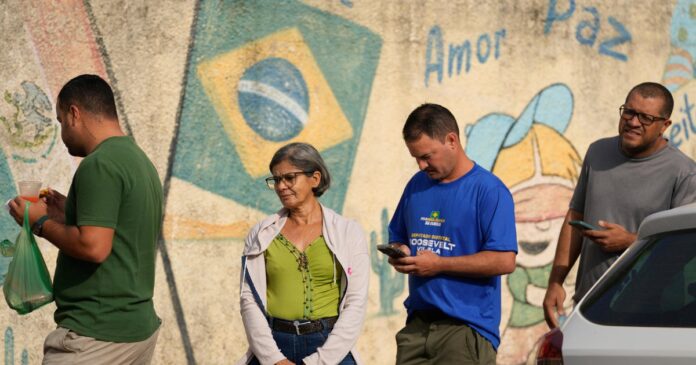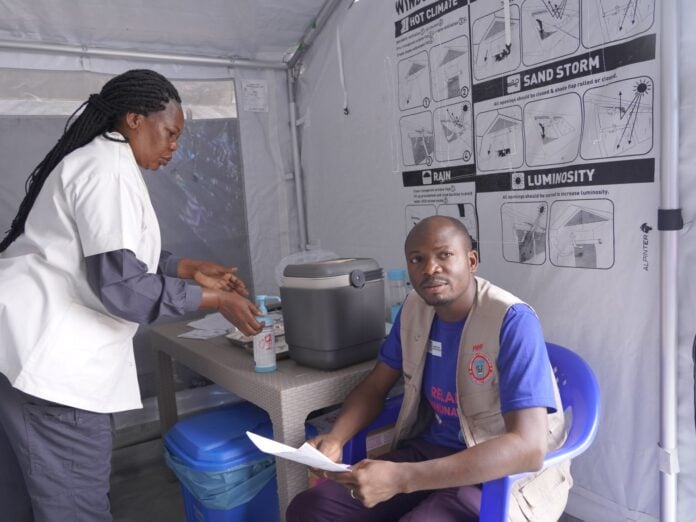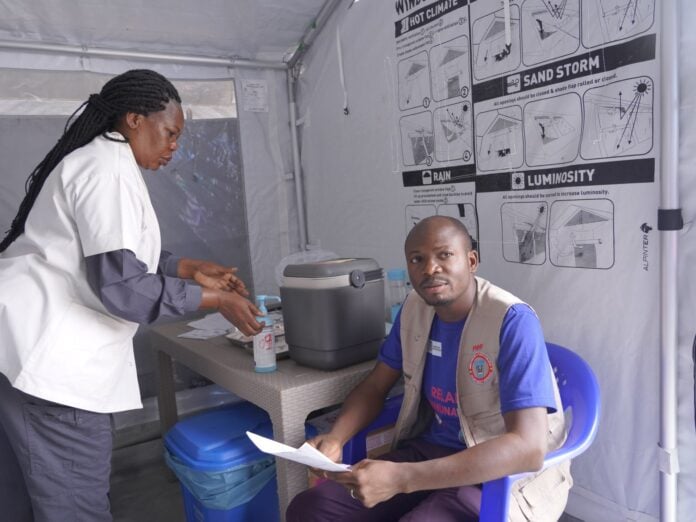

SAO PAULO — Karla Santos was in her third year of treating dengue patients at Hospital das Clínicas when she stopped counting the beds in the same way. Before the 2024 outbreak, dengue had a season. It peaked in January through March in the Southern Hemisphere, and then the wards quieted. By June 2026, there is no pause. The patients arrive at the same volume she used to see in February, and they have been arriving like this, without a break, for two and a half years. Santos is 31. She has treated dengue patients every month of her nursing career.
The World Health Organization’s weekly epidemiological report covering the period June 14 to 20 confirmed on Thursday what Santos has been living inside: dengue cases globally crossed five million in the first half of 2026, the first time that threshold has been reached at the year’s midpoint in recorded surveillance history. The World Health Organization noted that the complete 2023 global total was approximately 4.9 million cases. With six months remaining in 2026, the disease has already surpassed that year’s entire count. What was a record year three years ago is now the baseline that 2026 has left behind at the halfway mark.
“We are witnessing a fundamental change in dengue’s behaviour,” Dr. Raman Velayudhan, unit head of the Neglected Tropical Diseases department at WHO, said in a statement accompanying Thursday’s report. “What was seasonal is becoming perennial. The assumptions that governed dengue control for two decades no longer hold.”
Brazil is where the numbers are most visible. The country’s Ministry of Health reported approximately 3.1 million confirmed and probable dengue cases through the first 25 epidemiological weeks of 2026, accounting for nearly 62 percent of the global total. The epicentre has shifted inland and southward from the coastal cities where dengue established itself in the 1980s. São Paulo state recorded its highest-ever half-year dengue incidence for the third consecutive year. Brazil’s federal health ministry declared a national public health emergency in January 2026, a designation not invoked for dengue since 2015, and it remains in effect. According to the Pan American Health Organization, Brazil accounts for the largest share of dengue cases ever recorded by a single country in a single year at this point in the calendar.
Southeast Asia accounts for most of the remaining global burden. Vietnam reported more than 900,000 cases through the week of June 20, ahead of the pace that set a national record in 2022. The Philippines, Thailand, and Indonesia together added approximately 780,000 cases. In Ho Chi Minh City and its surrounding provinces, health officials recorded transmission in districts that had not documented locally acquired dengue in prior decades, a geographic expansion mirroring what is occurring in Brazil’s highland interior and, at lower intensity, in parts of Mexico and Central America.
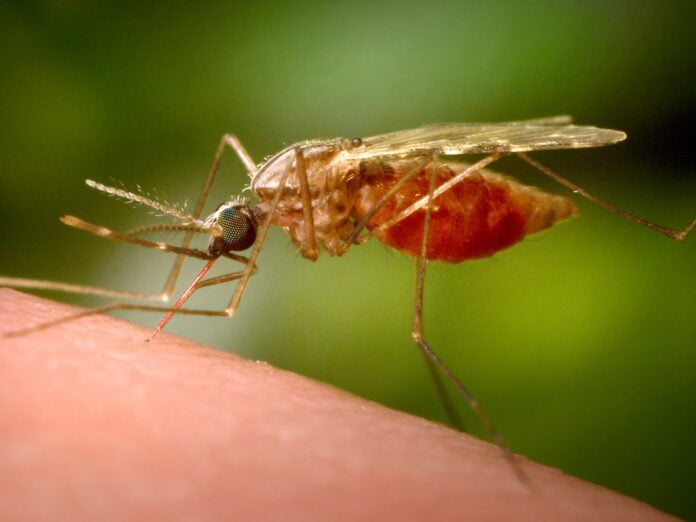
The mechanism driving that expansion is consistent across continents. Aedes aegypti, the mosquito responsible for most dengue transmission, thrives at temperatures between 15 and 35 degrees Celsius and requires standing water for reproduction. As climate change has pushed temperatures upward in subtropical zones previously marginal for the species, the mosquito has followed. Its documented range has expanded by approximately 150 kilometres on average per decade since 1980, a shift that has drawn comparison with the concurrent westward push of Lyme disease-carrying ticks into American Midwestern states where blacklegged ticks were rare a decade ago. Both patterns share a cause: wildlife and insects are occupying territory the changing climate has made habitable, in regions where no warning system was ever built.
The same atmospheric conditions underlying Europe’s record June heatwave, which has killed more than 150 people across France and Spain in eight weeks, are driving temperature anomalies in South America and Southeast Asia that amplify Aedes aegypti reproduction rates. When a city’s mean temperature rises by even one degree Celsius during the wet season, the mosquito’s breeding cycle accelerates and the proportion of bites resulting in viral transmission increases. São Paulo’s December 2025 and January 2026 average temperatures were, respectively, 2.1 and 1.8 degrees above the historical baseline for those months. The dengue surge followed within six to eight weeks, as modelling had predicted.
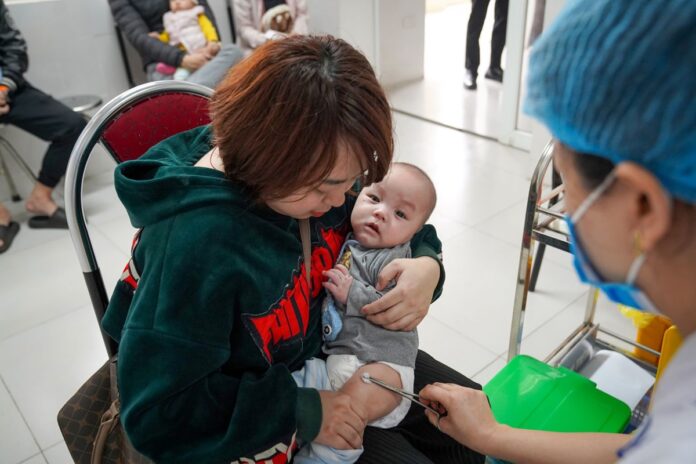
A vaccine exists. Takeda’s dengue vaccine TAK-003, marketed as Qdenga, received WHO prequalification in 2023 and has been incorporated into immunization programmes in Indonesia, Brazil, and Argentina. The WHO-recommended age range covers children aged four to 16 years, and Brazil’s national programme expanded Qdenga coverage in São Paulo state in early 2025. Paediatric dengue hospitalizations in the vaccinated cohort have declined measurably in the first communities to receive it. But the rollout has been uneven: supply constraints limited delivery in rural Brazilian states through most of 2025, and Indonesia’s programme has not reached full implementation outside Java. Qdenga does not protect against all four dengue serotypes with equal efficacy, and the serotype distribution in Brazil’s 2026 outbreak has shifted toward dengue virus type 3, a strain less prevalent in prior years and not the primary focus of the original phase-three trial data that drove the vaccine’s approval.
The World Cup is adding a travel advisory dimension. The tournament, hosted across 16 cities in the United States, Canada, and Mexico through mid-July, is drawing visitors from Brazil and Southeast Asia where active dengue transmission continues. The CDC’s travel advisory, updated in May, noted that dengue transmission risk exists in the southern US host cities, including Miami, Houston, and Atlanta, all within the established range of Aedes aegypti. The more immediate concern, the advisory noted, is for fans returning home to endemic countries after potential low-level exposure in the United States: the virus incubates for four to 14 days, meaning a person infected in Houston could not become symptomatic until they are already back in Bangkok or Belém.
WHO has not convened its emergency committee to evaluate dengue for formal designation as a Public Health Emergency of International Concern. The last such review occurred in 2019, when the committee concluded dengue did not meet the PHEIC threshold. Several public health researchers have published letters in The Lancet and in PLOS Medicine since January 2026 arguing that the combination of case volume, serotype shift, and climate-driven range expansion warrants a formal review before the committee’s scheduled September meeting. WHO has not responded publicly to those calls. The question it will eventually have to answer is whether the disease that killed an estimated 40,000 people globally in 2024 has changed fundamentally enough to require a changed institutional response, or whether the tools developed for a seasonal epidemic are sufficient for what dengue has quietly become.
Santos and the nursing staff of Hospital das Clínicas do not wait for that answer. The Monday morning census when this story was reported showed 34 dengue admissions on the overflow ward at 7 a.m. By Tuesday it was 41. The five-million threshold crossed in Geneva last Thursday is, in São Paulo, 41 beds that were not supposed to be needed in June.