
PARIS — The Rhône was already high when the first body was recovered on Saturday morning. By nightfall on Sunday, French authorities had confirmed 40 people drowned in rivers, lakes, and reservoirs across the country in five days. Most went in seeking relief from temperatures that, by Tuesday, France had never seen in recorded history.
The same heatwave claimed two children this week, among the 18 people confirmed dead from direct heat-related causes in France, according to the country’s health authorities. In Spain, the Health Ministry confirmed on Wednesday that at least 108 people had died from heat-related conditions since the current episode began on June 21. Health officials warned the figure would continue to climb.
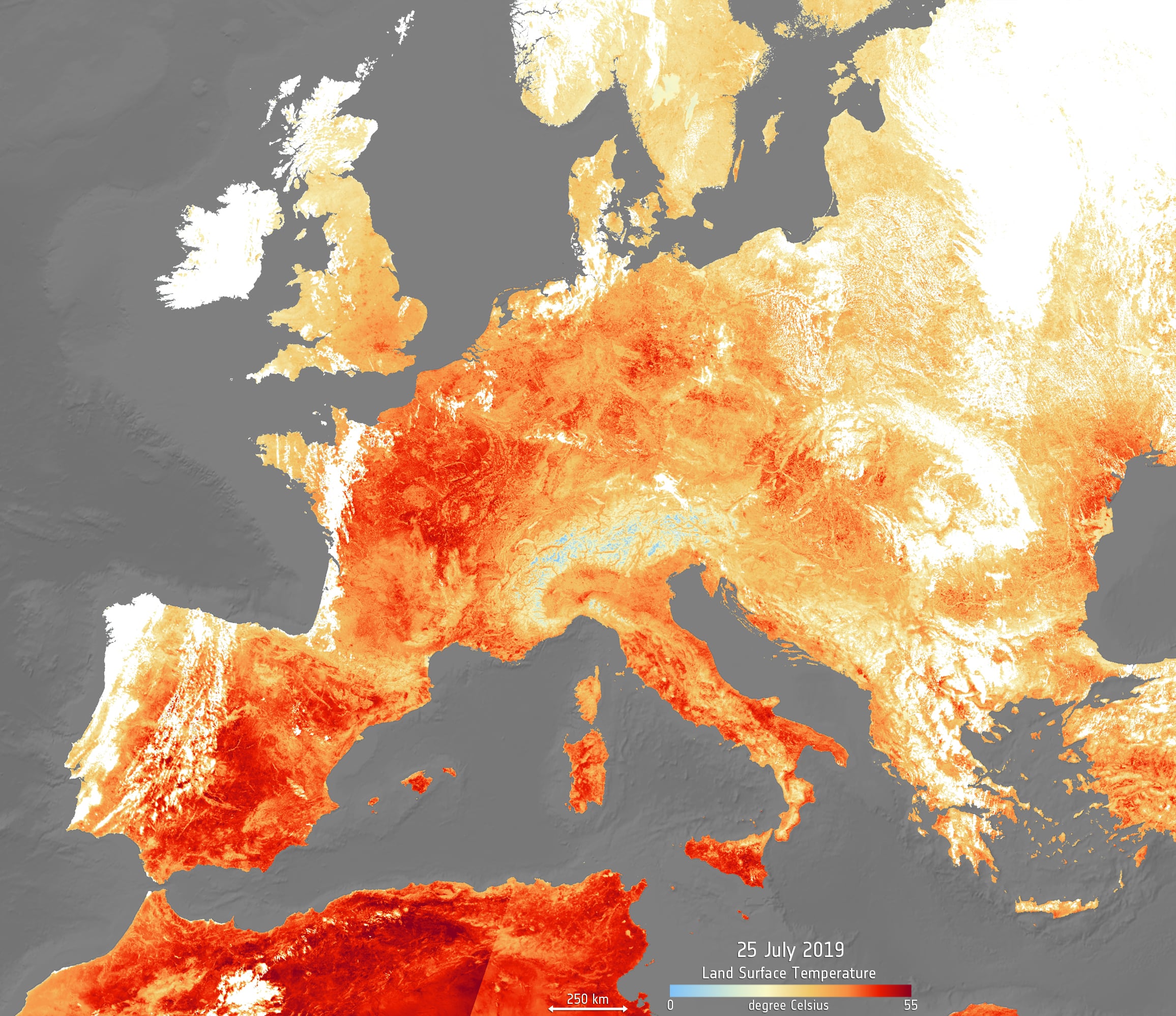
Across Europe, what governments have tried to manage as a weather event is increasingly visible as what it is: a mass casualty crisis. The continent is in the grip of its second major heatwave in eight weeks, driven by a heat dome drawing superheated air north from the Sahara. At least 94 million people are expected to experience temperatures above 35 degrees Celsius this week, most of them concentrated in France and Spain.
“Leaders must prioritise investment in climate-resilient health systems, while also accelerating climate action and mitigating the drivers of the climate crisis,” WHO Director-General Tedros Adhanom Ghebreyesus said on Tuesday. He warned that Europe’s heatwave was “putting people’s health at risk,” invoking the benchmark of 2003, when roughly 70,000 people died across the continent during a single June-to-August event. That number is what public health officials cite when they try to explain what an unmanaged heat crisis ultimately costs.
The warning resonated most visibly in Italy, where authorities placed 16 cities under the highest heat alert this week, including Rome, Florence, Bologna, Milan, and Verona. Hospitals in Parma reported a sharp surge in emergency visits. In Milan and Turin, a simultaneous spike in households running air conditioning triggered power blackouts. Italy’s healthcare infrastructure, which operates near capacity during normal summer conditions, is absorbing heat casualties on two fronts at once.
France’s difficulties compounded in ways that exposed the brittleness of its infrastructure. Around 68,000 households lost power, mostly in the south. Nearly 900 junior and middle schools closed or shortened their schedules. The country’s national thermal indicator, an average drawn from 30 weather stations, hit 29.8 degrees Celsius on Tuesday, the highest reading since records began. Officials activated red-heat alerts across 54 departments, covering most of France’s populated south and centre. France’s health emergency services, already managing the country’s first confirmed Bundibugyo Ebola case after a traveller returned from the Democratic Republic of Congo in early June, simultaneously issued guidance to regional hospital trusts to prepare for elevated heat-related admissions through the end of the month.
At the Eiffel Tower and in public squares across Paris, city authorities set up misting stations to help residents cool down. At France’s Fête de la Musique celebrations in Bordeaux, festival-goers stood under mist sprayers for relief. France, like much of northern Europe, was built for a climate that no longer exists.
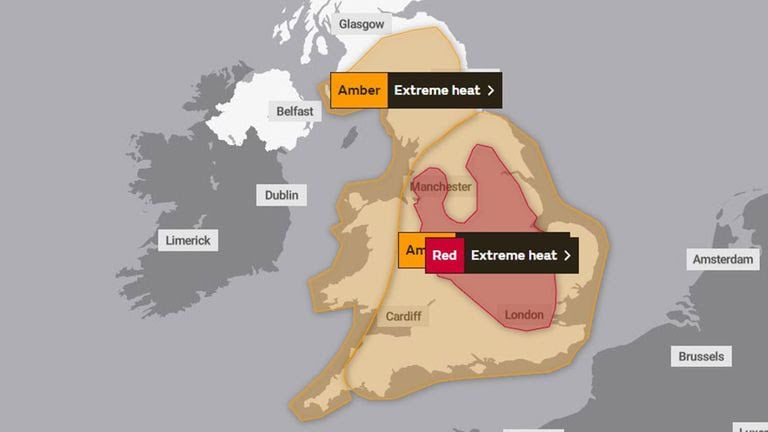
In the United Kingdom, which is several days behind France and Spain in the heatwave’s progression, the Met Office issued a red extreme-heat warning for parts of England. Temperatures are forecast to exceed 38 degrees Celsius, potentially approaching the 40.3 degrees recorded in July 2022, then the hottest day in British history. Transport authorities warned passengers to avoid unnecessary rail travel amid fears of rail buckling. Al Jazeera reported that schools across England were already preparing early closures.
The Climameter research group calculated that climate change has made this heatwave up to four degrees Celsius hotter than it would have been in a pre-industrial climate: Paris is roughly 2.4 degrees above its historical baseline for the date, Milan nearly 3.8 degrees, and Zaragoza approaching four. The World Health Organization published updated guidance on heat-health action plans for European governments three weeks before the current event, calling for emergency cooling infrastructure, early warning systems, and heat-specific hospital protocols that most European countries do not yet have at scale.
The full death toll across the continent is not yet compiled. Portugal, Belgium, Germany, and the Balkans have all issued heat alerts, but mortality data from those countries has not been formally released. Spain’s 108 figure covers only deaths confirmed through its health ministry’s direct surveillance system. The true heat-attributable mortality, which epidemiologists calculate through excess-deaths analysis after an event concludes, is historically two to three times higher than official real-time counts. France’s final figure for this episode will likely not be known for weeks.
What is already clear, to the doctors in Parma running out of beds and to the families of the children who died in France’s cars this week, is that this is no longer an unusual summer. This is summer now.