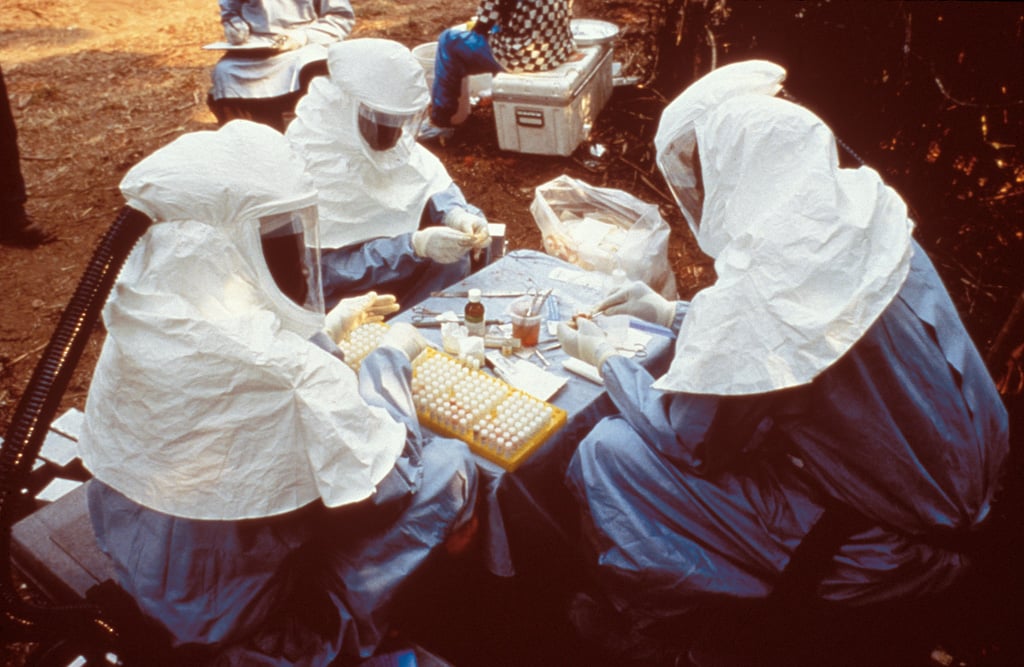

PARIS – The doctor had gone to the Democratic Republic of Congo to help stop Ebola. On June 24, France’s Health Ministry announced that the doctor had come back with it. The confirmed case, the first Ebola patient detected in Western Europe since the current outbreak began, arrived on the same day that the DRC Ministry of Health reported the outbreak had crossed 1,000 confirmed cases, a threshold that makes this the second-largest Ebola epidemic in recorded history.
The French patient, a healthcare worker who had been on a humanitarian mission in an active transmission zone in the DRC, tested positive for the Bundibugyo strain of Ebola upon return. France’s Health Ministry said the patient had been placed in isolation immediately upon arrival and transferred to a hospital under strict biosafety protocols, with contact tracing underway. The ministry did not disclose the patient’s identity, the name of the receiving hospital, or the precise number of people who had been in contact with the healthcare worker during the journey back to France.
The case matters not because France is at risk of an outbreak. A single imported case in a country with strong public health infrastructure is a very different situation from what is unfolding in Ituri province. But it places the 2026 epidemic into the category of global crises that wealthy nations can no longer observe at a distance. The World Health Organization had already moved in that direction on May 17, when Director-General Tedros Adhanom Ghebreyesus declared the DRC-Uganda outbreak a Public Health Emergency of International Concern, the organization’s highest alert designation. France’s case is the first confirmation that the PHEIC reflects a real, not theoretical, international risk.
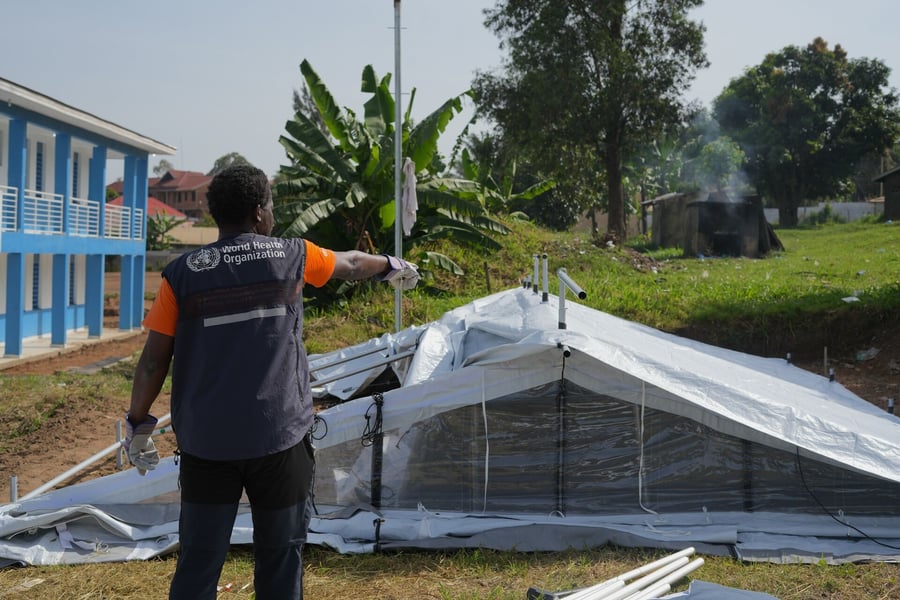
Tedros moved quickly to contain the anxiety around the France confirmation. He said there was no reason for panic and noted that in 50 years of Ebola outbreaks, fewer than 30 cases had ever been detected outside Africa. But in the same remarks, he was candid about the state of the DRC response: the outbreak, he acknowledged, had “a big head start,” and containment efforts were still behind it. “Under the leadership of the Government of DRC, we are catching up,” Tedros said at a briefing in early June, words that reassured and admitted the deficit simultaneously.
The DRC numbers are striking. As of June 23, the Ministry of Health had reported 1,094 confirmed cases, with 277 confirmed deaths. Ituri province accounts for the bulk of it, with 997 of those cases spread across 22 health zones. North Kivu has added 94 more, and South Kivu three. Uganda, which shares a porous border with eastern DRC, had confirmed 19 cases and two deaths as of mid-June, a figure that does not include one probable case who also died. The US had already registered its own imported case in May, when an American citizen was medically evacuated to Germany for treatment. The France confirmation marks the second import into the European continent.
What makes this outbreak structurally harder to fight than the 2018-2020 DRC epidemic, which was itself the second-largest in history at the time, is a single biological fact: the Bundibugyo strain of Ebola has no approved vaccine and no approved treatment. The 2018 outbreak was ultimately brought under control partly because ring vaccination with the rVSV-ZEBOV vaccine was possible; that tool does not exist for Bundibugyo. Researchers are working on vaccine candidates and candidate therapeutics, but nothing is yet authorised for use at scale. Healthcare workers entering treatment centres in Ituri do so without the protective immunisation that made the response to the Zaire strain possible.
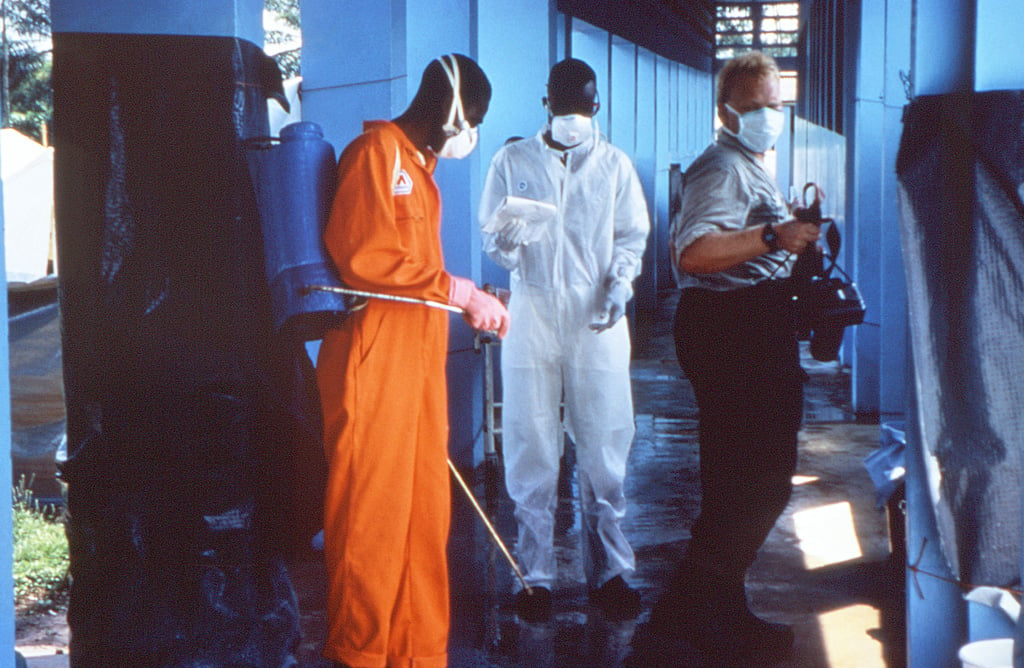
That gap has come at direct cost. Al Jazeera reported in mid-June that more than 70 healthcare workers had been infected in the current outbreak, with at least 17 dying. The figure illustrates the scale of infection-control failure across multiple facilities, a problem that is not simply one of equipment or training but of the conditions under which those workers are operating: an active conflict zone in Ituri with limited road access, community distrust that has repeatedly disrupted response operations, and a virus for which the usual prophylactic backstop does not exist.
Community resistance has been one of the defining features of the 2026 outbreak in ways that disease statistics cannot fully capture. In late June, Al Jazeera reported that families had stormed at least one Ebola treatment centre in the DRC and removed patients. The act, driven by grief, by fear of the centres themselves, by a historical memory of what it means for a family member to enter an isolation ward and not come out, is not irrational from the perspective of the families involved. It is, however, one of the most effective ways to break contact tracing and accelerate transmission. It is a reminder that outbreak response is not only a logistical problem.
The pattern of healthcare worker deaths and family resistance tracks closely with what the WHO identified as the central challenge in a June 3 briefing: inadequate contact tracing, insufficient treatment capacity, and failures in safe burials. Each of those gaps feeds the others. A family that removes a patient from a treatment centre requires a new round of contact identification. A death outside an official facility makes safe burial harder to ensure. Inadequate tracing means the next generation of cases is partially invisible until it surfaces, too late for early intervention.
For people following the DRC outbreak from outside, the France case offers a point of reference that the raw case count in Ituri does not. Europeans who would not locate Mongbwalu on a map, the health zone in Ituri where the outbreak was first identified in May after four healthcare workers at the general referral hospital died within four days, will understand what it means for a doctor to test positive in Paris. The risk to the French public is low; the risk assessment infrastructure in Paris is incomparably better than anything available in Bunia. But the case establishes that the virus travels when people travel, and that humanitarian workers, who move between the highest-risk zones and the rest of the world by design, are the most likely vector for that movement.
France is the second European country and third country outside Africa to confirm a case in this outbreak, after Germany in May. That three-country spread within weeks of a PHEIC declaration fits the pattern the WHO framework was designed to flag. Whether it also fits the pattern of controlled imports (isolated cases, traced contacts, no secondary transmission) or something more complicated will depend on how thoroughly French authorities can reconstruct the French doctor’s contacts in the days between leaving DRC and testing positive.
What France has not said, as of June 25, is how many people were on the return flight, whether airline contact tracing has been initiated, or how long the doctor was symptomatic before testing. Those answers matter for assessing the window of potential exposure. The French Health Ministry’s assurance that isolation began immediately upon arrival is important, but Ebola’s incubation period of two to 21 days means the contacts of someone who tested positive shortly after landing will need to be tracked across weeks, not days. That work is underway. Whether it is complete is not yet known.
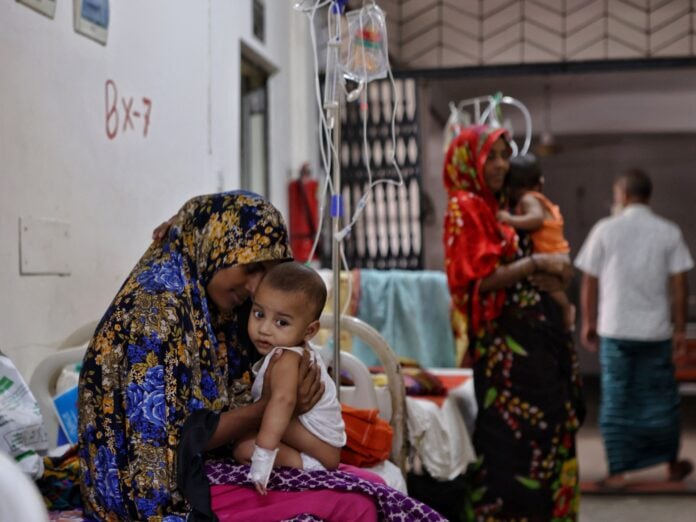
In Ituri, the work of containment continues without a vaccine and with 387 people hospitalised in isolation as of June 22. Among them are people who entered treatment centres voluntarily, which is itself a measure of the relationship between responders and community that the response team has spent months trying to build. It is not the same relationship in every health zone, and the attack on the treatment centre is a reminder of that. The doctor who tested positive in France crossed two continents to be part of the response. What happens next in Ituri, whether the case count stabilises or pushes toward a third thousand, is a question that answer is not yet back.