
LOS ANGELES — He was 74 years old when he walked onstage at the Dolby Theatre to accept an honorary Academy Award, the Jean Hersholt Humanitarian Award, given not for a single performance but for a career of what the academy described as bringing credit to the industry through a lifetime of activism. He already knew. The diagnosis had arrived years before. The condition had taken hold of his movement and his speech. He accepted the award and said what people say in those moments and went home.
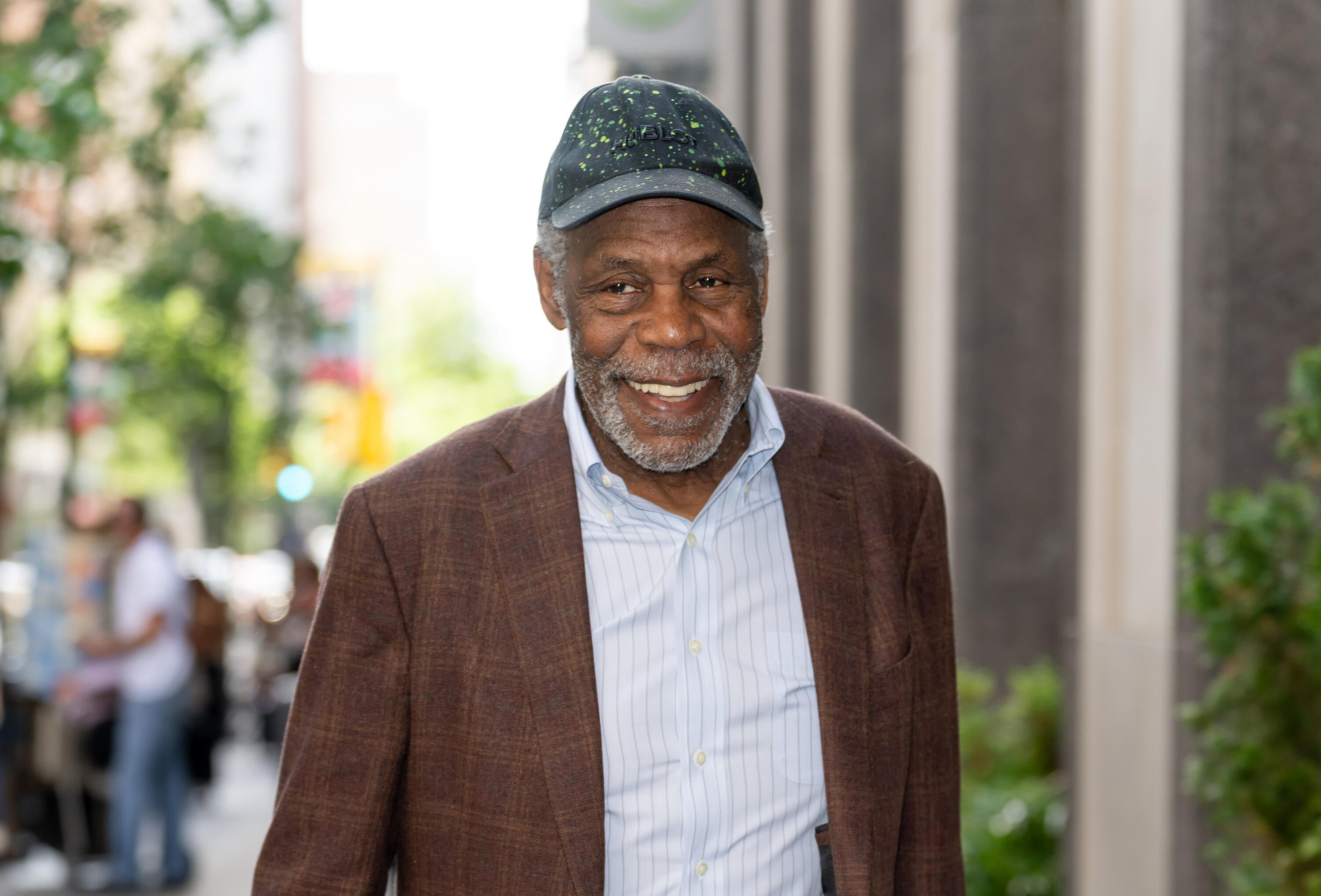
Danny Glover, the actor and political activist who spent four decades making films that other studios would not make and saying things that other celebrities would not say, revealed Wednesday that he has Alzheimer's disease. He is 79.
In an interview with Lester Holt taped at his home in San Francisco and broadcast Wednesday on NBC's Today program, Glover described a condition that has been reshaping him for several years and that his family has been living with quietly. Several relatives appeared alongside him during the interview. They described their hope that the disclosure would make it easier for other families to have conversations they have been avoiding: that a name attached to a well-known face might reduce the silence Alzheimer's tends to produce in the households where it lives.
“I can live with it, in a sense,” Glover told Holt. “I'm sure as it advances, things are going to be different and changing.” He did not soften the word “advances.” He said it without euphemism, which is the way he has generally delivered lines he did not write and truths he did not choose.
The disease has affected his movement and his speech, the family confirmed to CBS News. What they did not say, and what Wednesday's disclosure did not address, is the specific onset timeline, whether he is enrolled in any clinical trial or treatment protocol, or what his professional plans are going forward. Voluntary health disclosures from public figures rarely include that information, and his family's decision to speak on a morning television program with relatives present, rather than through a prepared statement, suggests the goal was different from an industry announcement. It was a family saying: we are telling you now.
Glover was born in San Francisco in 1946, the son of a postal worker and a domestic worker, and came to acting in his thirties after years of community organizing and political theater. He did not arrive in Hollywood as a leading man. He arrived as something more durable: a character actor of unusual gravity whose delivery suggested a person thinking rather than performing, which in commercial American cinema is not always a compliment and is not always rewarded.
Steven Spielberg cast him opposite Mel Gibson in Lethal Weapon in 1987, and that franchise, four films spanning more than a decade, made him a commercial presence recognizable to audiences who might never have sought out the work he did outside the studio system. He starred in Sidney Poitier's adaptation of The Color Purple in 1985. He appeared in the 1987 film Mandela, about Nelson Mandela's imprisonment. He produced features addressing the Haitian Revolution and the apartheid system when major studios had no appetite for the subject matter.
The humanitarian award the academy gave him in 2021 was not primarily for any of those films. It was for the other career: for appearing in places where celebrities are not expected, for taking positions on political questions in eras when the industry's preferred posture was silence, for lending his presence to causes that came with professional cost rather than promotional upside.
He was already living with Alzheimer's at that ceremony. The public did not know. That detail is the most significant fact in Wednesday's disclosure. It means that whatever version of Glover the world was watching, at award ceremonies, in interviews, in any public appearances he made between 2021 and now, was a man managing a disease while doing so. That is not a performance. It is the ordinary work of living with something that, as he said, advances.
Earlier this week, Angelina Jolie described raising her children while carrying the BRCA1 gene, a kind of mortality management that begins before any diagnosis and shapes every domestic decision. Glover's circumstances are different. The disease is present, not potential. But the willingness of well-known people to speak about what they are managing, rather than what they have overcome, has become a different kind of public service in its own right, separate from the art.
His family directed that donations in his memory, when that becomes applicable, be made to the Alzheimer's Association, which estimates more than 6.9 million Americans aged 65 and older currently live with the disease. That number encompasses people in households where no one is famous and the only thing available is a diagnosis and a family that has to figure out what to do next. The science has not changed because Danny Glover has spoken. What has changed is smaller and harder to measure: who has said publicly that they are in that room.
He will turn 80 this month. The interview was taped at his San Francisco home, with his family around him. He told Lester Holt that his family has his back. That is not a quotation that requires unpacking. It does not advance the discourse on Alzheimer's treatment or clarify his prognosis. It is a man at 79, having named the thing he has been carrying, saying what matters to him now.