
BRUSSELS – For the workers at Volkswagen’s German plants, the arithmetic of EU-China trade arrived this year in the only form it ever really matters: a redundancy notice. A hundred thousand jobs across the Volkswagen Group are marked for elimination, roughly fifteen percent of its global workforce, as the carmaker absorbs the reality that Chinese electric vehicles have crossed ten percent of total EU auto sales for the first time.
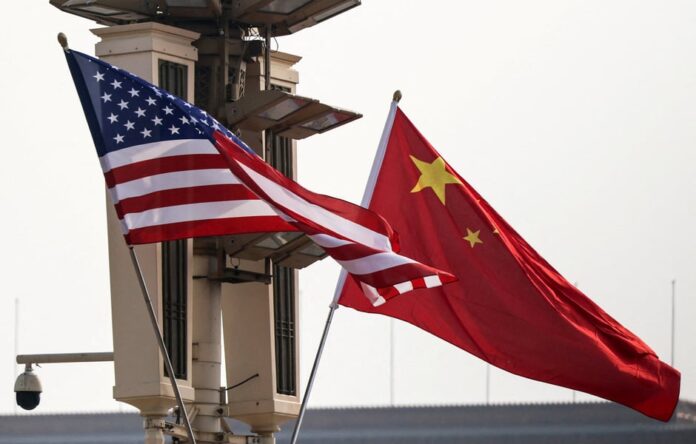
The European Union activated a new package of trade restrictions on China on July 1, restricting duty-free steel quotas and imposing a three-euro customs charge on small parcels shipped directly to European consumers from Chinese platforms. The measures are the latest step in a multi-year tightening cycle the bloc has described not as protectionism but as a structural correction. The EU recorded a trade deficit with China of €360.6 billion in 2025, equivalent to roughly €1 billion per day, up fifteen percent from the year before.
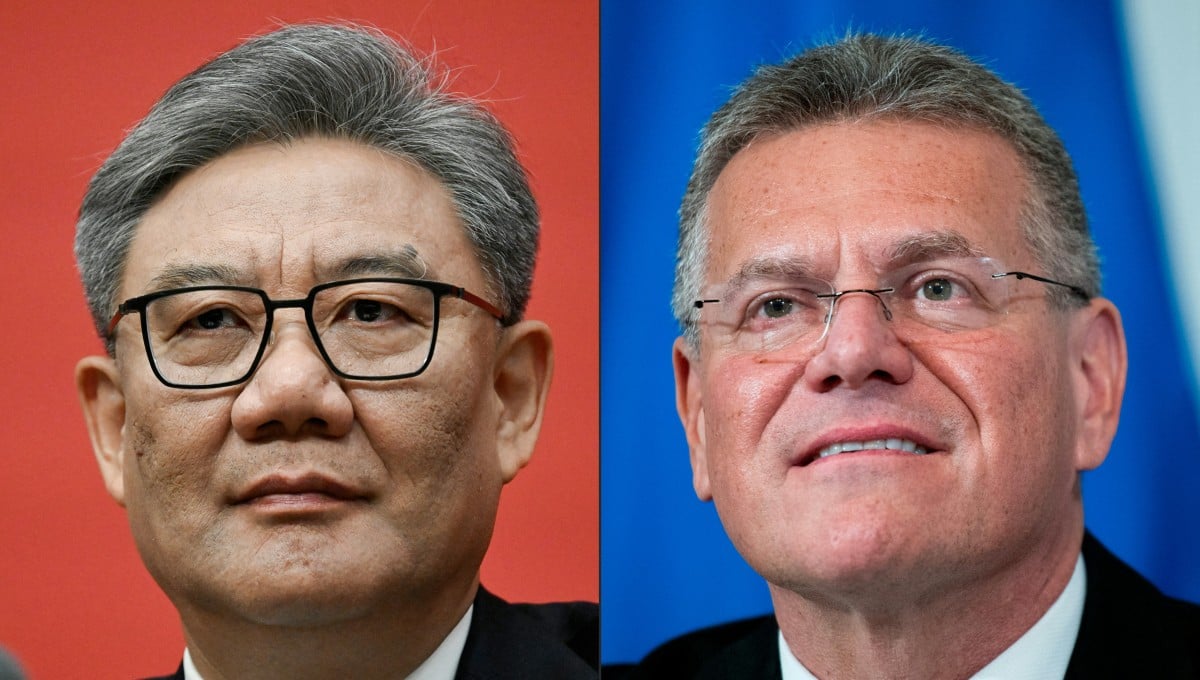
EU Trade Commissioner Maros Sefcovic has made the framing explicit. “China’s exports to the EU keep rising, while our market share in China keeps shrinking. This trend is not sustainable,” he said. His office estimates the cumulative EU trade deficit with China since 2018 has transferred economic activity from European manufacturers to Chinese ones at a scale European economies have not fully absorbed and may struggle to reverse.
The electric vehicle market is the sharpest front. Chinese EV makers, led by BYD and backed by industrial subsidies that Brussels estimates considerably exceed what European governments provide to domestic producers, crossed ten percent of total EU auto sales in May 2026, a threshold European officials describe as a structural tipping point. European tariffs on Chinese electric vehicles now run as high as 35.3 percent. BMW has announced a workforce reduction of roughly five percent by the end of 2026, citing the same competitive pressure driving Volkswagen’s far larger restructuring.
Philippe Le Corre of ESSEC Business School, who studies EU-China commercial relations, described a shift in the political mood in Brussels that he calls qualitatively different from the debate of two years ago. “The mood has shifted,” Le Corre said, “because there is real danger for European companies.” Brussels had traditionally balanced concern about Chinese export competition against recognition that European consumers benefited from cheaper goods and European companies gained from Chinese market access. That balance has broken down as job losses in manufacturing have accumulated.
The EU’s July 1 restrictions sit inside a broader legislative push. The bloc has introduced an Industrial Accelerator Act and is overhauling its Cyber Security Act to restrict Chinese firms from operating in European critical infrastructure. The Commission has proposed supply chain diversification requirements that would compel strategic-sector companies to maintain at least three separate suppliers, reducing the concentration risk from years of reliance on Chinese manufactured inputs. A joint EU-China trade monitoring mechanism is being established, though its authority to compel compliance on either side has not been publicly defined.
China’s position is that the EU is imposing protectionist restrictions on a genuinely competitive industry rather than an unfairly subsidized one. That framing is not without foundation: Chinese electric vehicle manufacturers have made real engineering advances and productivity gains that partially explain their price competitiveness independent of subsidy. But the interdependence cuts both ways. European carmakers including Volkswagen, BMW, and Stellantis generate a substantial share of their global profits from Chinese consumers. A trade war that widened would damage those operations as readily as it protects European domestic market share. Neither side can escalate without absorbing costs it would prefer to impose on the other.
The EU’s trade confrontation with China is one dimension of a broader regulatory posture the bloc has adopted toward large Asian commercial interests. European courts have simultaneously been tightening enforcement against foreign platforms: the Court of Justice of the European Union this week upheld a €4.1 billion antitrust fine against Google over its Android operating system, confirming Brussels’ willingness to impose large-scale penalties on foreign commercial interests operating in European markets. China has read the pattern: in June it enacted an Outbound Direct Investment Regulation giving Beijing formal authority to probe foreign governments that restrict Chinese investors and companies abroad, a direct response to years of tightening Western restrictions.
Alicia Garcia-Herrero at Natixis described the scale of manufacturing job losses in Europe as “so huge” that meaningful Chinese concessions might become necessary to slow the political pressure for further restrictions. Those concessions have not materialized. Whether they emerge from bilateral talks scheduled between Brussels and Beijing for October 2026 is the central question neither side can currently answer. Al Jazeera reported that European officials see October as critical to determining whether the relationship can stabilize before industrial employment losses become politically irreversible.
The broader picture, which the July 1 measures address only at the margin, is one of simultaneous pressure on Chinese commercial activity across Western jurisdictions. Alibaba agreed this week to a $600 million settlement with the US Justice Department over illegal drug sales on its platforms, the largest marketplace liability resolution in American legal history. Western institutional systems are applying pressure at scale; China has responded with new legal frameworks treating that pressure as unreasonable barrier-setting rather than legitimate enforcement. The trade and regulatory disputes exist in the same political space.
What the EU’s July 1 measures do not address is whether European industrial policy can regenerate the manufacturing capacity that has migrated to China over two decades, or whether trade barriers only slow a transition already too far advanced to reverse. The European Commission does not have a public answer. Volkswagen workers waiting to learn which of the 100,000 planned cuts will reach them have no reason to wait for October to find out.